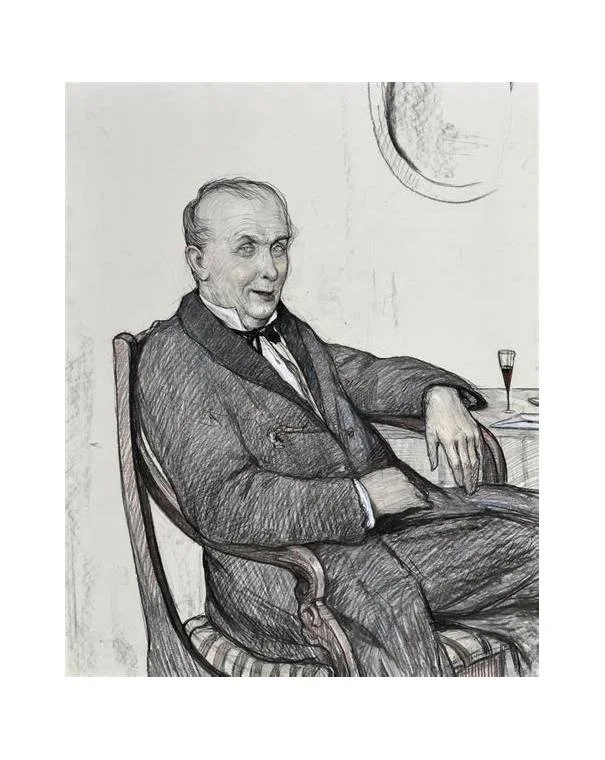
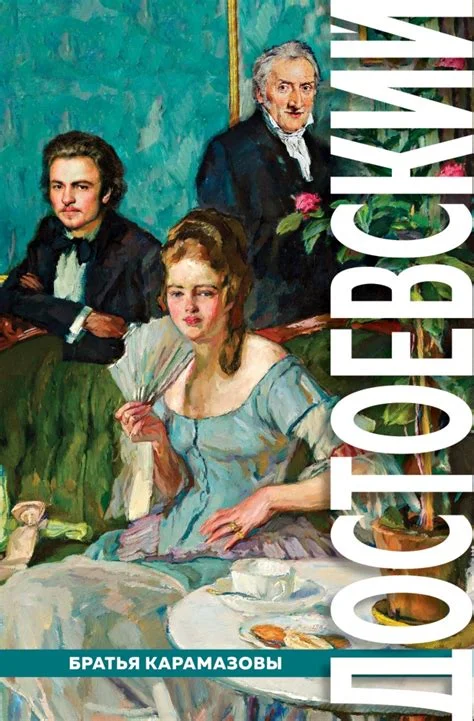
Fyodor Pavlovitch Karamazov
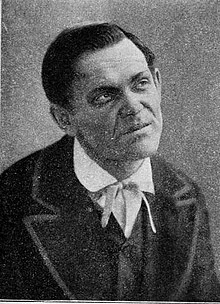
The father: a sensualist and a buffoon who has spent his life making himself ridiculous on purpose, and has never once been ashamed of it for long.
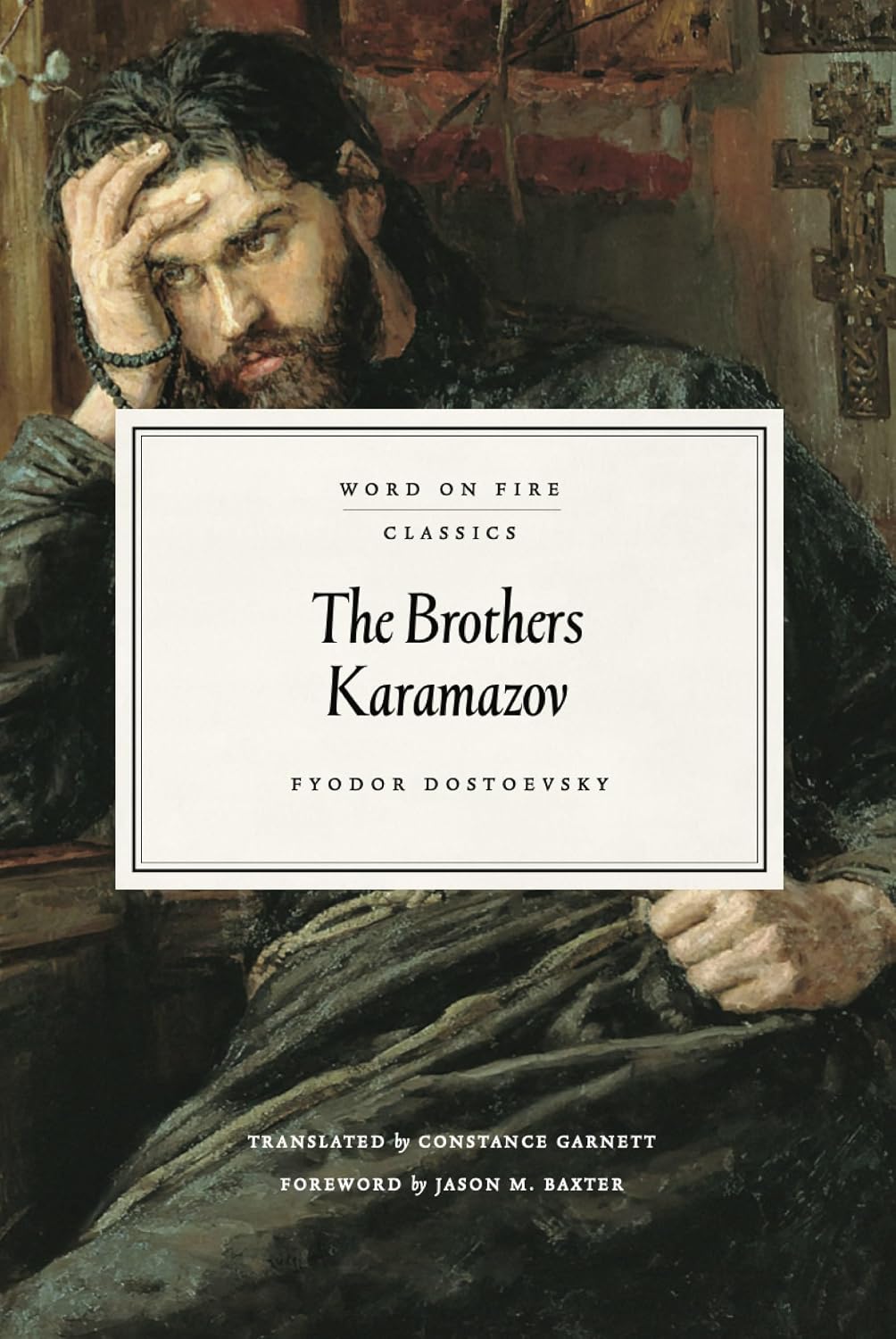
Constance Garnett, 1912 (Project Gutenberg #28054, public domain)
14 takeaways · scroll
The book
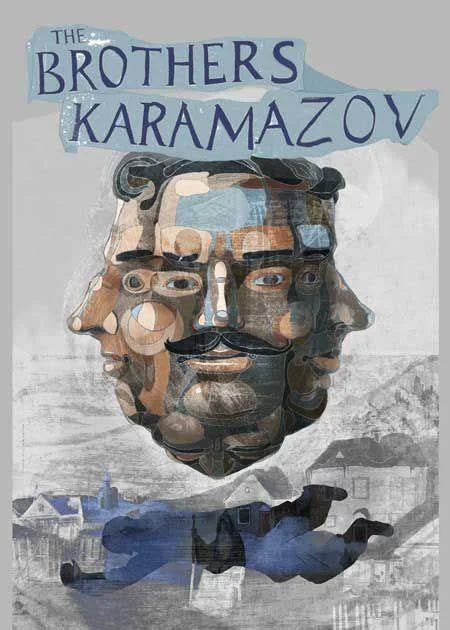
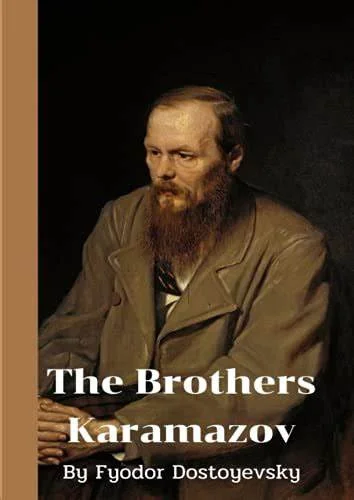
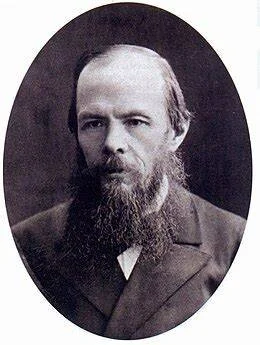
The Brothers Karamazov was Dostoevsky's sixteenth and last novel. It ran as a serial in The Russian Messenger from January 1879 to November 1880, and he died less than four months after it was finished.
The plot is one line long: a worthless father is murdered, and one of his sons is convicted of it. Three brothers carry it between them. Dmitri lives by his passions and knows it; Ivan grapples with belief in God and a suspicion that freedom itself may be a burden humans were never fit to carry, and revolts against a divine order that includes the suffering of innocents; Alyosha answers none of it with argument. Sent out of the monastery to live in the world, he embodies the book's answer to the questions raised, not through conclusions, but through deeds.
Around that line Dostoevsky set the argument he had circled all his life — the question of whether, once God is gone, conscience is only a habit we invent, or whether each of us is answerable to all, for all.
Freud called it the most magnificent novel ever written, and Wittgenstein read it so often that he knew whole passages of it by heart. This page follows fourteen scenes, each held by one sentence from the book.

Part I
Book I — The History of a Family, ch. 1–5
Book II — An Unfortunate Gathering, ch. 1–8
Above all, don't lie to yourself […]
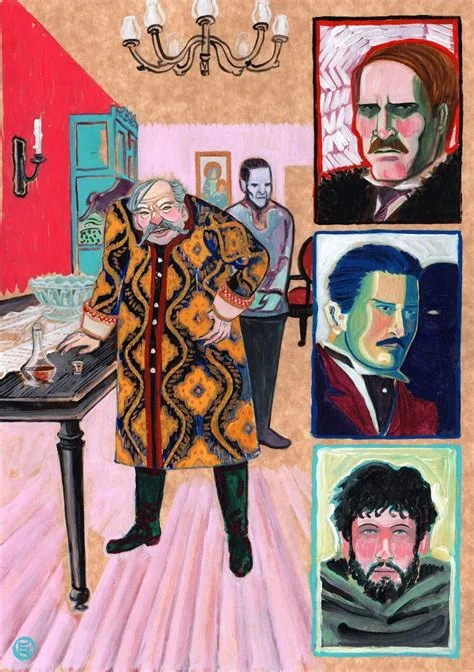
Fyodor Pavlovitch Karamazov is a rich, greedy old man who has lived for his own pleasure and never looked after any of his three sons. Other people brought them up.
The father: a sensualist and a buffoon who has spent his life making himself ridiculous on purpose, and has never once been ashamed of it for long.
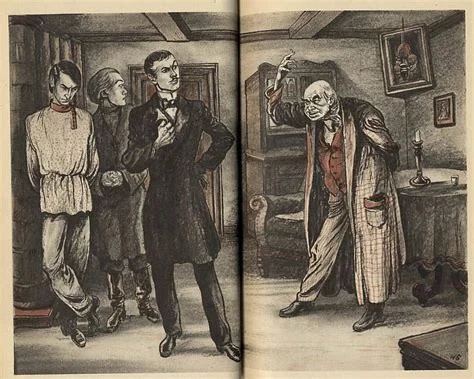
The eldest, Dmitri, an army officer, says his father is keeping back the money his mother left him. They quarrel so loudly that the family looks for someone to judge between them.
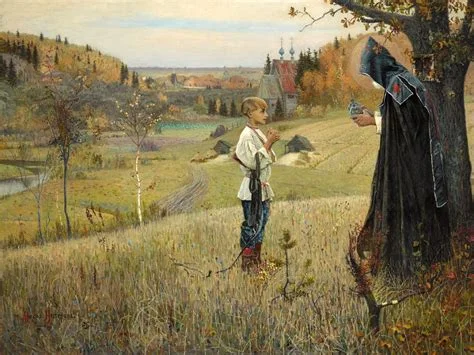
They choose a holy man: the elder Zossima, at the monastery outside the town where the youngest son, Alyosha, has become a novice. The middle son, Ivan, comes too.
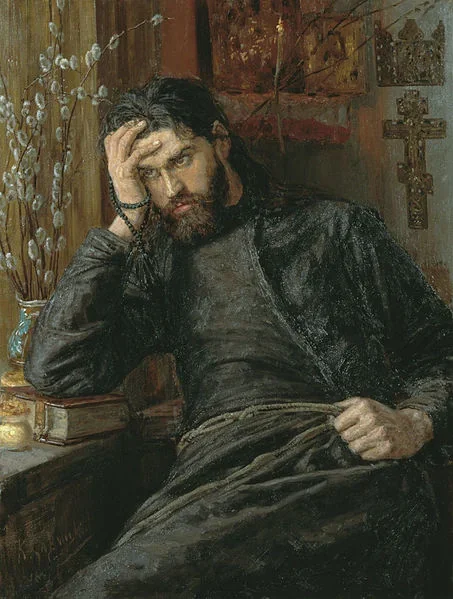
The youngest son, a novice under Zossima. He judges nobody, and everybody tells him everything. Sent out of the monastery to live in the world, he embodies the book's answer to the questions raised, not through conclusions, but through deeds.
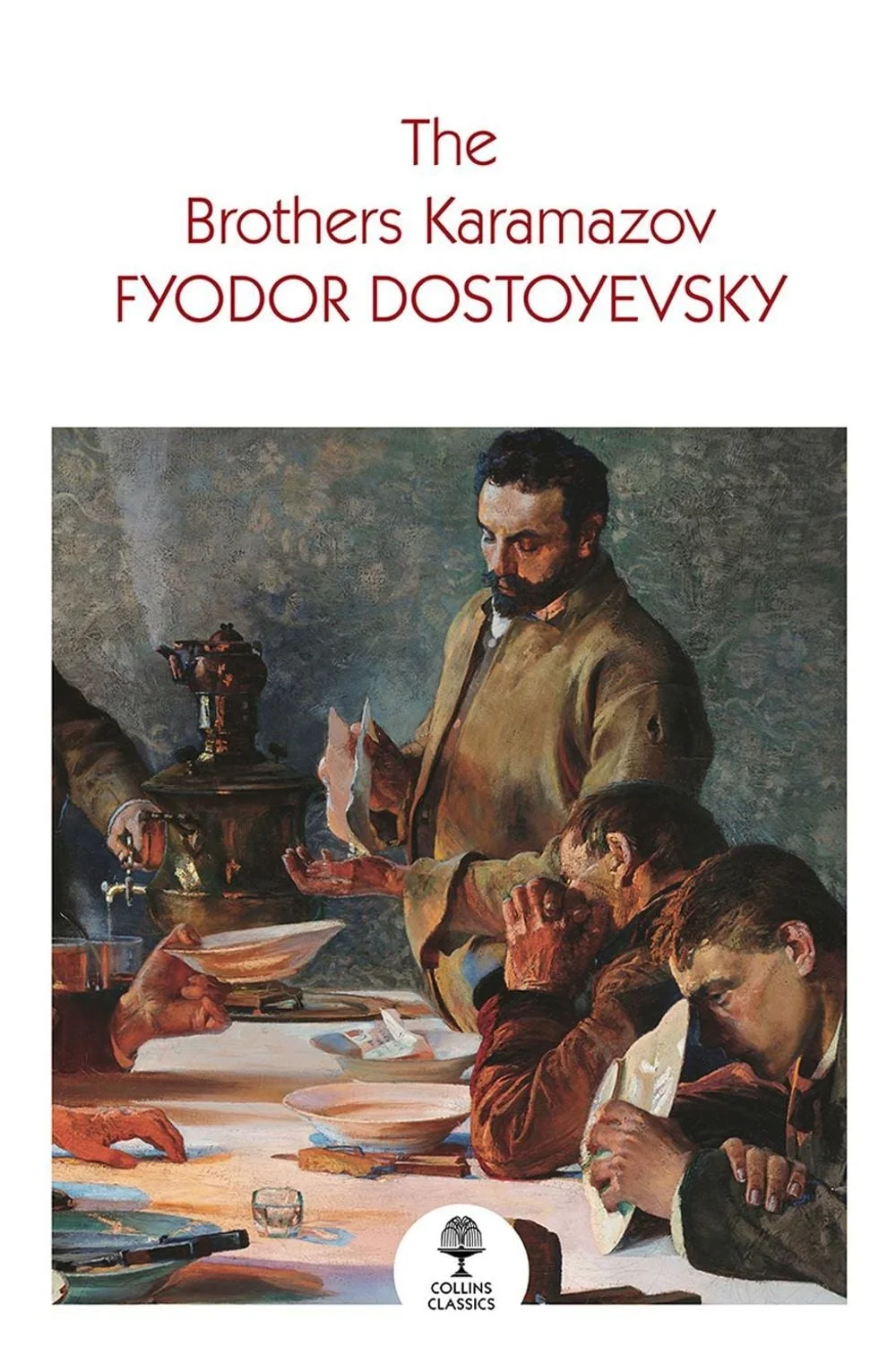
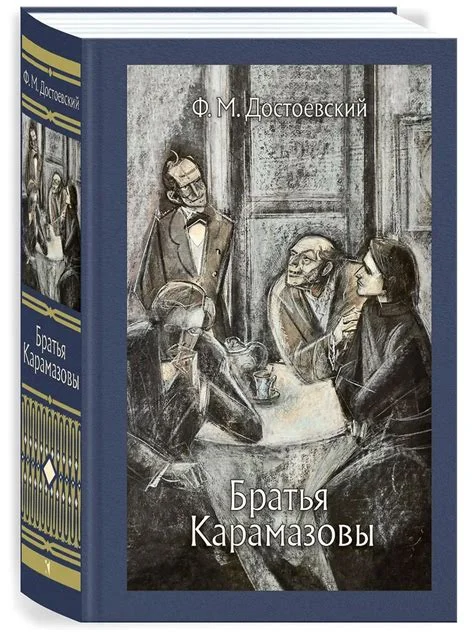
Key scene
In the elder's cell the father plays the fool in front of the monks, and then admits why: everyone has always taken him for a clown, so a clown he is. Half joking, he asks what he must do to gain eternal life, and the elder answers him seriously. That is the first sign of what this old monk is: he takes the worst man in the room as seriously as anyone else.
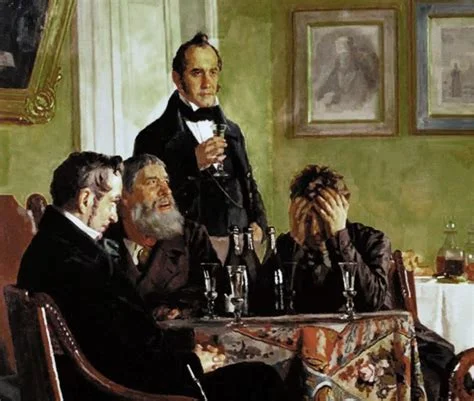
The key passage
Zossima to Fyodor Pavlovitch in his cell, answering his question about how to gain eternal life.
“Above all, don't lie to yourself. The man who lies to himself and listens to his own lie comes to such a pass that he cannot distinguish the truth within him, or around him, and so loses all respect for himself and for others. And having no respect he ceases to love, and in order to occupy and distract himself without love he gives way to passions and coarse pleasures, and sinks to bestiality in his vices, all from continual lying to other men and to himself. The man who lies to himself can be more easily offended than any one. You know it is sometimes very pleasant to take offense, isn't it? A man may know that nobody has insulted him, but that he has invented the insult for himself, has lied and exaggerated to make it picturesque, has caught at a word and made a mountain out of a molehill—he knows that himself, yet he will be the first to take offense, and will revel in his resentment till he feels great pleasure in it, and so pass to genuine vindictiveness.”
Book II, ch. 2 — The Old Buffoon
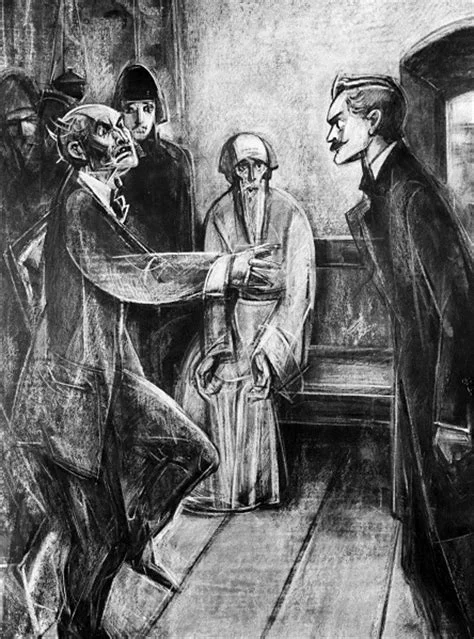
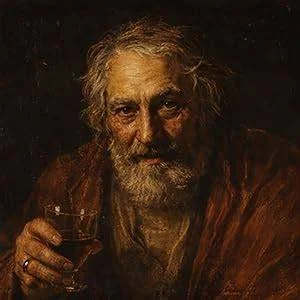
Fyodor Pavlovitch in the elder's cell, saying what he is.
“But I have been lying, lying positively my whole life long, every day and hour of it. Of a truth, I am a lie, and the father of lies.”
Book II, ch. 2 — The Old Buffoon
The elder to a lady who came to him that same morning, on how to live.
“Above all, avoid falsehood, every kind of falsehood, especially falseness to yourself. Watch over your own deceitfulness and look into it every hour, every minute. Avoid being scornful, both to others and to yourself.”
Book II, ch. 4 — A Lady of Little Faith
Dmitri arrives late, and the quarrel breaks open: the money, and a woman of the town called Grushenka whom father and son both want.
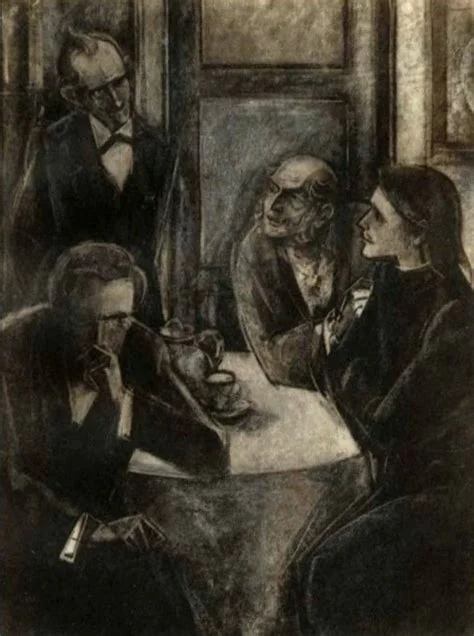
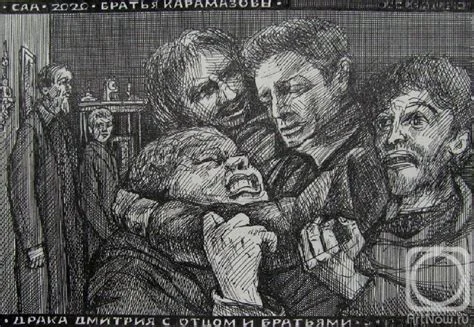
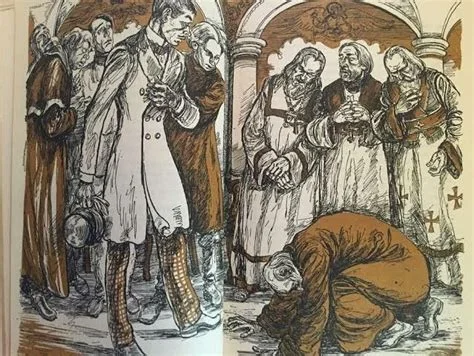
The elder gets up, crosses the cell and bows down at Dmitri's feet until his forehead touches the floor. Then he goes out, and Dmitri rushes from the room.
The elder to Ivan, on the question of immortality Ivan says he has not settled.
“The question is still fretting your heart, and not answered. But the martyr likes sometimes to divert himself with his despair, as it were driven to it by despair itself. Meanwhile, in your despair, you, too, divert yourself with magazine articles, and discussions in society, though you don't believe your own arguments, and with an aching heart mock at them inwardly.... That question you have not answered, and it is your great grief, for it clamors for an answer.”
Book II, ch. 6 — Why Is Such a Man Alive?
The father makes a second scene over dinner with the monks, and drives home, taking Ivan with him.
Part I
Book III — The Sensualists, ch. 3–5
Book III, ch. 10 — Both Together
[…] God and the devil are fighting there and the battlefield is the heart of man.
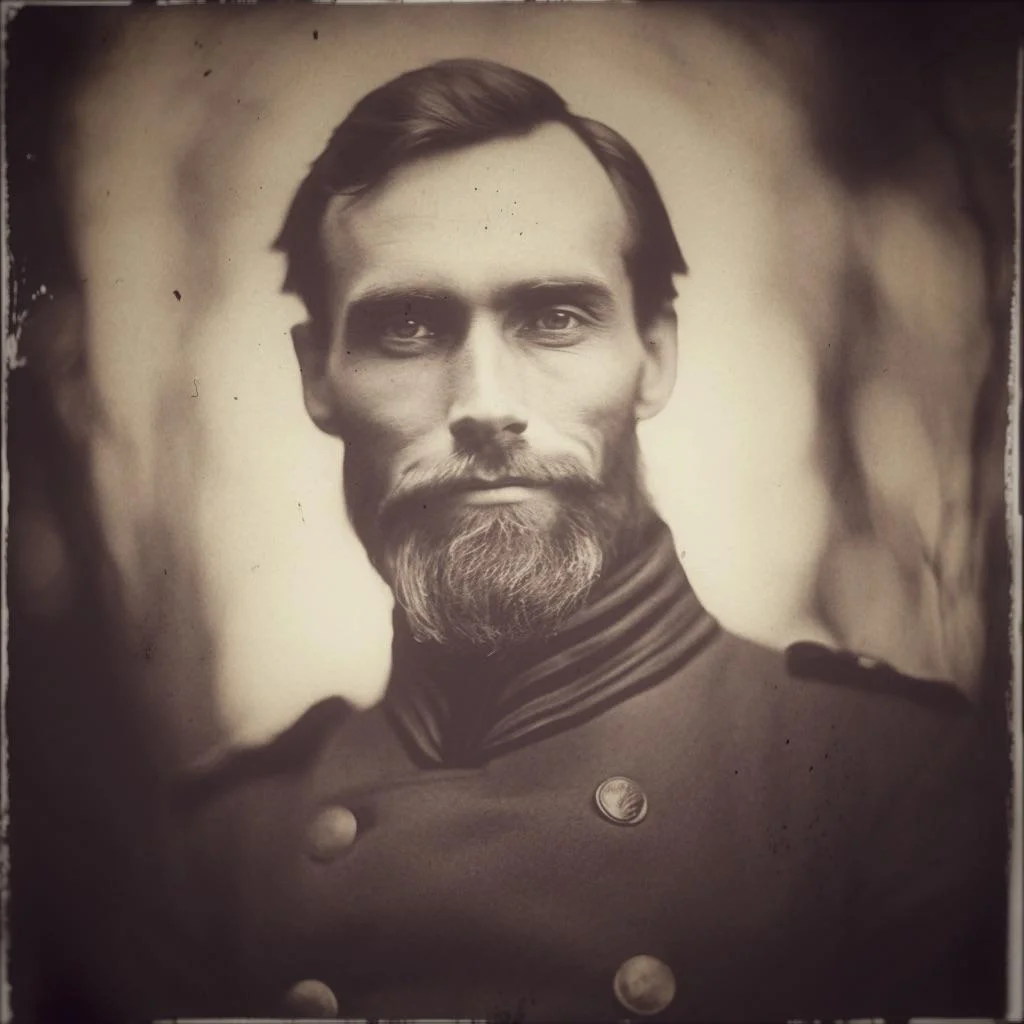
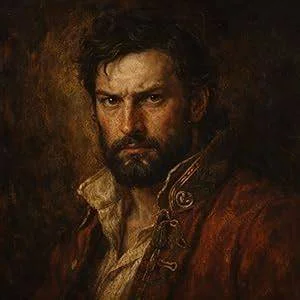
The eldest son, an ex-army officer, all appetite and honour at once: he can spend a fortune in a night and still divide the world into scoundrels and thieves.
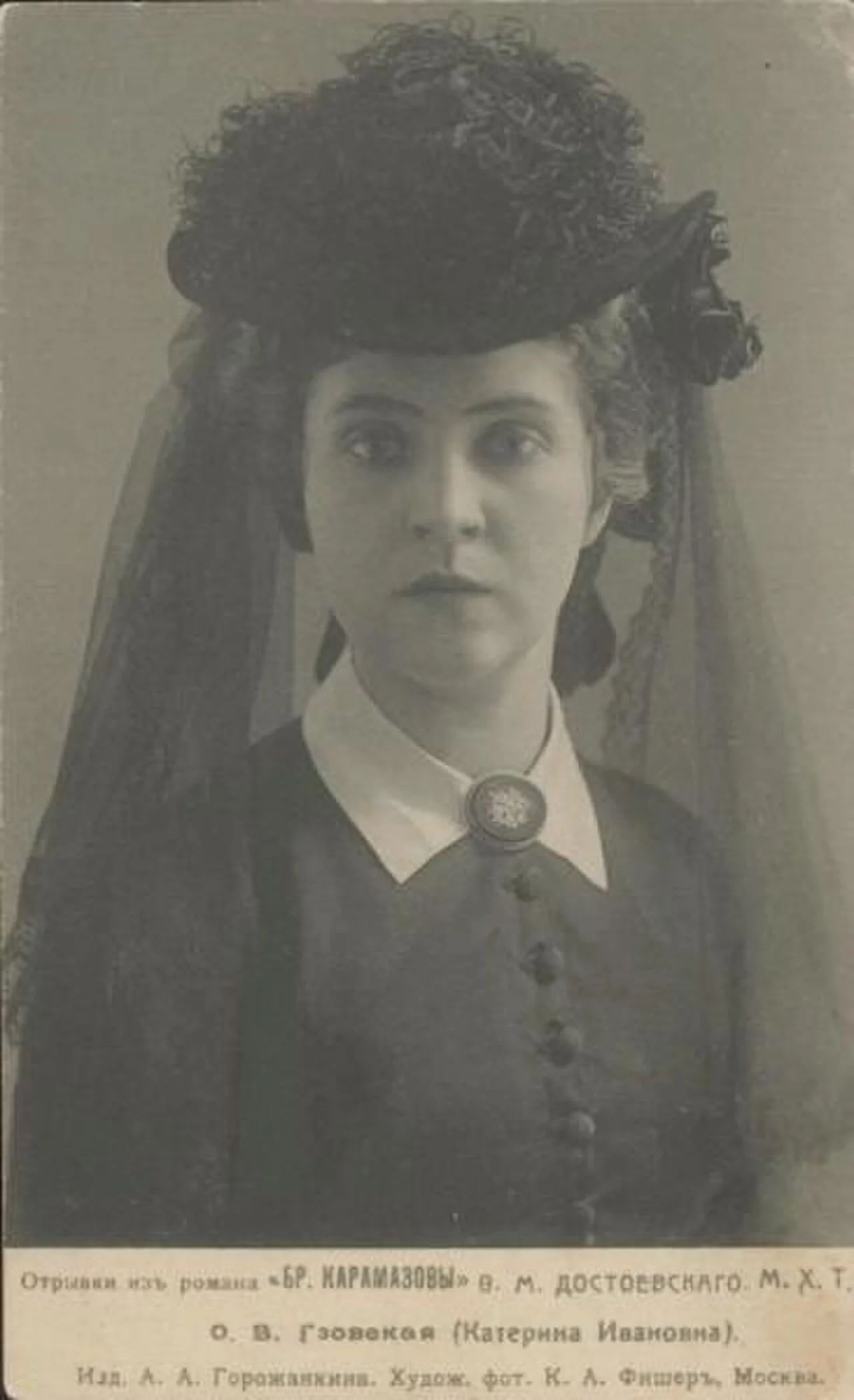
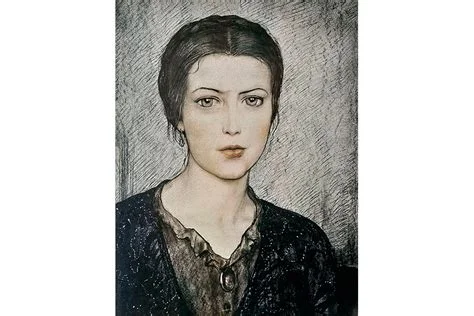
Dmitri's betrothed, proud past bearing. She loves him as a debt to be paid, and the debt is what she cannot forgive.
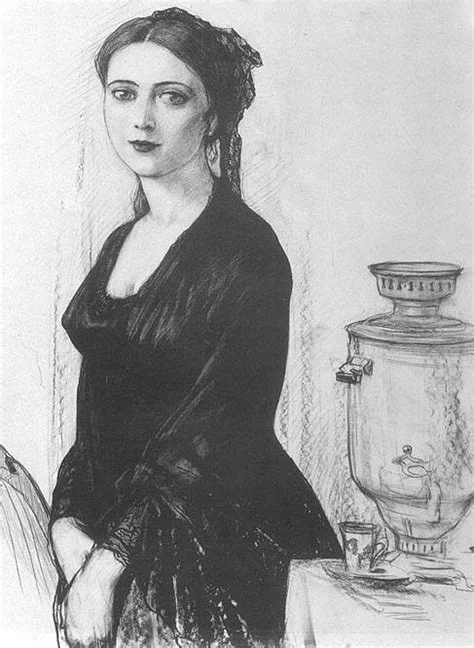
An officer betrayed her at seventeen and left her in poverty; the old merchant Samsonov raised her out of it and has protected her ever since. She is proud, sharp with money, and courted by the father and the son at once.
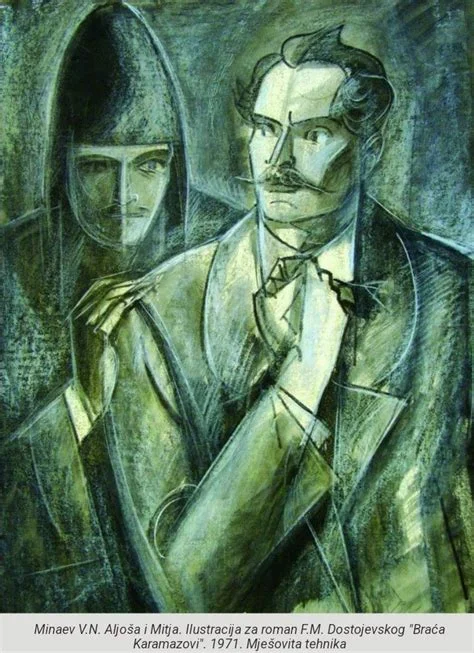
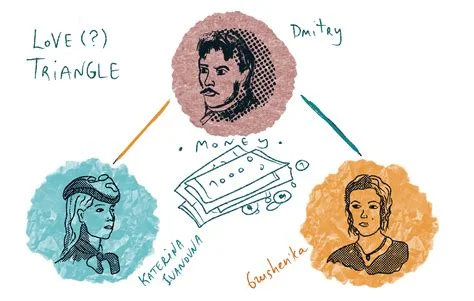
Dmitri is engaged to Katerina Ivanovna. She had come to his rooms alone once, to beg for her ruined father, and he gave her the money and asked nothing for it.
She bowed to the ground to him and went away. He has never forgiven her that bow: it left her owing him her gratitude, and neither of them has been free since.
Since then he has spent three thousand roubles of hers on a single night with Grushenka, and he cannot face her until he has paid it back.
He sends for Alyosha and takes him to a summer-house in the garden, to tell him everything before the storm breaks.
Key scene
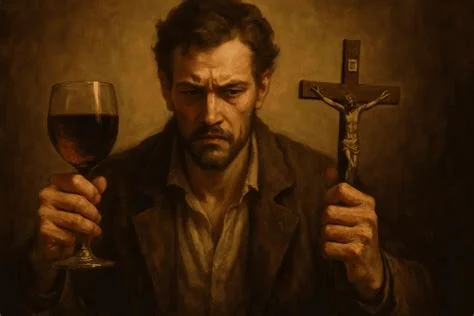
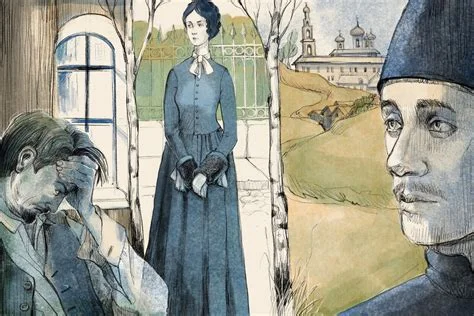
He gives his brother his whole life at once: that he is low and knows it, that he loves beauty and cannot tell the beauty of the Madonna from the beauty of Sodom, and that God and the devil are fighting inside him with his own heart for a battlefield. He asks to be understood, not excused, and this is the only place in the book where he explains himself before anything has happened.
The key passage
Dmitri to Alyosha in the summer-house, at the opening of his confession.
“Beauty is a terrible and awful thing! It is terrible because it has not been fathomed and never can be fathomed, for God sets us nothing but riddles. Here the boundaries meet and all contradictions exist side by side. I am not a cultivated man, brother, but I've thought a lot about this. It's terrible what mysteries there are! Too many riddles weigh men down on earth. We must solve them as we can, and try to keep a dry skin in the water. Beauty! I can't endure the thought that a man of lofty mind and heart begins with the ideal of the Madonna and ends with the ideal of Sodom. What's still more awful is that a man with the ideal of Sodom in his soul does not renounce the ideal of the Madonna, and his heart may be on fire with that ideal, genuinely on fire, just as in his days of youth and innocence. Yes, man is broad, too broad, indeed. I'd have him narrower. The devil only knows what to make of it! What to the mind is shameful is beauty and nothing else to the heart. Is there beauty in Sodom? Believe me, that for the immense mass of mankind beauty is found in Sodom. Did you know that secret? The awful thing is that beauty is mysterious as well as terrible. God and the devil are fighting there and the battlefield is the heart of man.”
Book III, ch. 3 — The Confession of a Passionate Heart—In Verse
Dmitri to Alyosha in the summer-house, on the way he falls.
“For when I do leap into the pit, I go headlong with my heels up, and am pleased to be falling in that degrading attitude, and pride myself upon it. And in the very depths of that degradation I begin a hymn of praise.”
Book III, ch. 3 — The Confession of a Passionate Heart—In Verse
Dmitri to Alyosha, after reciting Schiller's lines about the man sunk in degradation.
“I think about that man because I am that man myself.”
Book III, ch. 3 — The Confession of a Passionate Heart—In Verse
He is carrying half of Katerina Ivanovna's money sewn into a rag round his neck. While he still has it, he says, he is a scoundrel but not a thief.
Then the two women meet. Katerina Ivanovna is sure of her rival for a few minutes; then Grushenka laughs at her and refuses to kiss her hand, and they part as enemies.
Part II
Book IV — Lacerations, ch. 3
Book IV, ch. 6–7
Book V, ch. 1
[…] the wisp of tow does not sell his honor […]
Crossing the town on an errand, Alyosha finds a pack of schoolboys stoning a smaller boy. When he goes over to help, the boy bites his finger and runs off.
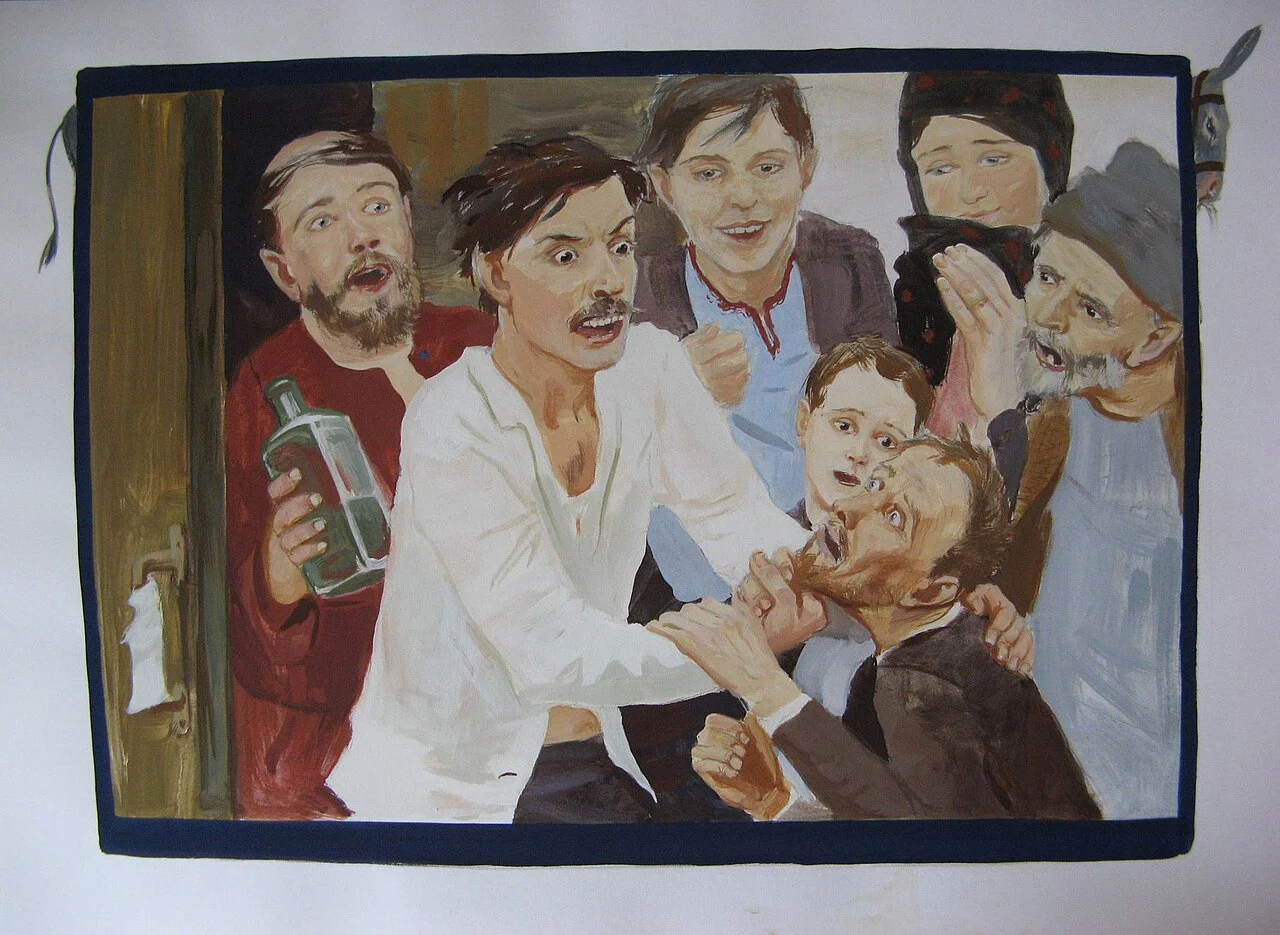
The boy is Ilyusha. Dmitri had dragged his father, a poor captain, out of a tavern by the beard in front of the school, and the boys have taunted Ilyusha ever since.
Katerina Ivanovna hears of it and sends Alyosha to the captain with two hundred roubles, as from a sister.
Alyosha finds the family in one room: the captain, his wife, a crippled daughter on crutches, and nothing in the house. The captain takes him outside to talk.
The captain to Alyosha outside the cottage, about his son and the day in the square.
“For our children—not your children, but ours—the children of the poor gentlemen looked down upon by every one—know what justice means, sir, even at nine years old.”
Book IV, ch. 7 — And in the Open Air
Key scene
The captain holds the notes by one corner and works out aloud what they would buy: a doctor, a way of getting his family out of that room, a beginning for all of them. Then he crumples the notes, throws them in the sand and stamps on them. He will not let his son see him take money for their shame, and it costs him every one of the things he has just counted.
The key passage
The captain to Alyosha after trampling the notes; 'wisp of tow' is the town's nickname for him.
“Tell those who sent you that the wisp of tow does not sell his honor […] What should I say to my boy if I took money from you for our shame?”
Book IV, ch. 7 — And in the Open Air
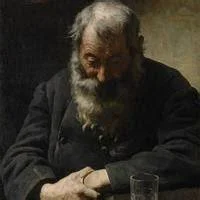
He runs a few steps, turns and kisses his hand to Alyosha, runs on, and turns once more with his face shaking.
Alyosha afterwards, working out why the captain could not take the money.
“You know, Lise, it's awfully hard for a man who has been injured, when other people look at him as though they were his benefactors.... I've heard that; Father Zossima told me so.”
Book V, ch. 1 — The Engagement
Lise, the girl Alyosha tells it all to, doubting their confident reading of the captain.
“Isn't there in all our analysis—I mean your analysis ... no, better call it ours—aren't we showing contempt for him, for that poor man—in analyzing his soul like this, as it were, from above, eh? In deciding so certainly that he will take the money?”
Book V, ch. 1 — The Engagement
Part II
Book V — Pro and Contra, ch. 3–5
If all must suffer to pay for the eternal harmony, what have children to do with it […]
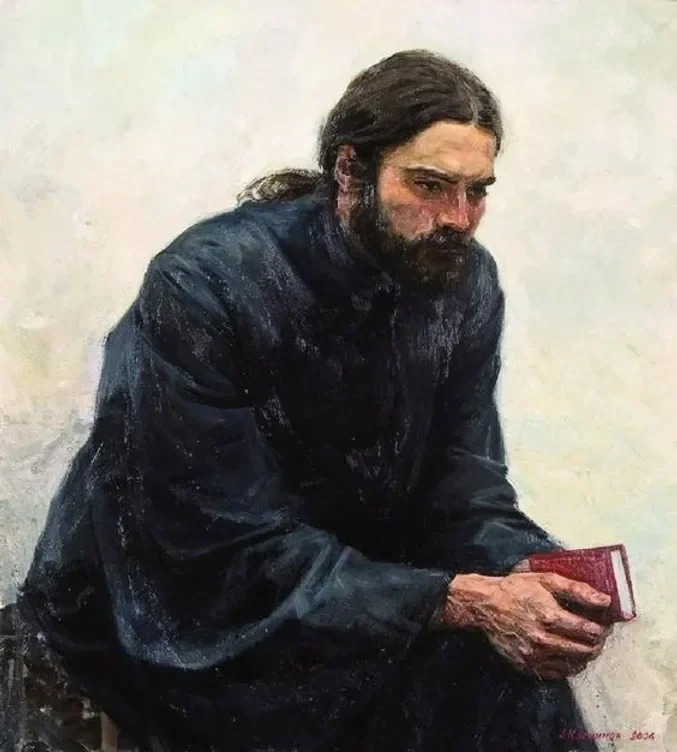
Ivan is a scholar who has published on the church courts, and who says that if there is no life after death then there is no virtue and everything is permitted.
The middle brother, a scholar who has published on the church courts. Ivan grapples with belief in God and a suspicion that freedom itself may be a burden humans were never fit to carry, and revolts against a divine order that includes the suffering of innocents.
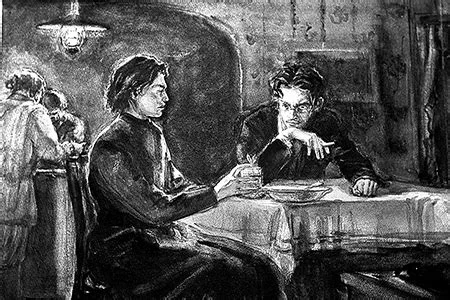
Before leaving for Moscow he asks Alyosha to meet him in a tavern. The brothers hardly know each other, and he wants one real conversation first.
Key scene
Ivan says he accepts God but refuses the world God made. He has collected newspaper reports of children tortured by their own parents, and he will not take any future happiness that has to be paid for with them. He is much the better talker, and Alyosha does not argue with him at all. He answers with a person: Christ, who can forgive everything because he gave his own innocent blood.
The key passage
Ivan to Alyosha in the tavern, on the price of a harmony paid for with the suffering of children.
“Listen! If all must suffer to pay for the eternal harmony, what have children to do with it, tell me, please? It's beyond all comprehension why they should suffer, and why they should pay for the harmony. […] I understand solidarity in sin among men. I understand solidarity in retribution, too; but there can be no such solidarity with children. […] I don't want harmony. From love for humanity I don't want it. I would rather be left with the unavenged suffering. I would rather remain with my unavenged suffering and unsatisfied indignation, even if I were wrong. Besides, too high a price is asked for harmony; it's beyond our means to pay so much to enter on it. And so I hasten to give back my entrance ticket, and if I am an honest man I am bound to give it back as soon as possible. And that I am doing. It's not God that I don't accept, Alyosha, only I most respectfully return Him the ticket.”
Book V, ch. 4 — Rebellion
Alyosha to Ivan in the tavern, answering the case against a world that holds tortured children.
“But there is a Being and He can forgive everything, all and for all, because He gave His innocent blood for all and everything. You have forgotten Him, and on Him is built the edifice, and it is to Him they cry aloud, 'Thou art just, O Lord, for Thy ways are revealed!'"”
Book V, ch. 4 — Rebellion
Then Ivan tells him a poem he has invented. Christ comes back to earth and is arrested at once by an old cardinal, the Grand Inquisitor.
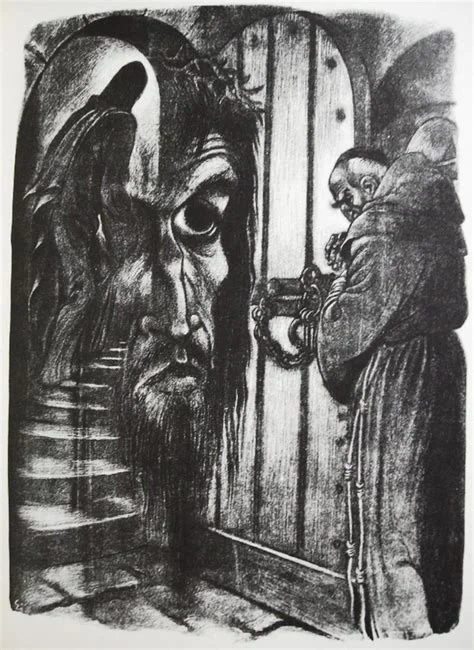
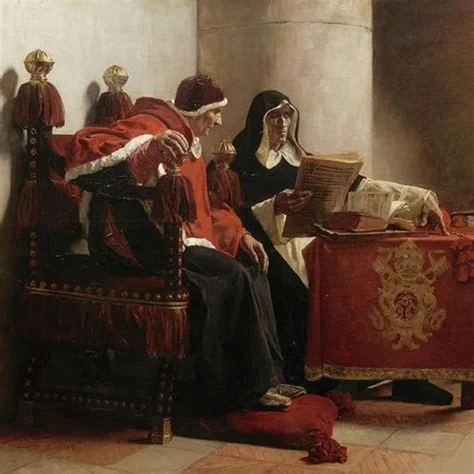
The old man tells him that people never wanted the freedom he brought, that they want bread and mystery and someone to obey, and that the church has given them that instead.
The old cardinal to Christ, in the poem Ivan tells Alyosha in the tavern.
“Nothing is more seductive for man than his freedom of conscience, but nothing is a greater cause of suffering.”
Book V, ch. 5 — The Grand Inquisitor
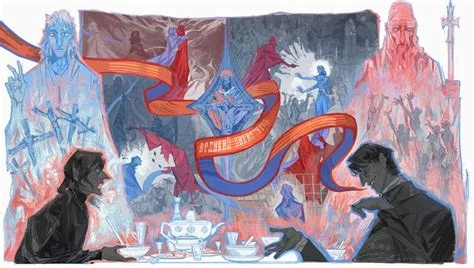
Christ says nothing and kisses the old man on his bloodless lips. The old man opens the door and tells him to go and never come again.
Ivan to Alyosha at the end of the poem, and what Alyosha does instead of answering.
“The formula, 'all is lawful,' I won't renounce—will you renounce me for that, yes? […] Alyosha got up, went to him and softly kissed him on the lips.”
Book V, ch. 5 — The Grand Inquisitor
The brothers part in the street, and Ivan leaves the town the next day.
Part II
Book VI — The Russian Monk, ch. 1–3
[…] we are each responsible to all for all […]
At the monastery Zossima is dying. On his last day he sees the women who come to him with their griefs, and tells Alyosha to leave and live in the world.
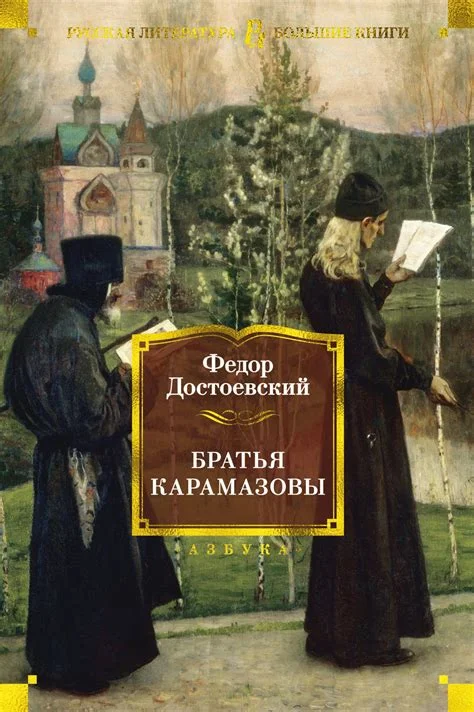
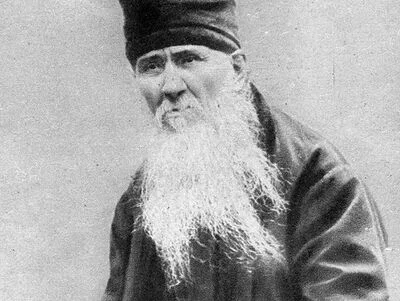
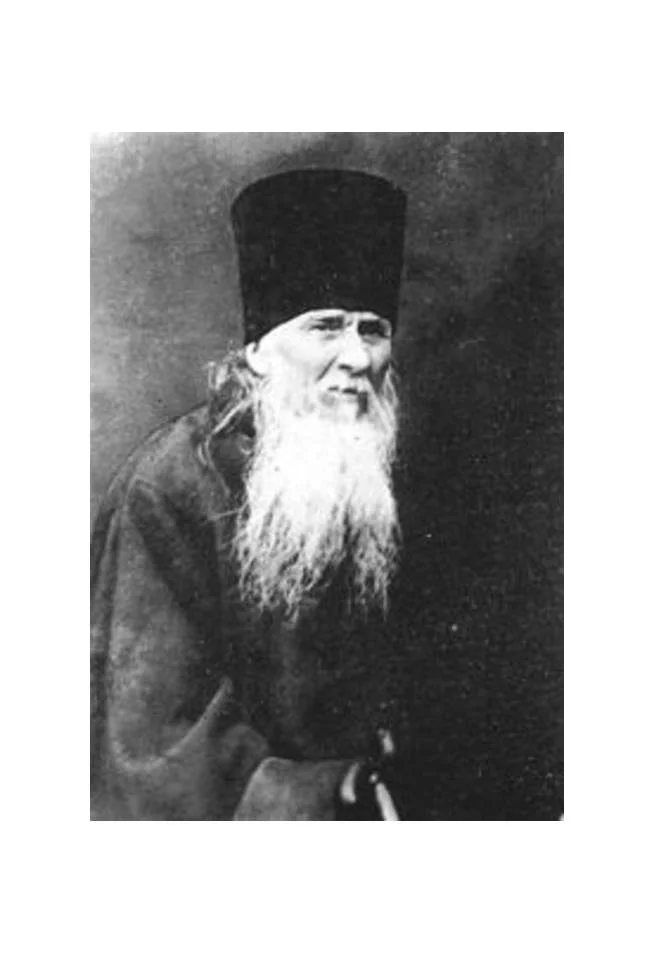
The elder of the monastery, dying through the first part of the book. He answers questions nobody asked and bows to the man who will suffer most.
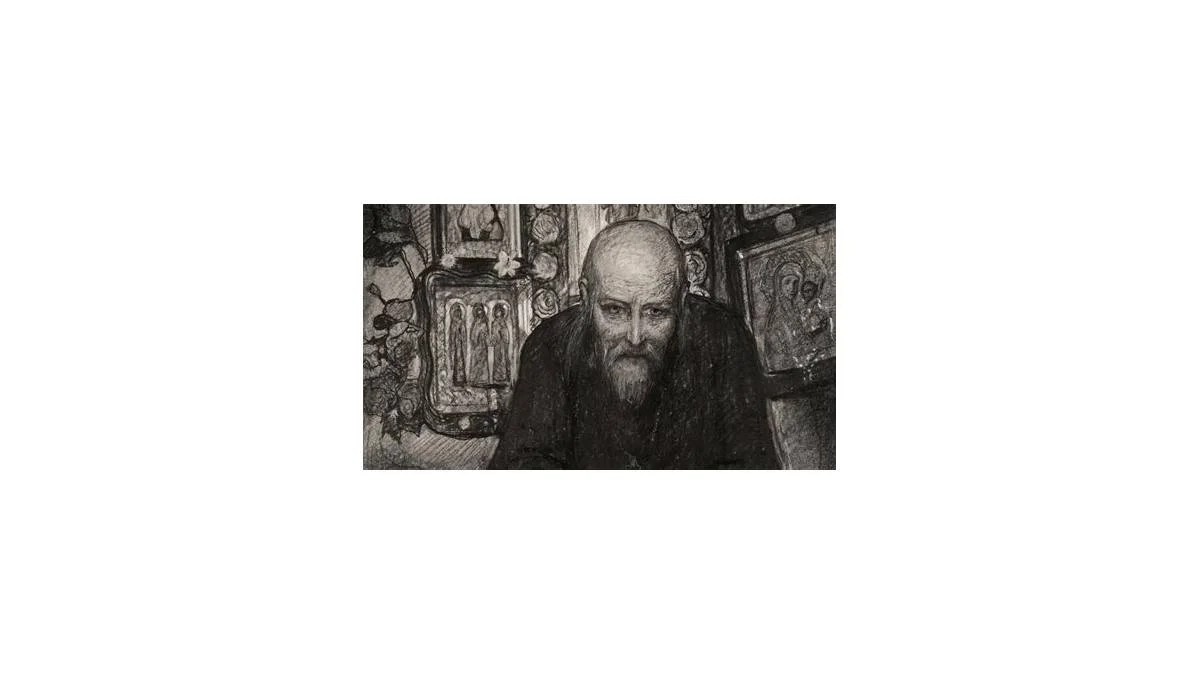
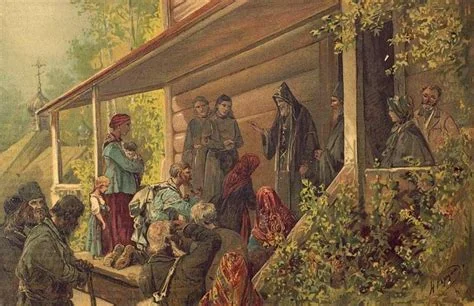
Instead of a sermon he tells the monks his own life, and Alyosha writes it down afterwards from memory.
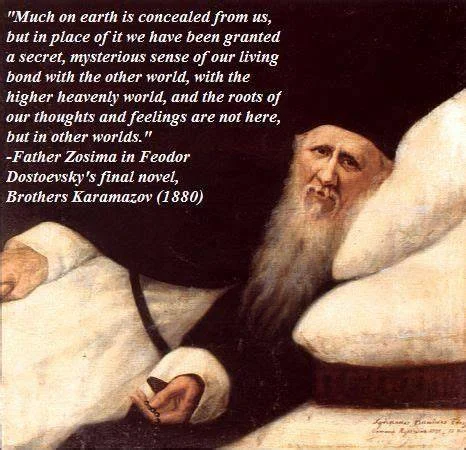
Key scene
He had an elder brother, Markel, who laughed at God and then fell ill at seventeen. Dying, the boy turned joyful: he begged the servants and even the birds to forgive him, and said that every one of us is guilty before all, and he most of all. Everything the elder has taught since follows from that one sentence, said by a boy who had believed nothing a month before.
The key passage
The elder, telling the monks what came back to him on the morning of his duel.
“He had said, "Mother, my little heart, in truth we are each responsible to all for all, it's only that men don't know this. If they knew it, the world would be a paradise at once."”
Book VI, ch. 2 — The Duel
Markel, dying at seventeen, to his mother, in the elder's account of his brother.
“every one is really responsible to all men for all men and for everything. I don't know how to explain it to you, but I feel it is so, painfully even. And how is it we went on then living, getting angry and not knowing? […] If I have sinned against every one, yet all forgive me, too, and that's heaven. Am I not in heaven now?”
Book VI, ch. 1 — Father Zossima and His Visitors
As a young officer he challenged a man to a duel, and the night before it he beat his own servant in a temper.
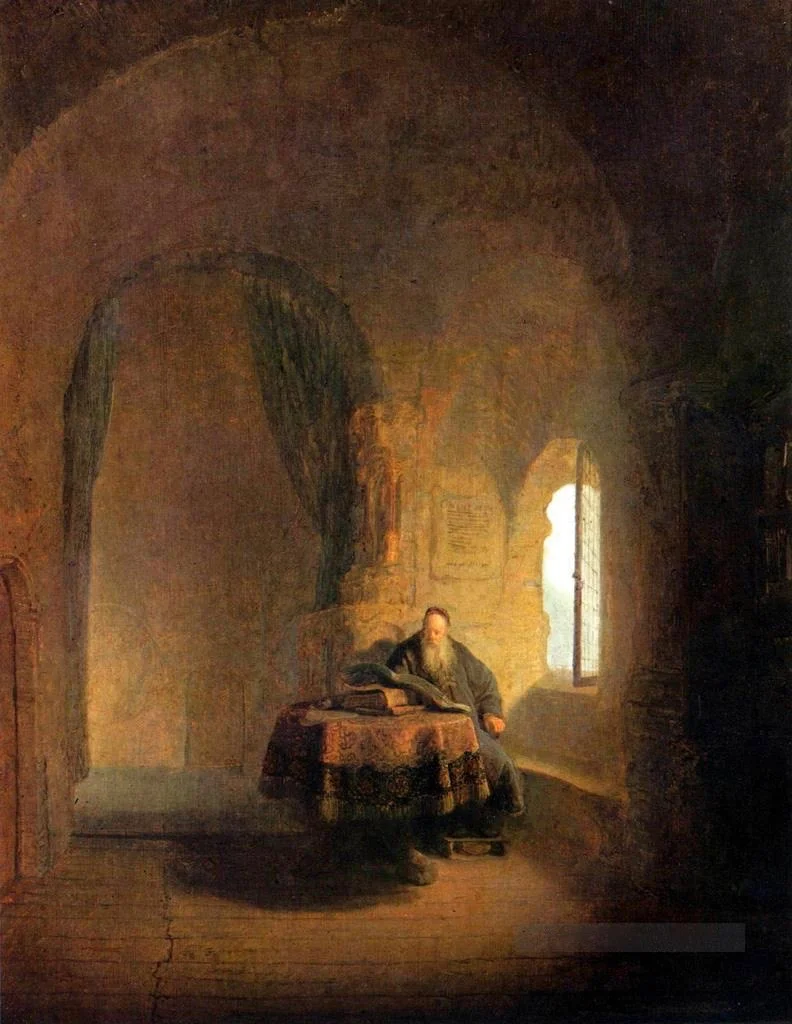
In the morning he was ashamed of the blow. He let his opponent fire first, then asked his pardon, and left the army for the monastery.
After the duel a respected townsman starts visiting him, and at last confesses a secret: years ago he murdered a woman who refused him, and an innocent servant took the blame.
The verse Zossima showed the visitor when he begged to be told what to do.
“Verily, verily, I say unto you, except a corn of wheat fall into the ground and die, it abideth alone: but if it die, it bringeth forth much fruit.”
— John 12:24
Book VI, ch. 2 — The Duel
Zossima urges him to confess. At his birthday dinner he reads his crime to the whole town. Nobody believes him; they decide he is mad. He falls ill and dies days later.
What he teaches the monks comes from his brother: love people even in their sin, take the blame for everything on yourself, and never be afraid of anyone's sin.
The elder to the monks, on why his brother's words hold.
“My brother asked the birds to forgive him; that sounds senseless, but it is right; for all is like an ocean, all is flowing and blending; a touch in one place sets up movement at the other end of the earth.”
Book VI, ch. 3 — Conversations and Exhortations of Father Zossima
Part III
Book VII — Alyosha, ch. 1–4
Faith does not, in the realist, spring from the miracle but the miracle from faith.
Zossima dies that evening, and before the day is out his body begins to smell. The town had come for a miracle and takes the smell for a judgment from heaven.
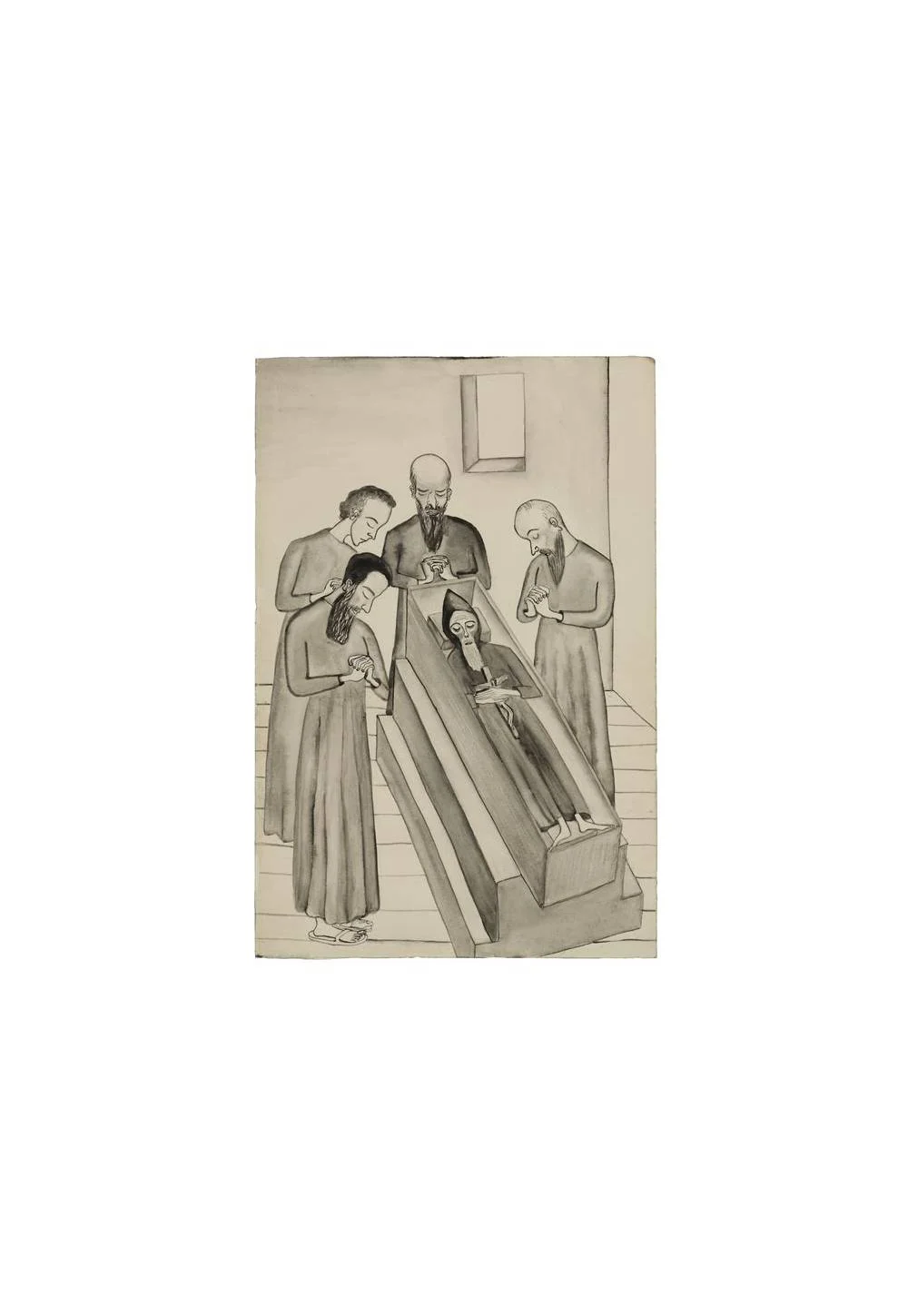
Monks who had queued to touch him the day before now mock him aloud, and something breaks in Alyosha.
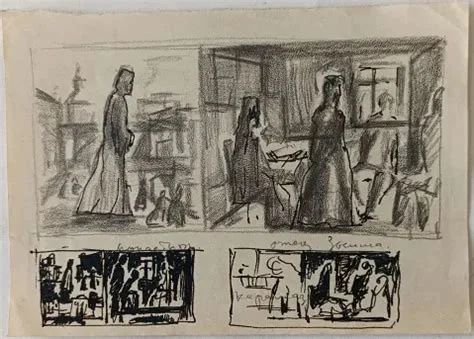
He does not rebel against God, he says, but he will not accept this. He walks out of the monastery.
The narrator, on what Alyosha had really been waiting for.
“But again it was not miracles he needed but only "the higher justice" which had been in his belief outraged by the blow that had so suddenly and cruelly wounded his heart.”
Book VII, ch. 2 — A Critical Moment
A divinity student called Rakitin, who has always disliked him, takes him to Grushenka, expecting to watch him fall.
Grushenka sits on his knee to make a joke of him. When she hears that the elder is dead she gets off it at once.
Alyosha to Rakitin, in Grushenka's room, after she has got off his knee.
“I came here to find a wicked soul […] I've found a true sister, I have found a treasure—a loving heart. […] You've raised my soul from the depths.”
Book VII, ch. 3 — An Onion
She tells him instead about a wicked woman who was nearly pulled out of hell by one onion she had once given away. Each came to harm the other; neither does.
Key scene
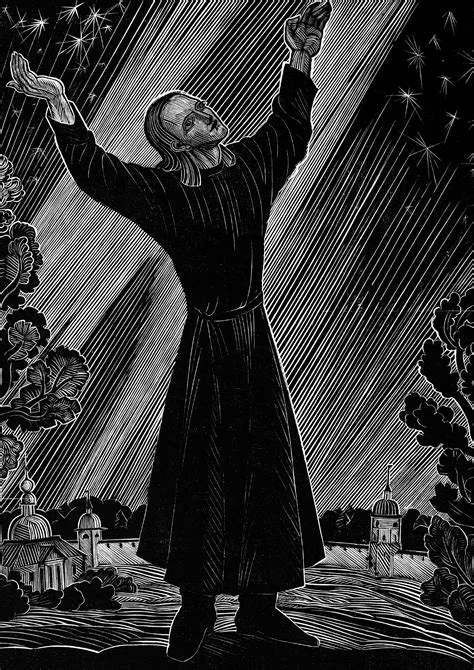
He goes back to the coffin. The Gospel of the wedding at Cana is being read over it; he falls asleep on his knees and dreams that the elder is there among the guests, alive and glad, and telling him to go on. He wakes, goes out into the night, throws himself down and kisses the earth, and gets up a different man. Nothing has been proved to him, and the smell is still there.
The key passage
Dostoevsky, at the start of the book, on Alyosha's faith.
“Oh! no doubt, in the monastery he fully believed in miracles, but, to my thinking, miracles are never a stumbling-block to the realist. It is not miracles that dispose realists to belief. The genuine realist, if he is an unbeliever, will always find strength and ability to disbelieve in the miraculous, and if he is confronted with a miracle as an irrefutable fact he would rather disbelieve his own senses than admit the fact. Even if he admits it, he admits it as a fact of nature till then unrecognized by him. Faith does not, in the realist, spring from the miracle but the miracle from faith. If the realist once believes, then he is bound by his very realism to admit the miraculous also. The Apostle Thomas said that he would not believe till he saw, but when he did see he said, "My Lord and my God!" Was it the miracle forced him to believe? Most likely not, but he believed solely because he desired to believe and possibly he fully believed in his secret heart even when he said, "I do not believe till I see."”
Book I, ch. 5 — Elders
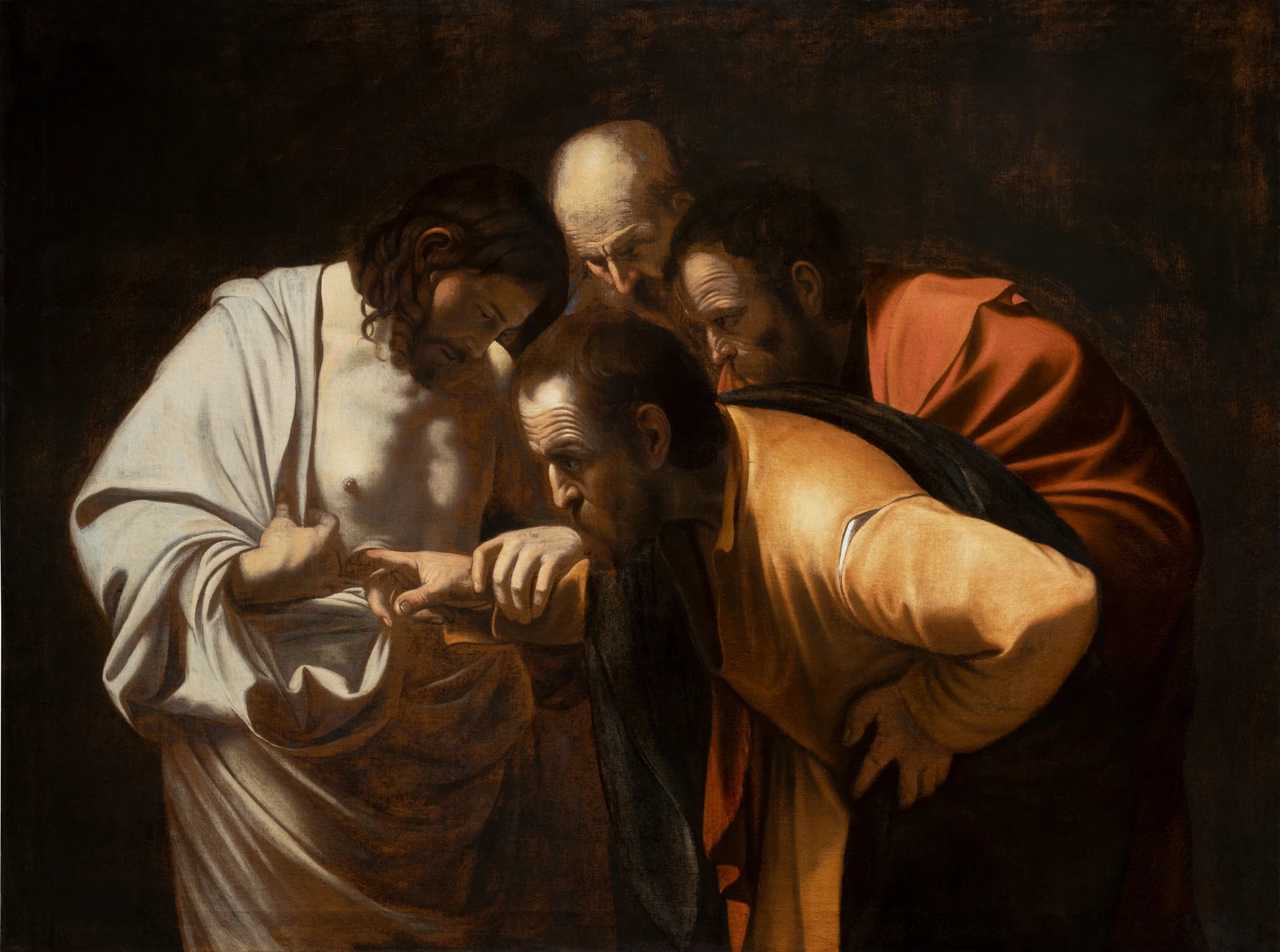
The narrator, on Alyosha in the night after the dream of Cana.
“He had fallen on the earth a weak boy, but he rose up a resolute champion, and he knew and felt it suddenly at the very moment of his ecstasy.”
Book VII, ch. 4 — Cana of Galilee
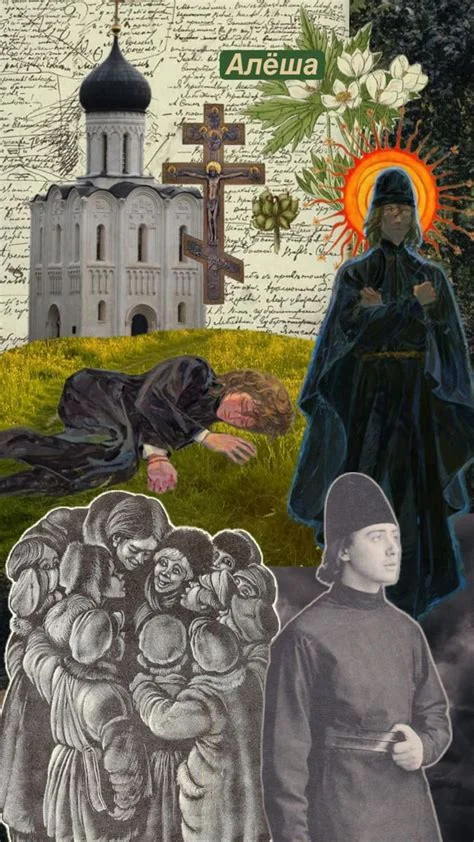
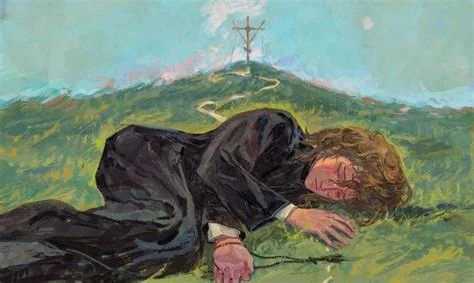
Three days later he leaves the monastery for good, as the elder had told him to.
Part III
Book VIII — Mitya, ch. 4–8
[…] 'God was watching over me then' […]
Dmitri needs three thousand roubles. Until he can hand Katerina Ivanovna back her money he will not let himself go to Grushenka at all.
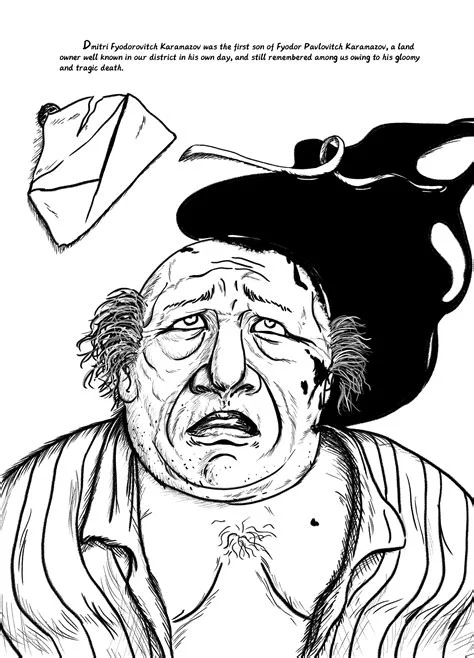
He spends a day and a night trying to borrow it, and gets nothing but an offer of gold mines from a rich widow.
That evening Grushenka is not at home. He is certain she has gone to his father, who is waiting for her with three thousand roubles in an envelope.
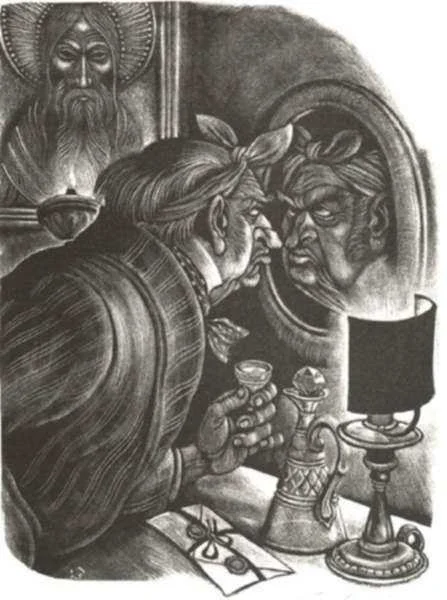
Going out through the kitchen he takes a brass pestle from the table, and runs to his father's garden.
Key scene
He taps the signal on the window that means she has come. His father opens it and leans out into the dark, looking for her, and the hatred rises in Dmitri until he pulls the pestle out of his pocket. Then he runs away. He never afterwards explains that moment, and says only that God was watching over him then.
The key passage
Dostoevsky at the window in the dark, and the only thing Dmitri ever said about that moment.
“A horrible fury of hatred suddenly surged up in Mitya's heart: "There he was, his rival, the man who had tormented him, had ruined his life!" […] This personal repulsion was growing unendurable. Mitya was beside himself, he suddenly pulled the brass pestle out of his pocket. "God was watching over me then," Mitya himself said afterwards.”
Book VIII, ch. 4 — In the Dark
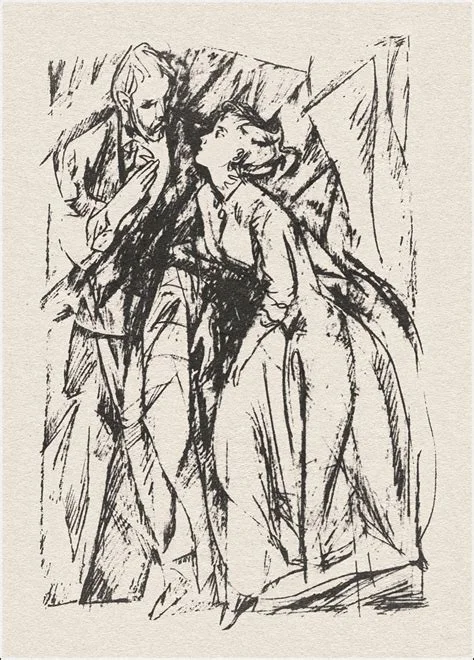
The old servant Grigory catches him on the fence and shouts "parricide", and Dmitri strikes him down with the pestle and climbs over.
An hour later he has a thick bundle of notes that nobody can account for. He pays his debts and drives out to Mokroye, the village Grushenka has gone to.
Dmitri praying in the cart, on the road to Mokroye.
“Lord, receive me, with all my lawlessness, and do not condemn me. Let me pass by Thy judgment ... do not condemn me, for I have condemned myself, do not condemn me, for I love Thee, O Lord. I am a wretch, but I love Thee. If Thou sendest me to hell, I shall love Thee there, and from there I shall cry out that I love Thee for ever and ever.... But let me love to the end.”
Book VIII, ch. 6 — "I Am Coming, Too!"
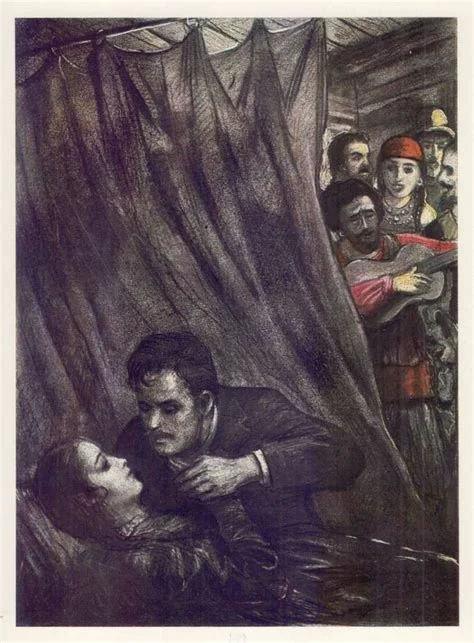
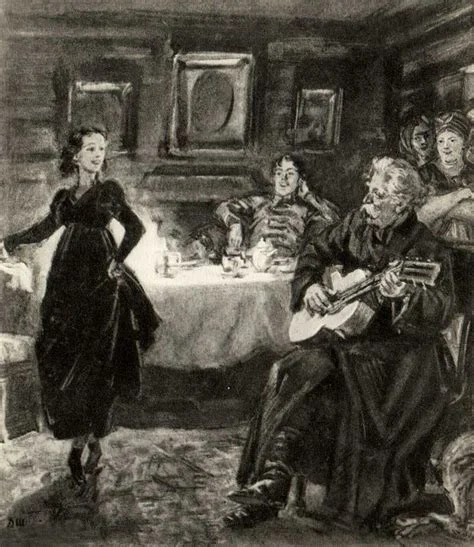
He arrives with wine and a band, meaning to see her once and shoot himself at dawn. Instead she tells him that she loves him, and always has.
Part III
Book IX — The Preliminary Investigation, ch. 3–9
[…] Why is the babe poor? […]
The police arrive at Mokroye before morning. His father has been found with his skull broken, and the envelope lying torn open and empty on the floor.
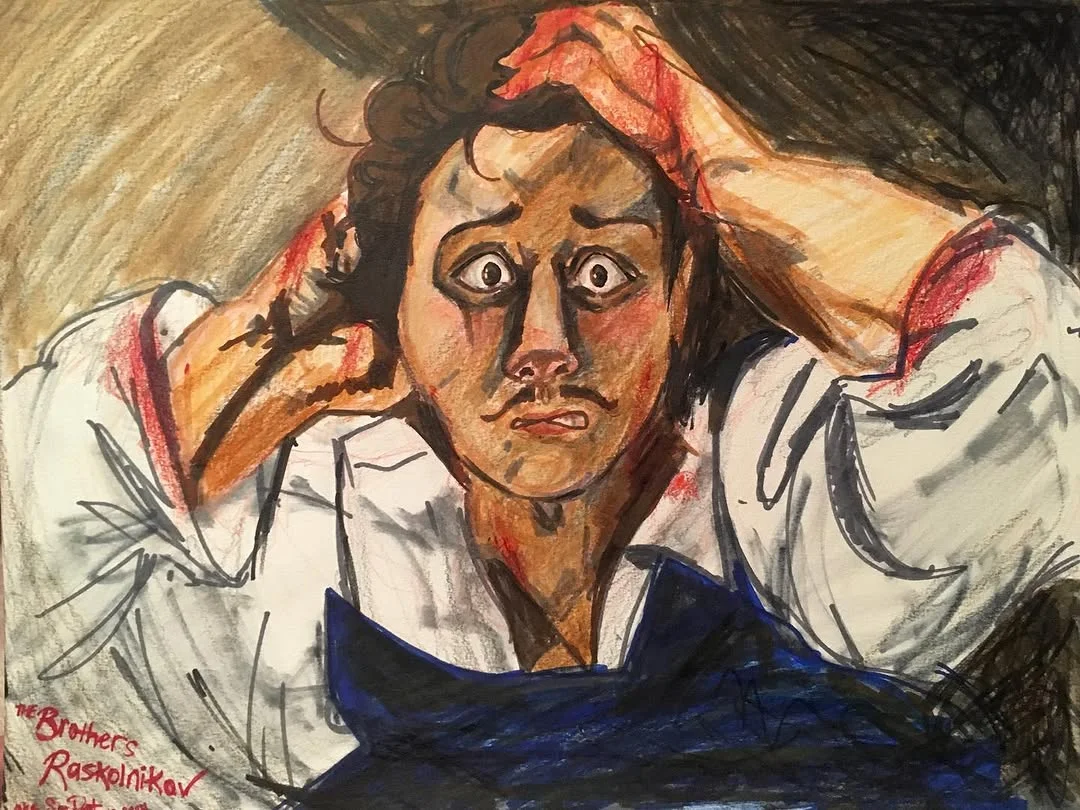
Dmitri says over and over that he is not guilty of his father's blood: he had meant to kill him, but he did not.
Dmitri at Mokroye, when they tell him what he is charged with.
“I'm not guilty of my father's blood.... I meant to kill him. But I'm not guilty. Not I.”
Book IX, ch. 3 — The Sufferings of a Soul, the First Ordeal
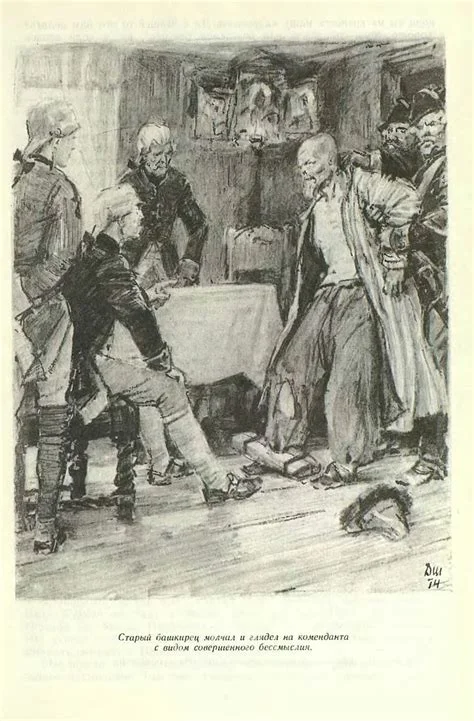
Everything is against him: the pestle, the blood, the threats he had shouted in front of witnesses, and the money he suddenly had.
Dmitri to the examining lawyers, telling them at last what happened at the window.
“Whether it was some one's tears, or my mother prayed to God, or a good angel kissed me at that instant, I don't know. But the devil was conquered.”
Book IX, ch. 5 — The Third Ordeal
What shames him most he admits last: half the money he is accused of spending had hung round his neck in a rag all the time. The room laughs at him.
Key scene
Between questions he falls asleep on a chest and dreams of a burnt village, starving women and a crying baby. He wakes with tears on his face, wanting to do something at once so that the babe shall weep no more, and finds that someone has put a pillow under his head. He is guilty of the wish and not the deed, and this is the night he starts to accept the punishment.
The key passage
Dmitri asleep on a chest between questions, in the dream of the burnt village.
“Tell me why it is those poor mothers stand there? Why are people poor? Why is the babe poor? Why is the steppe barren? Why don't they hug each other and kiss? Why don't they sing songs of joy? Why are they so dark from black misery? Why don't they feed the babe? […] And he felt that a passion of pity, such as he had never known before, was rising in his heart, that he wanted to cry, that he wanted to do something for them all, so that the babe should weep no more, so that the dark-faced, dried-up mother should not weep, that no one should shed tears again from that moment, and he wanted to do it at once, at once, regardless of all obstacles, with all the recklessness of the Karamazovs.”
Book IX, ch. 8 — The Evidence of the Witnesses. The Babe
At dawn they carry him away. Grushenka tells them that she is guilty of everything and he of nothing, and that she is coming with him.
Dmitri to the whole room, as they take him away at dawn.
“Gentlemen, we're all cruel, we're all monsters, we all make men weep, and mothers, and babes at the breast, but of all, let it be settled here, now, of all I am the lowest reptile!”
Book IX, ch. 9 — They Carry Mitya Away
Part IV
Book X — The Boys, ch. 1, 3–7
Father, don't cry, and when I die get a good boy […]
While Dmitri waits in prison for his trial, Ilyusha is dying in the captain's one room.
The captain's son, nine years old, who bit Alyosha's finger for the sake of his father's beard and is dying before the trial begins.
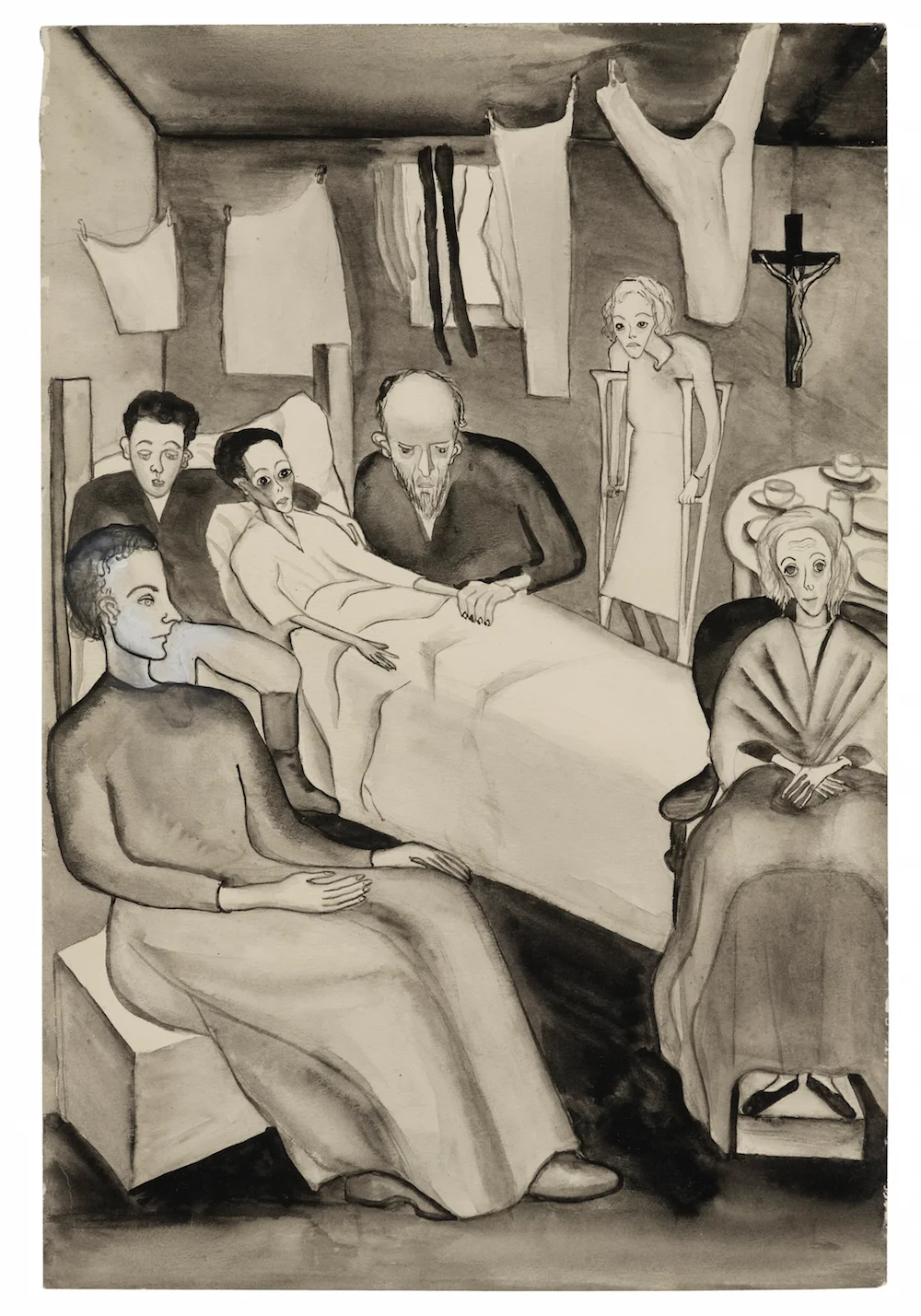
Alyosha has made peace between him and the schoolboys, and they come to his bed every day.
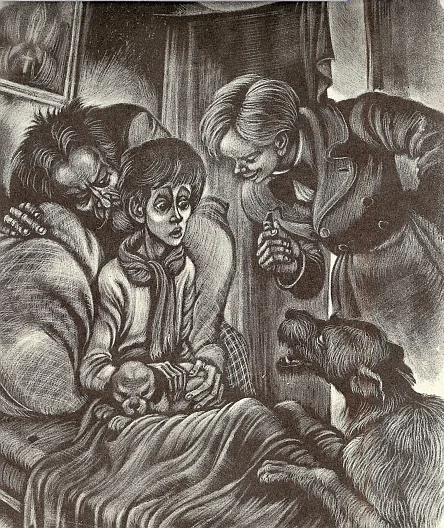
The one who stays away is their leader, Kolya Krassotkin, thirteen years old, afraid of nothing and most afraid of being thought soft.
The schoolboy leader — a socialist at thirteen, terrified of being thought sentimental, and the only one who can still make Ilyusha laugh.
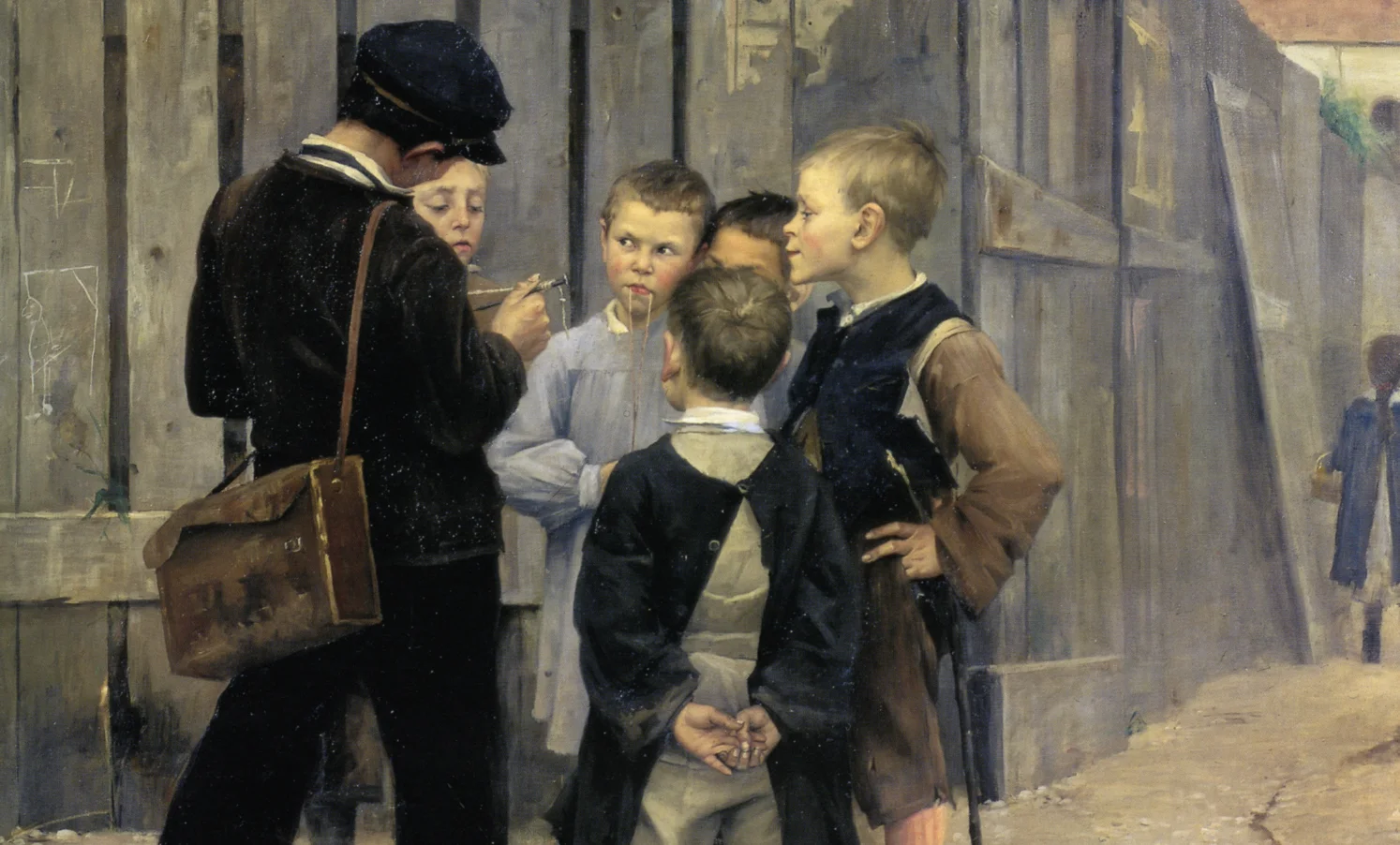
Alyosha to Kolya, asked what sort of man Ilyusha's father is.
“Oh, no; there are people of deep feeling who have been somehow crushed. Buffoonery in them is a form of resentful irony against those to whom they daren't speak the truth, from having been for years humiliated and intimidated by them. Believe me, Krassotkin, that sort of buffoonery is sometimes tragic in the extreme.”
Book X, ch. 4 — The Lost Dog
Ilyusha believes he has killed a dog. A grown man had taught him to throw it bread with a pin hidden inside, and the dog ran off howling and never came back.
Kolya comes at last, and brings the dog back alive, fed and taught to do tricks. Ilyusha is happy for an afternoon.
Key scene
Then Ilyusha tells his father what he heard the doctor say, and asks him to take another boy when he is gone and call him Ilyusha. The father, who has nothing else in the world, cries out that he wants no other boy. This is the suffering of a child that Ivan built his case on, and here it is met not with an argument but with a request.
The key passage
Ilyusha to his father, from his bed, telling him what to do after his death.
“Father, don't cry, and when I die get a good boy, another one ... choose one of them all, a good one, call him Ilusha and love him instead of me.... […] But don't ever forget me, father […] come to my grave ... and, father, bury me by our big stone, where we used to go for our walk, and come to me there with Krassotkin in the evening ... and Perezvon ... I shall expect you....”
Book X, ch. 7 — Ilusha
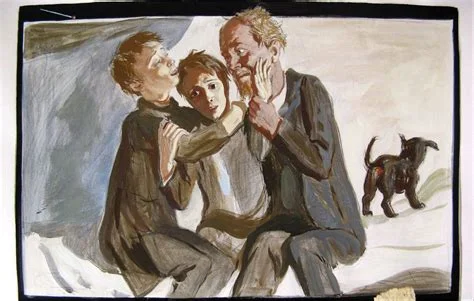
Kolya gets out into the passage before he cries. The captain runs after him, throws up his arms, and will not be comforted.
The captain in the passage, answering his son's request that he take another boy afterwards.
“I don't want a good boy! I don't want another boy! […] If I forget thee, Jerusalem, may my tongue—”
Book X, ch. 7 — Ilusha
Alyosha to Kolya, earlier that day, about the life in front of him.
“You know, Kolya, you will be very unhappy in your life […] But you will bless life on the whole, all the same.”
Book X, ch. 6 — Precocity
Part IV
Book XI — Ivan, ch. 6–8
[…] you are the real murderer, I was only your instrument […]
Ivan has come back. He cannot keep away from his father's cook, Smerdyakov, an insolent, epileptic man born to a beggar woman in the Karamazov garden and raised as a servant.
Fyodor Pavlovitch's cook and valet, and probably his son: born in the garden to a beggar woman of the town. He is epileptic, fastidious, and listens to Ivan more carefully than anyone else does.
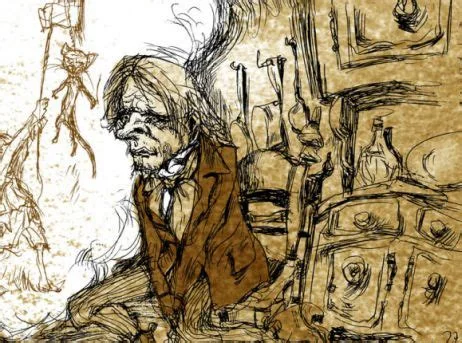
On the night of the murder Smerdyakov lay in the cellar with one of his fits. He had told Ivan beforehand to go away, and Ivan went.
Twice Ivan goes to him, and twice comes away certain that the man is hinting at something about him and will not say it.
Ivan to Katerina Ivanovna, straight after the second visit.
“If it's not Dmitri, but Smerdyakov who's the murderer, I share his guilt, for I put him up to it. Whether I did, I don't know yet. But if he is the murderer, and not Dmitri, then, of course, I am the murderer, too.”
Book XI, ch. 7 — The Second Visit to Smerdyakov
Key scene
On the third visit Smerdyakov pulls three thousand roubles out from under his stocking and lays them on the table. He killed the old man; the fit was a sham. And he did it, he says, because Ivan had taught him that everything is lawful, and then went away on purpose so that it could be done.
The key passage
Smerdyakov to Ivan, on the third visit, when he stops hinting.
“You murdered him; you are the real murderer, I was only your instrument, your faithful servant, and it was following your words I did it.”
Book XI, ch. 8 — The Third and Last Interview with Smerdyakov
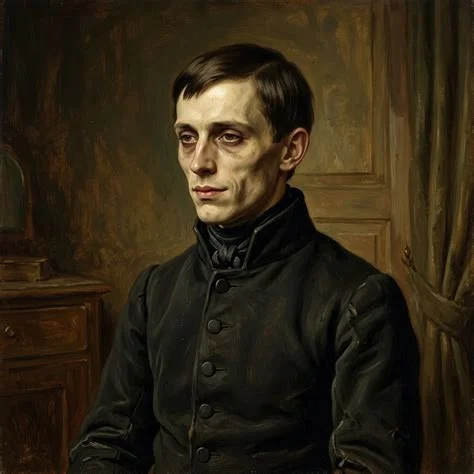
Smerdyakov to Ivan, on where he got his permission.
“I did dream of it, chiefly because 'all things are lawful.' That was quite right what you taught me, for you talked a lot to me about that. For if there's no everlasting God, there's no such thing as virtue, and there's no need of it.”
Book XI, ch. 8 — The Third and Last Interview with Smerdyakov
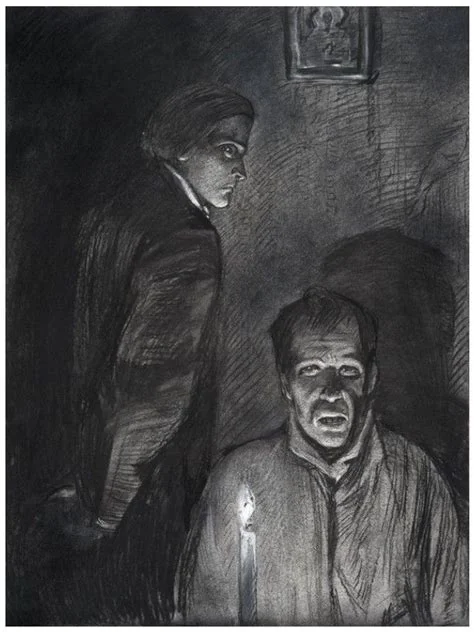
Ivan says he will tell the court everything tomorrow. Smerdyakov answers that nobody will believe a word of it.
Going home through the snow Ivan picks up a drunken peasant he had knocked down and left lying there earlier that evening, and carries him to the police.
Ivan to himself in the snow, after carrying the frozen peasant to the police.
“If I had not taken my decision so firmly for to-morrow […] I should not have stayed a whole hour to look after the peasant, but should have passed by, without caring about his being frozen.”
Book XI, ch. 8 — The Third and Last Interview with Smerdyakov
Part IV
Book XI — Ivan, ch. 9–10
Conscience! What is conscience? I make it up for myself […]
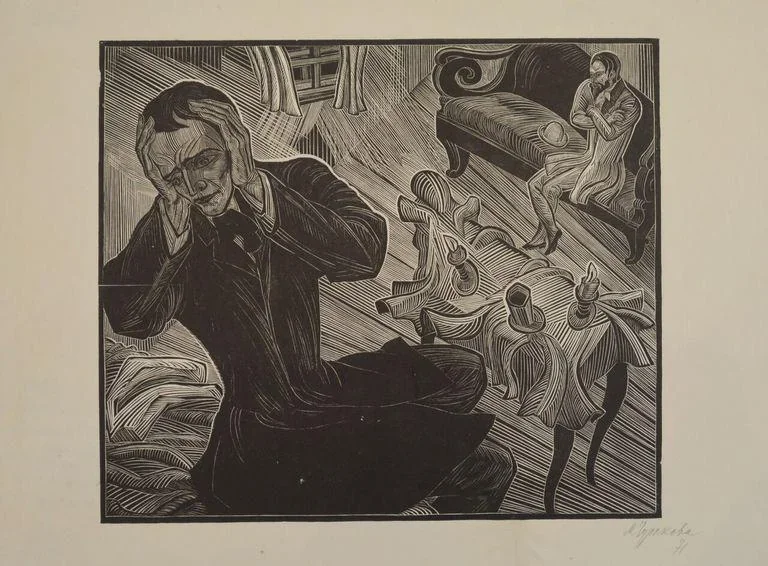
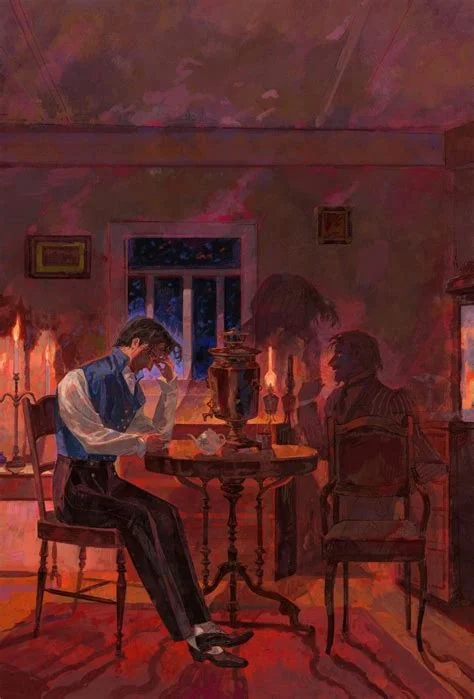
That night Ivan is in a fever. A shabby gentleman is sitting on his sofa as though he had always been there.
Key scene
The visitor is the devil, and he is a disappointment. He complains about his rheumatism, talks about the newspapers, and says nothing Ivan has not thought himself. That is the whole horror of him: if he is real, then Ivan is not mad; if he is only a fancy, then everything Ivan has believed is his own voice talking back at him. Ivan throws a glass at him.
The key passage
Ivan to Alyosha the same night, repeating what the visitor had said to him.
“'Conscience! What is conscience? I make it up for myself. Why am I tormented by it? From habit. From the universal habit of mankind for the seven thousand years. So let us give it up, and we shall be gods.'”
Book XI, ch. 10 — "It Was He Who Said That"
Ivan to the visitor on his sofa, refusing to let him be real.
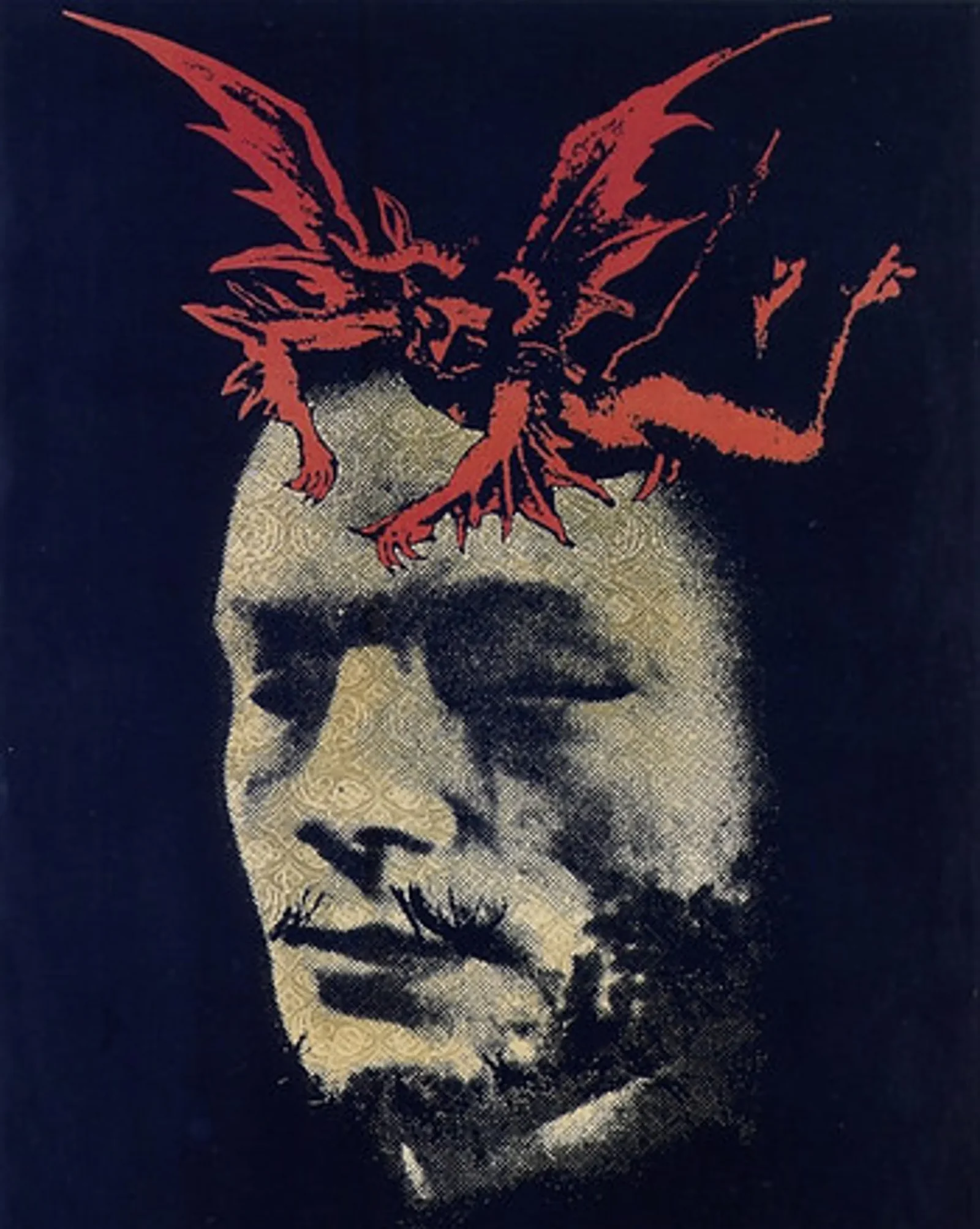
“You are my hallucination. You are the incarnation of myself, but only of one side of me ... of my thoughts and feelings, but only the nastiest and stupidest of them.”
Book XI, ch. 9 — The Devil. Ivan's Nightmare
The visitor to Ivan, explaining the part he says he was made to play.
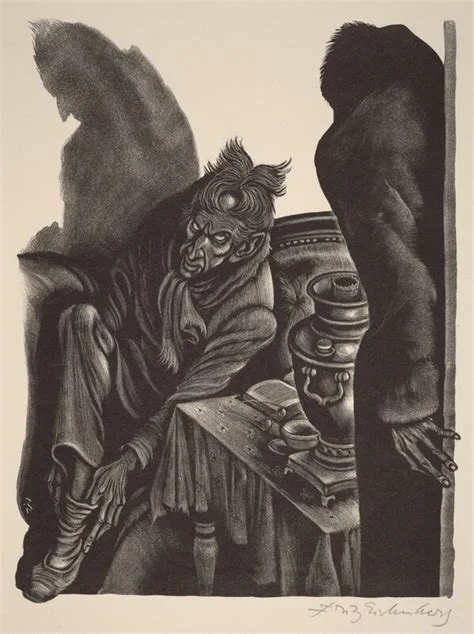
“But nothing but hosannah is not enough for life, the hosannah must be tried in the crucible of doubt and so on, in the same style.”
Book XI, ch. 9 — The Devil. Ivan's Nightmare
Alyosha knocks at the window with the news: Smerdyakov has hanged himself.
The only witness is dead, and Ivan has nothing to take to the court but his word.
The narrator, on Alyosha watching his brother sleep.
“God, in Whom he disbelieved, and His truth were gaining mastery over his heart, which still refused to submit.”
Book XI, ch. 10 — "It Was He Who Said That"
Part IV
Book XII — A Judicial Error, ch. 1–5
Book XII, ch. 9–14
I was erring, but I loved what is good.
The trial fills the town. Ladies come from the capital, and a famous lawyer is brought from Petersburg to defend Dmitri.
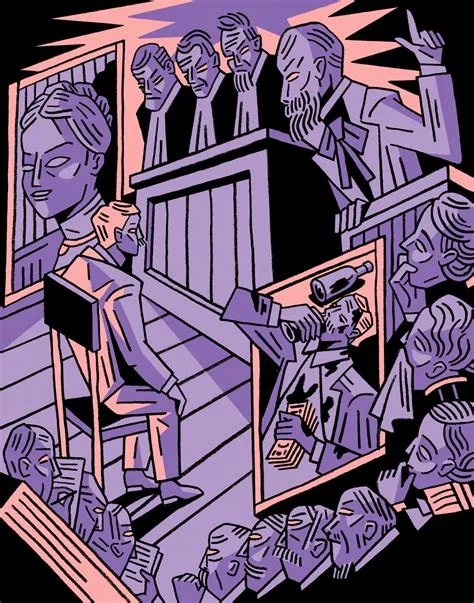
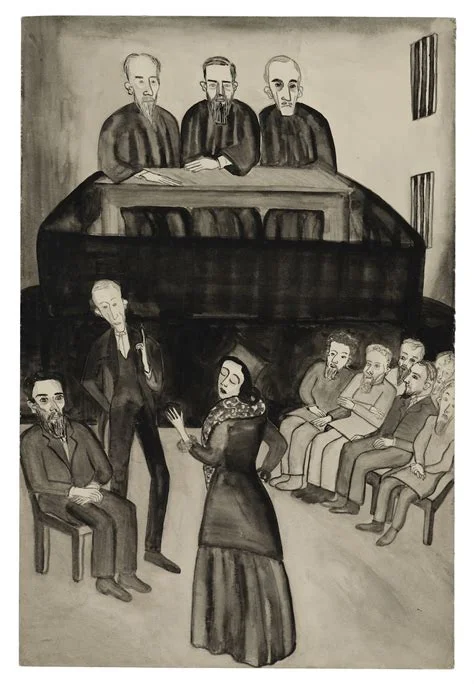
The witnesses go badly for the prosecution, and the town begins to think he will be let off.
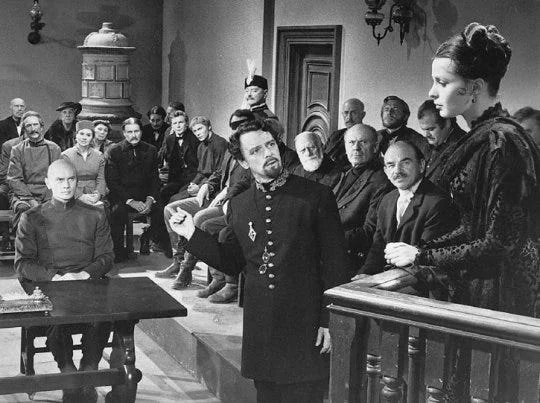
Grushenka in the witness box, asked whether she had believed him guilty.
“Every one was crying out that he had killed his father, and I felt that it was my fault, that it was on my account he had murdered him.”
Book XII, ch. 4 — Fortune Smiles on Mitya
Then Ivan comes in, lays the three thousand roubles before the court, says Smerdyakov was the murderer and that he himself put him up to it, and is judged ill.
Ivan to the court, handing up the money, before they carry him out.
“It was he, not my brother, killed our father. He murdered him and I incited him to do it ... Who doesn't desire his father's death?”
Book XII, ch. 5 — A Sudden Catastrophe
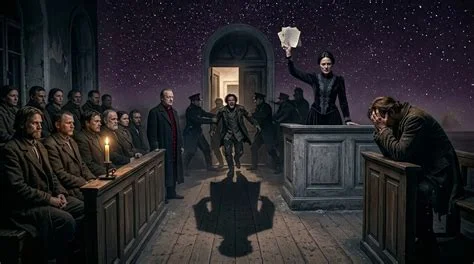
To save Ivan from himself, Katerina Ivanovna hands up a letter Dmitri had written her when drunk, in which he sets out the murder in advance.
The famous lawyer argues that such a father was no father, and that there may have been no murder at all.
The prosecutor in his reply, on the Gospel the defense had just quoted.
“But what Christ commands us is something very different: He bids us beware of doing this, because the wicked world does this, but we ought to forgive and to turn the other cheek, and not to measure to our persecutors as they measure to us.”
Book XII, ch. 14 — The Peasants Stand Firm
Key scene
Then Dmitri is given the last word. He does not shout. He tells the jury that he is innocent of his father's blood, and that he was an erring man who nevertheless loved what is good and tried, every hour, to become better.
The key passage
Dmitri's last word to the jury, before they retire to consider.
“What am I to say, gentlemen of the jury? The hour of judgment has come for me, I feel the hand of God upon me! The end has come to an erring man! But, before God, I repeat to you, I am innocent of my father's blood! For the last time I repeat, it wasn't I killed him! I was erring, but I loved what is good. Every instant I strove to reform, but I lived like a wild beast.”
Book XII, ch. 14 — The Peasants Stand Firm
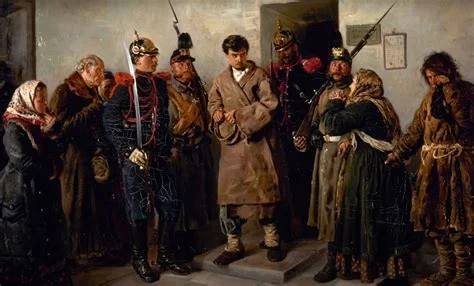
The jury goes out, and is back within the hour. Guilty on every count, with no recommendation to mercy.
Epilogue
Epilogue, ch. 1–2
[…] such a cross is not for you […]
Dmitri is sentenced to twenty years in the mines of Siberia. Ivan lies ill with brain fever in Katerina Ivanovna's house.
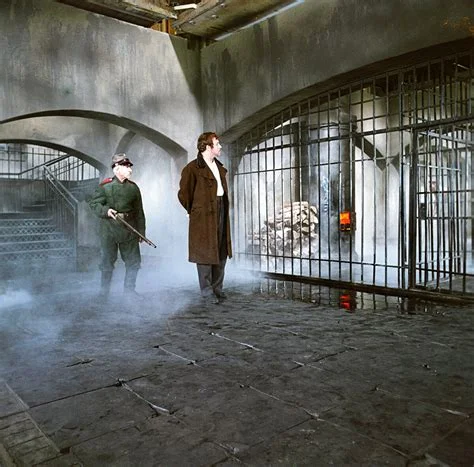
A plan to buy Dmitri's escape to America is half made already, with her money.
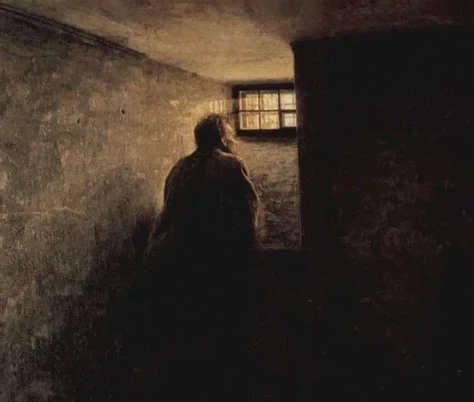
Dmitri has spent the night judging himself and says he is not ready: he could not bear it, and would kill a guard who spoke to him roughly.
Key scene
Alyosha tells him plainly to go. He is innocent, and this cross is not his to carry.
Dmitri to Alyosha in prison before the trial, on why he means to go to Siberia.
“It's for the babe I'm going. Because we are all responsible for all. For all the 'babes,' for there are big children as well as little children. All are 'babes.' I go for all, because some one must go for all. I didn't kill father, but I've got to go. I accept it.”
Book XI, ch. 4 — A Hymn and a Secret
Dmitri to Alyosha in prison before the trial, about the new man he feels risen in himself.
“‘I exist.’ In thousands of agonies—I exist. I’m tormented on the rack—but I exist! Though I sit alone on a pillar—I exist! I see the sun, and if I don’t see the sun, I know it’s there. And there’s a whole life in that, in knowing that the sun is there.”
Book XI, ch. 4 — A Hymn and a Secret
The key passage
Alyosha to Dmitri in the prison hospital, telling him to take the escape.
“Listen: you are not ready, and such a cross is not for you. What's more, you don't need such a martyr's cross when you are not ready for it. If you had murdered our father, it would grieve me that you should reject your punishment. But you are innocent, and such a cross is too much for you.”
Epilogue, ch. 2 — For a Moment the Lie Becomes Truth
Dmitri, answering him.
“But I do condemn myself! […] I shall escape, that was settled apart from you; could Mitya Karamazov do anything but run away? But I shall condemn myself, and I will pray for my sin for ever.”
Epilogue, ch. 2 — For a Moment the Lie Becomes Truth
Then Katerina Ivanovna comes. Both know the love between them is finished, both say the opposite, and for one minute it is true. Then Grushenka comes in and refuses to forgive her.
Katerina Ivanovna to Dmitri, when she comes to the prison at last.
“But now let what might have been come true for one minute […] You love another woman, and I love another man, and yet I shall love you for ever, and you will love me; do you know that? Do you hear? Love me, love me all your life!”
Epilogue, ch. 2 — For a Moment the Lie Becomes Truth
In the street afterwards she tells Alyosha that she asked forgiveness only to punish herself to the end.
Epilogue
Epilogue, ch. 3 — Ilusha's Funeral. The Speech at the Stone
[…] that one memory may keep him from great evil […]
That same day, across the town, Ilyusha is buried. His father wants him laid by the big stone where the two of them used to walk, and is talked out of it.
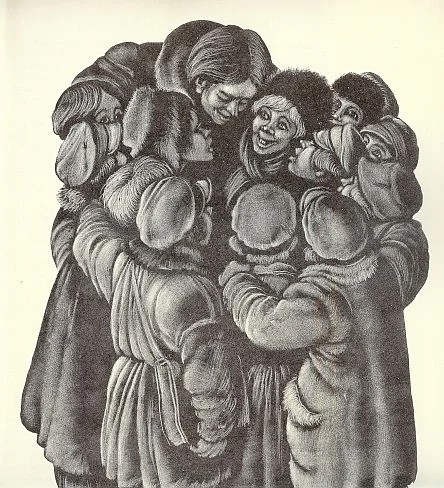
At the grave he crumbles bread for the sparrows, because the boy had asked him to, and then he breaks down.
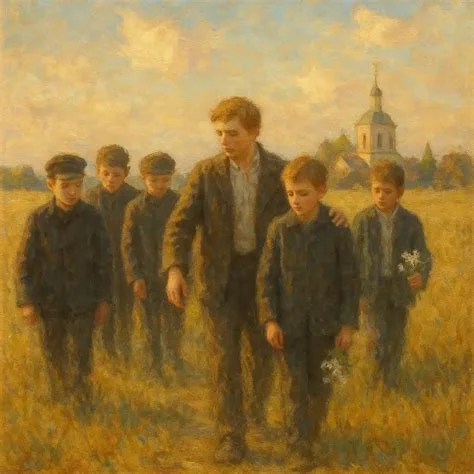
On the way back Alyosha stops the boys at the stone.
Key scene
He tells them that nothing in life is stronger or more wholesome than one good memory kept from childhood, and that a single such memory may be enough to save a man later on. He asks them never to forget Ilyusha, or one another. Then Kolya asks whether the rest is true too, whether they will rise from the dead and see each other again, and Alyosha answers him without hedging. The boys cheer him.
Alyosha stopping the boys at the stone on the way back from the funeral.
“Let us make a compact here, at Ilusha's stone, that we will never forget Ilusha and one another.”
Epilogue, ch. 3 — Ilusha's Funeral. The Speech at the Stone
Kolya to Alyosha at the stone, and the answer.
“can it be true what's taught us in religion, that we shall all rise again from the dead and shall live and see each other again, all, Ilusha too? […] Certainly we shall all rise again, certainly we shall see each other and shall tell each other with joy and gladness all that has happened!”
Epilogue, ch. 3 — Ilusha's Funeral. The Speech at the Stone
The key passage
Alyosha to the boys at Ilyusha's stone, on the way back from the funeral.
“And even if we are occupied with most important things, if we attain to honor or fall into great misfortune—still let us remember how good it was once here, when we were all together, united by a good and kind feeling which made us, for the time we were loving that poor boy, better perhaps than we are. […] You must know that there is nothing higher and stronger and more wholesome and good for life in the future than some good memory, especially a memory of childhood, of home. People talk to you a great deal about your education, but some good, sacred memory, preserved from childhood, is perhaps the best education. If a man carries many such memories with him into life, he is safe to the end of his days, and if one has only one good memory left in one's heart, even that may sometime be the means of saving us. […] What's more, perhaps, that one memory may keep him from great evil and he will reflect and say, 'Yes, I was good and brave and honest then!' […] Well, and who has united us in this kind, good feeling which we shall remember and intend to remember all our lives? Who, if not Ilusha, the good boy, the dear boy, precious to us for ever!”
Epilogue, ch. 3 — Ilusha's Funeral. The Speech at the Stone
“Verily, verily, I say unto you, except a corn of wheat fall into the ground and die, it abideth alone: but if it die, it bringeth forth much fruit.”
— John 12:24
The novel's epigraph