

Visual Learning for Readers: How to Retain More from What You Read
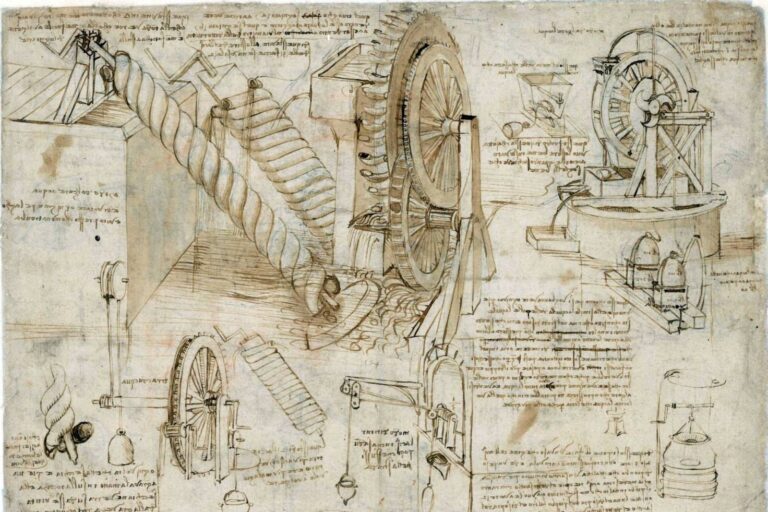
Students scribble in margins while taking notes. Management consultants create elaborate slide decks to explain complex business strategies. Scientists design colorful posters to present their research at conferences. Yet when it comes to reading books, most of us simply… read.
This disconnect reveals a fundamental problem: books are purely text-based, but our brains are wired for visual information. If you’ve ever finished a book only to forget most of it within weeks, you’re experiencing the limitation of text-only learning.
The solution is to transform your reading with visual techniques that work with your brain’s natural strengths:
Words + images = stronger memory.
Extracting Keywords to Deepen Your Understanding of Any Book
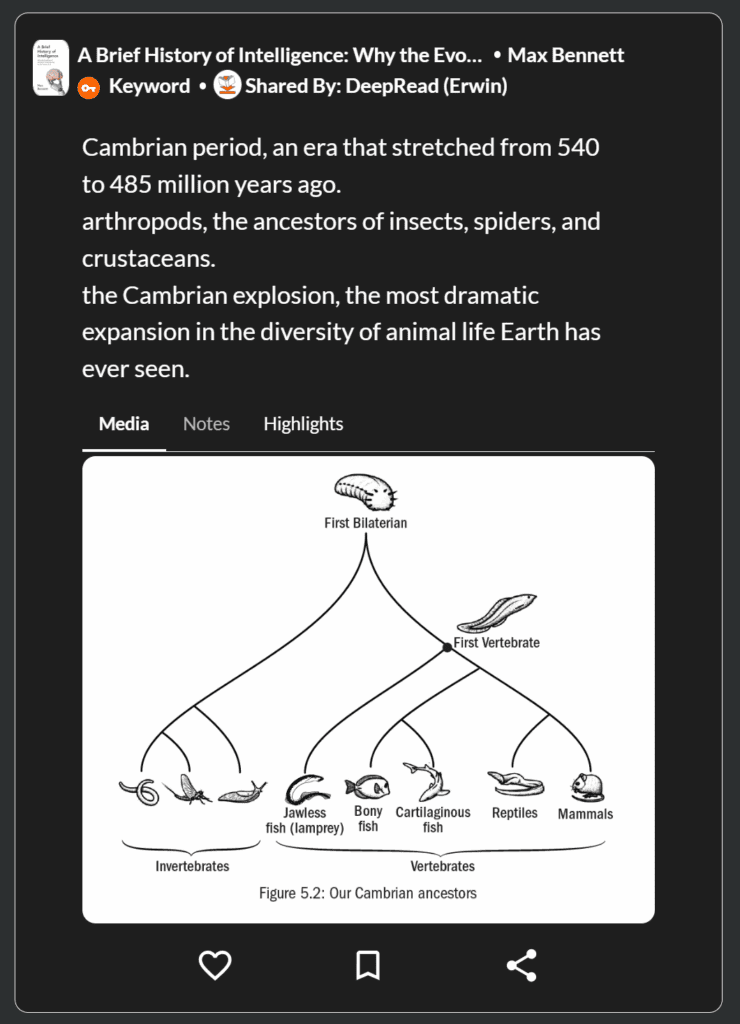
Identify and extract a book’s keywords to transform surface-level reading into deep, lasting comprehension that you can apply anywhere.
Creating a Mind Map from Your Reading: My Process with “A Brief History of Intelligence”
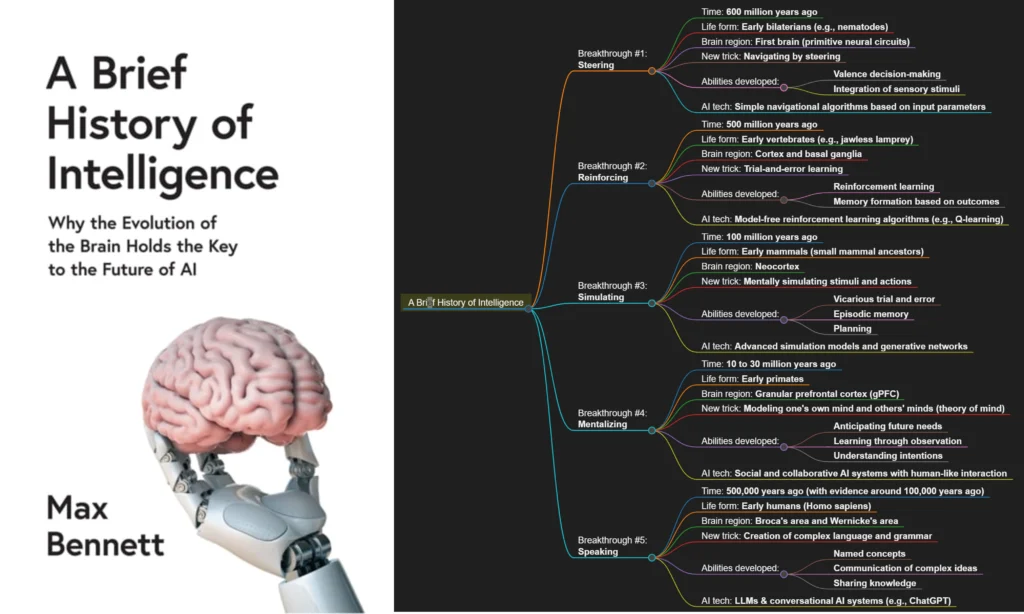
Today, I want to share a practical example of creating externalized knowledge—specifically a mind map—from my recent reading of Max Bennett’s “A Brief History of Intelligence: Why the Evolution of the Brain Holds the Key to the Future of AI.”
How to Remember What You Read
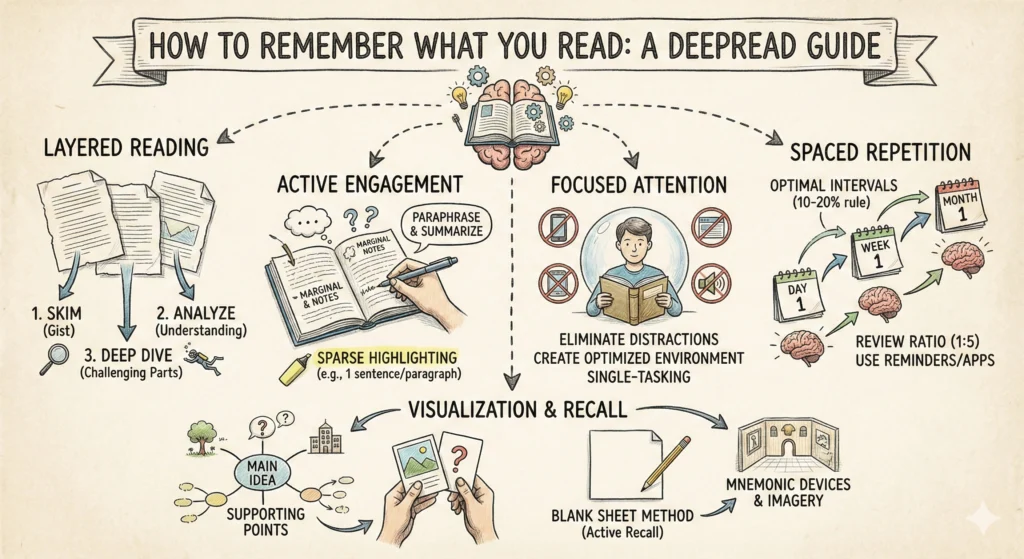
Have you ever finished a book that absolutely blew your mind, only to find yourself struggling to explain its core message just a few weeks later?
In this article, I’ll show you that investing just a small amount of effort after finishing a book will dramatically improve your retention. I’ll introduce a technique for processing and applying what you read that automatically builds your external knowledge structure. This system grows more valuable with every book you read and process.
How to Use AI for Learning: Balancing Effort and Convenience

Artificial intelligence has emerged as a powerful tool for enhancing the learning experience. From personalized tutoring to intelligent content curation, AI technologies are transforming how we acquire and retain knowledge. But as these tools become increasingly sophisticated, learners face an important question: how can we leverage AI to maximize learning outcomes without compromising the cognitive benefits that come from effort and struggle?
The goal isn’t to make learning effortless but to direct cognitive effort toward the activities with the highest learning return – we should use AI as a complement, not a replacement.
The Best Apps for Readers: From Passive Consumption to Active Learning
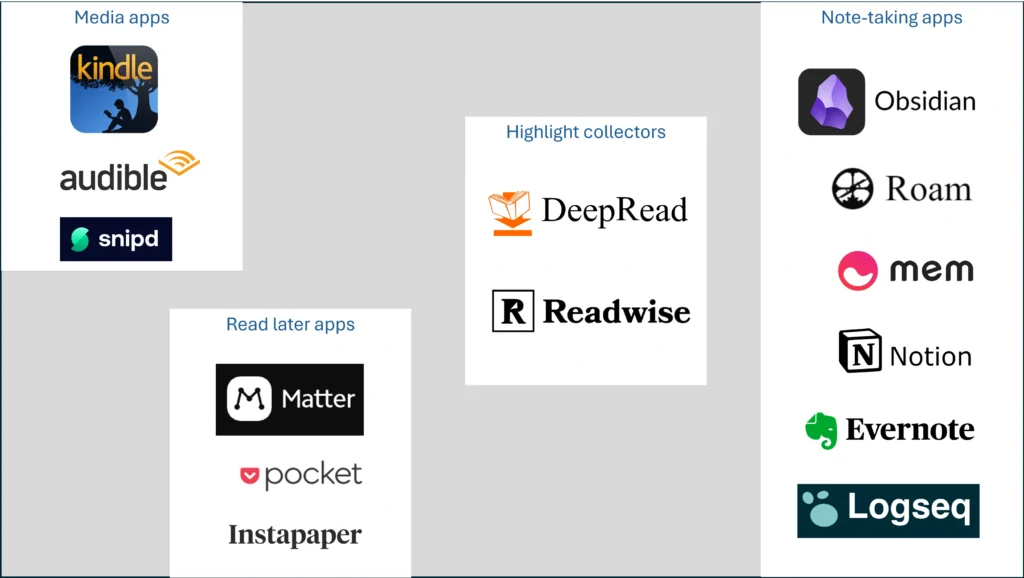
Looking to transform reading into active learning? The right tools can help you capture insights and build lasting knowledge from everything you read.
From organizing Kindle highlights to implementing Zettelkasten systems in Obsidian, today’s readers have powerful options. Services like Readwise or DeepRead centralize your highlights and annotations, while Matter, Instapaper, and Pocket curate quality reading material.
In this guide, we’ll explore the most effective apps that support learning from reading, helping you build a personal knowledge system that grows with every page you turn. Discover how these digital companions can transform scattered highlights into structured wisdom.
A Book’s Chapter Structure as a Tool for Understanding and Learning
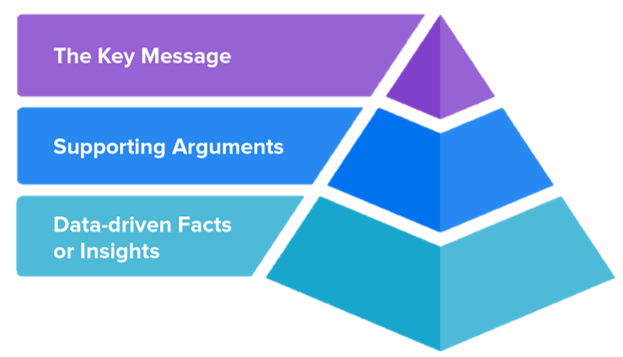
You can leverage the chapter structure of a book for enhanced learning and retention. If you understand how authors strategically use chapters to prime you as a reader, you can employ specific techniques to improve your comprehension, break down complex information, and maintain engagement. This guide will walk you through practical strategies to transform how you interact with non-fiction texts.
How to Highlight a Book for Effective Learning
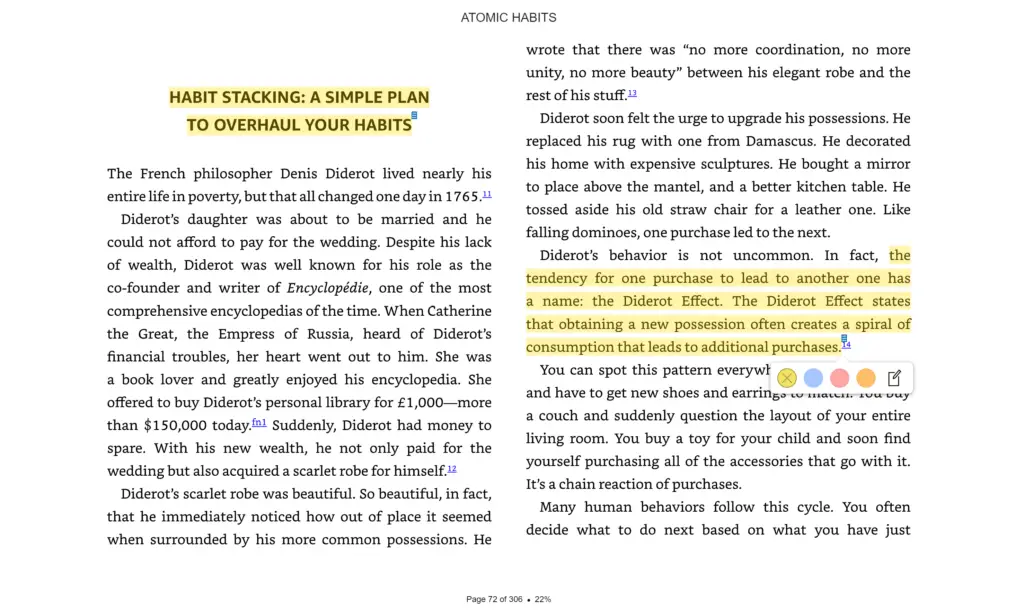
Highlighting is an art that transforms reading from passive consumption to active learning, bridging the gap between simply scanning text and deeply understanding and retaining knowledge. This guide aims to help readers become more intentional and effective learners, turning the simple act of highlighting into a powerful tool for personal growth and knowledge retention.
How to Export Your Kindle Highlights
This comprehensive guide explores multiple techniques how to extract and manage your Kindle highlights. It reveals how new tools can streamline the entire process of knowledge capture and organization.
Microlearning as a way to master any book: A Beginner’s Guide
Discover how to transform your reading habits using microlearning techniques – the secret weapon for effective learning in our fast-paced world. This guide shows you how to break down books into digestible chunks and build lasting knowledge, perfect for busy professionals and lifelong learners who want to get more out of their reading time.