

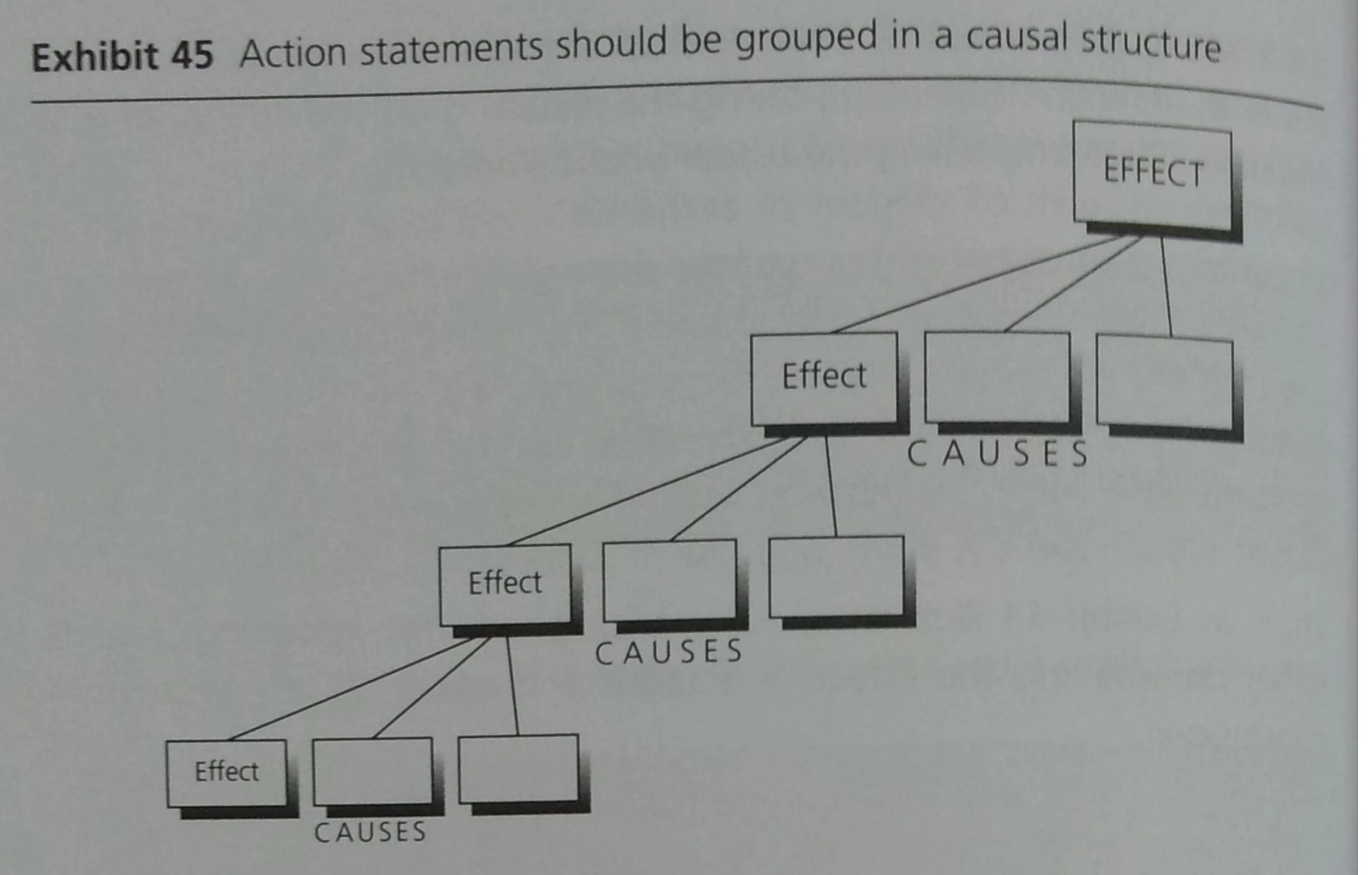
Clear writing requires organizing ideas in a pyramid — a single governing thought supported by logically grouped sub-ideas — built through question-answer dialogue, SCQA (Situation, Complication, Question, Answer) introductions, smooth transitions, and preferably inductive Key Line structure.
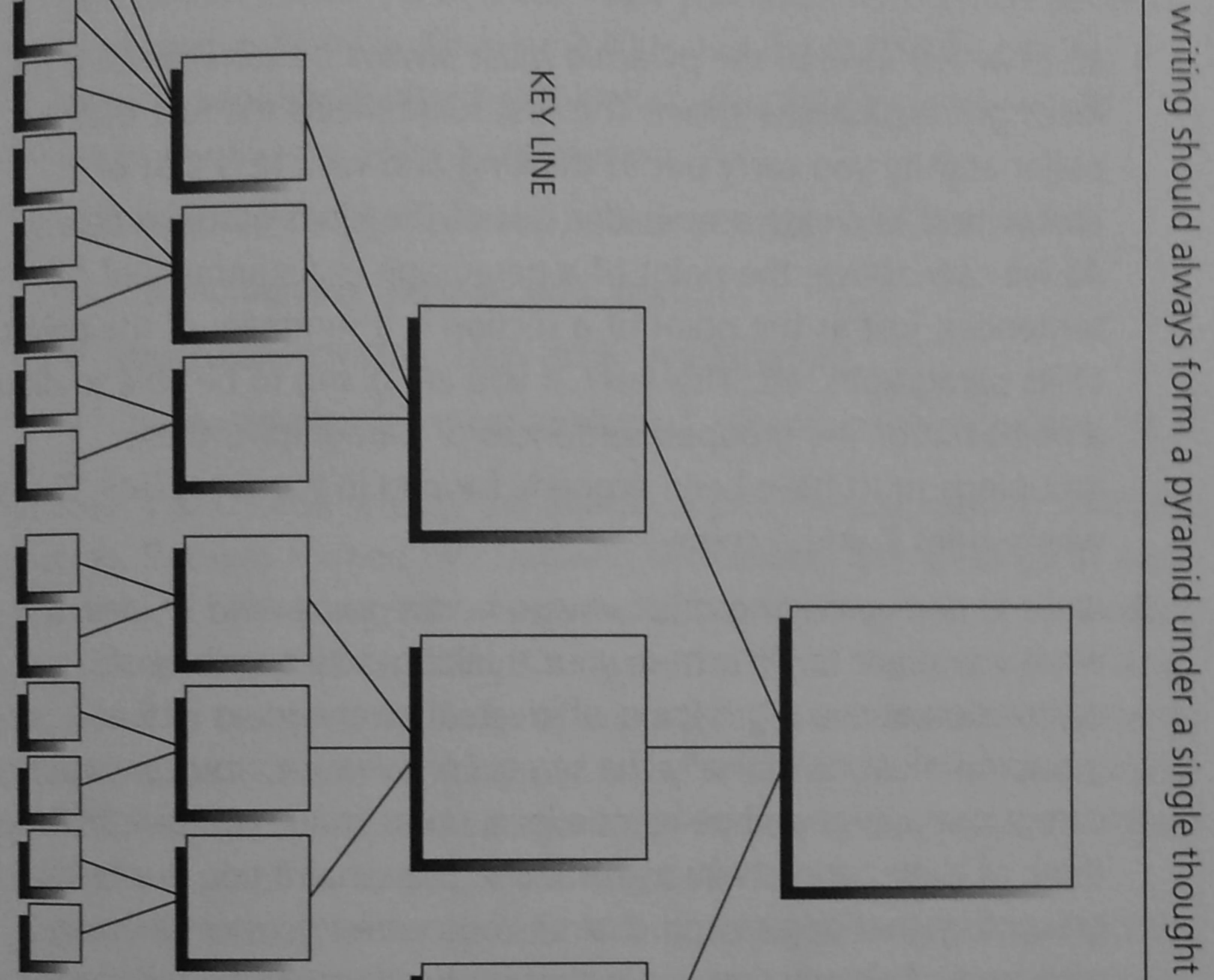
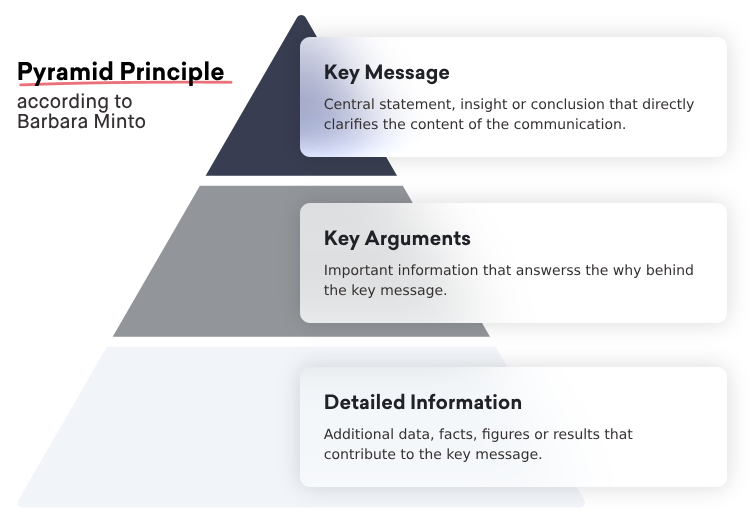
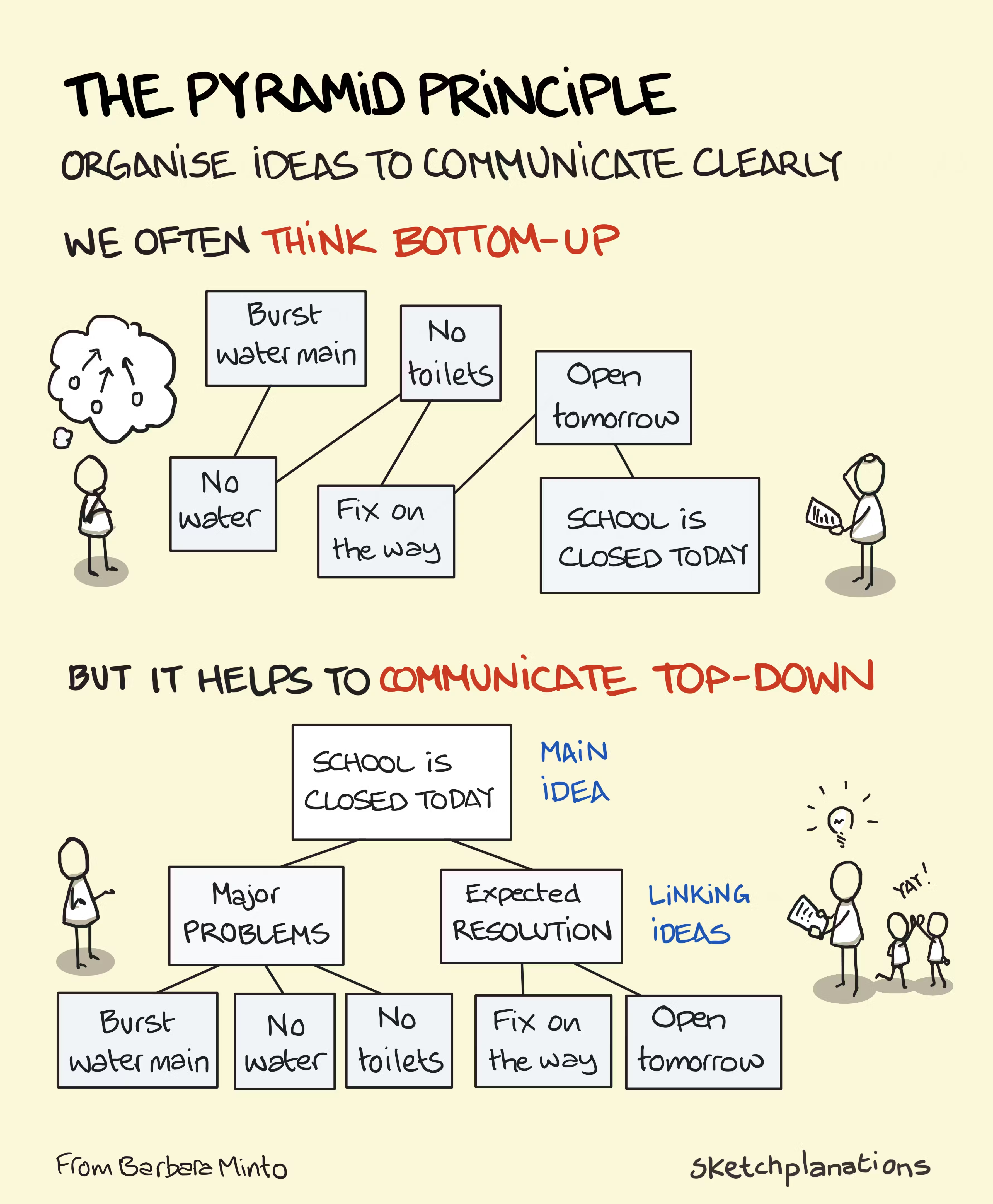
The human mind can hold only about seven items in short-term memory at once. When confronted with more, it instinctively clusters them into logical groups, creating a hierarchy. Minto argues that because the reader's mind works this way, writing must mirror the process — presenting ideas from the top down, each level summarizing the one beneath it.
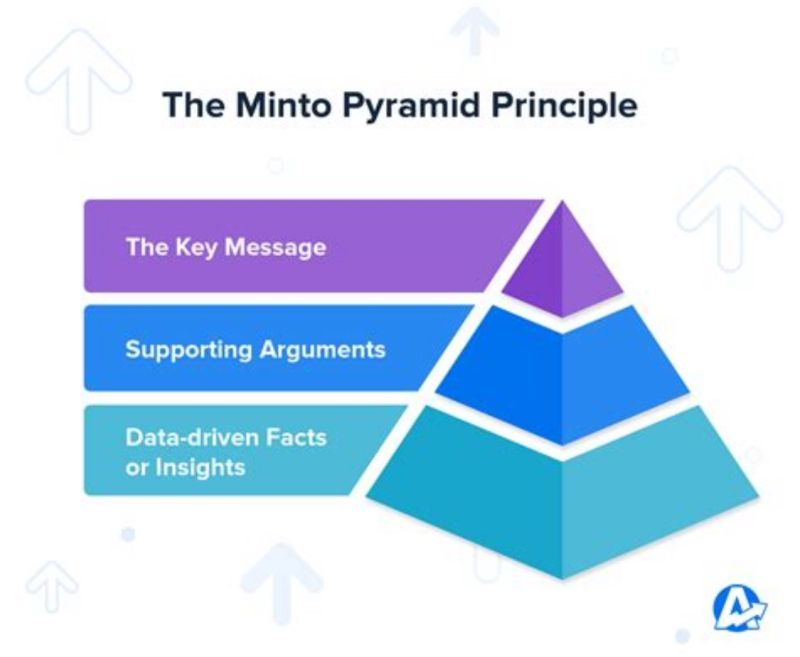
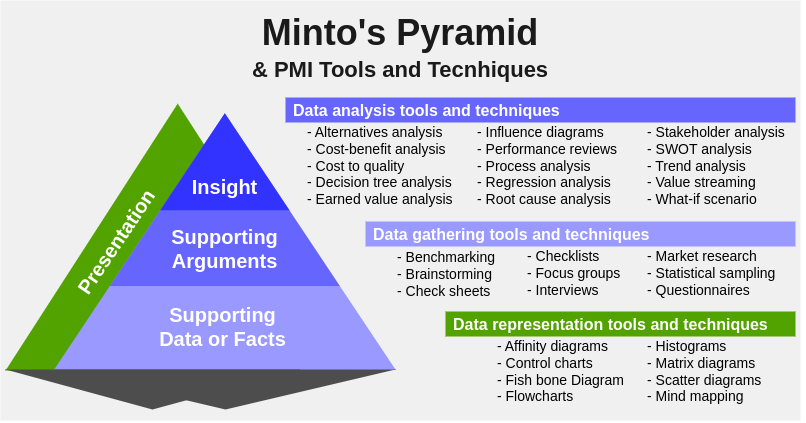
This is the pyramid: a structure where every idea at every level summarizes the ideas grouped beneath it. Three rules govern a proper pyramid: every idea must summarize the ideas grouped below it, ideas in each grouping must be logically alike, and ideas within each group must be in a logical order.
"The order in which you present your ideas is the single most important act necessary to clear writing." — The Pyramid Principle, Chapter 1
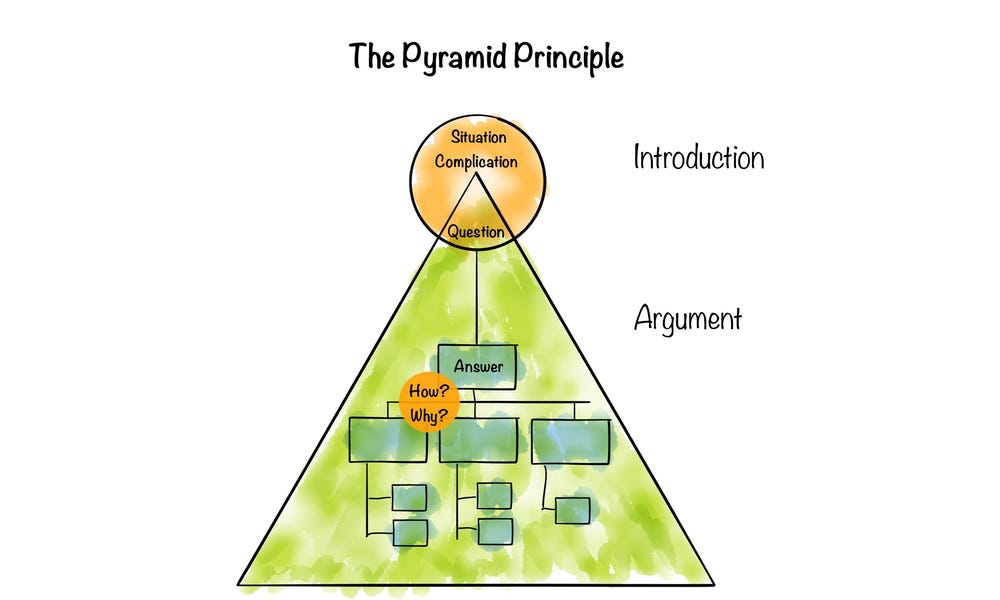
Vertically, every point in the pyramid raises a question in the reader's mind, and the points directly below it answer that question. Horizontally, the ideas in each group must present either a deductive chain (premise → premise → therefore) or an inductive grouping (similar ideas → inference). There is no third option — every grouping is one or the other.
The introduction follows the classic narrative pattern of Situation, Complication, Question, Answer (SCQA). This ensures the reader already cares about the question the document will answer before encountering the answer itself.
"This classic pattern of story-telling — Situation, Complication, Question, Answer — permits you to make sure that you and the reader are 'standing in the same place' before you take him by the hand and lead him through your thinking." — The Pyramid Principle, Chapter 2
The top-down approach is always preferred. Start by identifying your subject, determine the Question the reader needs answered, formulate your Answer, and then check whether it resolves the Situation and Complication properly. This method forces you to think about reader needs from the very beginning.
When your thinking isn't yet developed enough for the top-down approach, the bottom-up rescue works: list everything you want to say, look for relationships between the points, and draw conclusions that become higher-level groupings. Either way, the goal is the same — a pyramid you can defend logically at every level.
"The purpose of the entire exercise is to make sure you know what Question it is you are trying to answer. Once you have the Question, everything else falls into place relatively easily." — The Pyramid Principle, Chapter 3
An introduction is not a summary of what follows. It is a narrative that reminds the reader of something he already knows (the Situation), introduces a tension (the Complication), and thereby raises the one Question the document exists to answer. The SCQA order can be varied for different tones — lead with the Situation for a considered tone, the Answer for directness, the Complication for urgency.
Regardless of order, every element must be present — omit one and the reader feels unmoored. The Key Line must always state ideas, not category labels: "there are three reasons" tells the reader nothing, while stating the three reasons tells him everything.
"A good introduction does more than simply gain and hold the reader's interest. It influences his perceptions." — The Pyramid Principle, Chapter 4
Once you recognize the SCQA pattern, you see it everywhere. A directive plants an implied question about how to act. A funding request seeks approval. A 'how to' document compares the current process against the recommended one. A proposal follows the pattern of problem, approach, and people. A progress review builds on previous findings.
The document type merely determines the predictable shape of the Situation and Complication; the discipline of finding the pivot Question remains universal.
"The pivot on which your entire document depends is the Question, of which there is always only one to a document." — The Pyramid Principle, Chapter 5
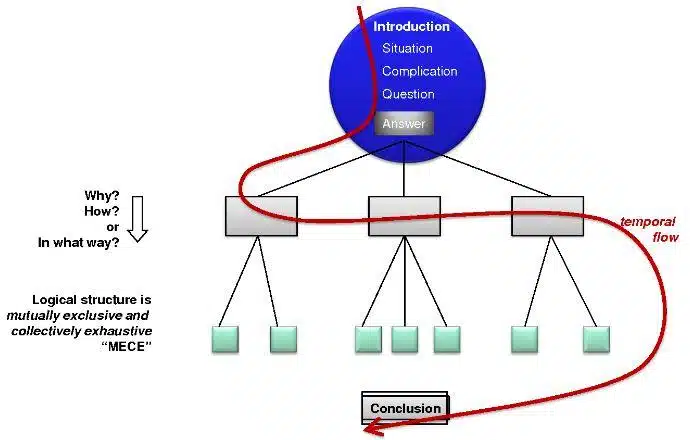
Transitions are the connective tissue of clear writing. Referencing backward means picking up a key word or phrase from the preceding section and carrying it into the opening of the next. Summarizing consolidates complex ideas at the end of long sections before moving forward. Concluding creates the appropriate emotion or call to action — but only when genuinely needed.
The goal throughout is to make thinking as easy as possible for the reader by relating ideas to each other, not merely to section labels.
"If you insist on appending a conclusion, you will want to write something that puts into perspective the significance of your message." — The Pyramid Principle, Chapter 6
A deductive argument is a chain: major premise, minor premise, conclusion. It is rigorous but ponderous — the reader must hold the first premise in mind through pages of development before reaching the payoff. An inductive argument groups similar ideas and invites the reader to see what they have in common — the inference emerges naturally.
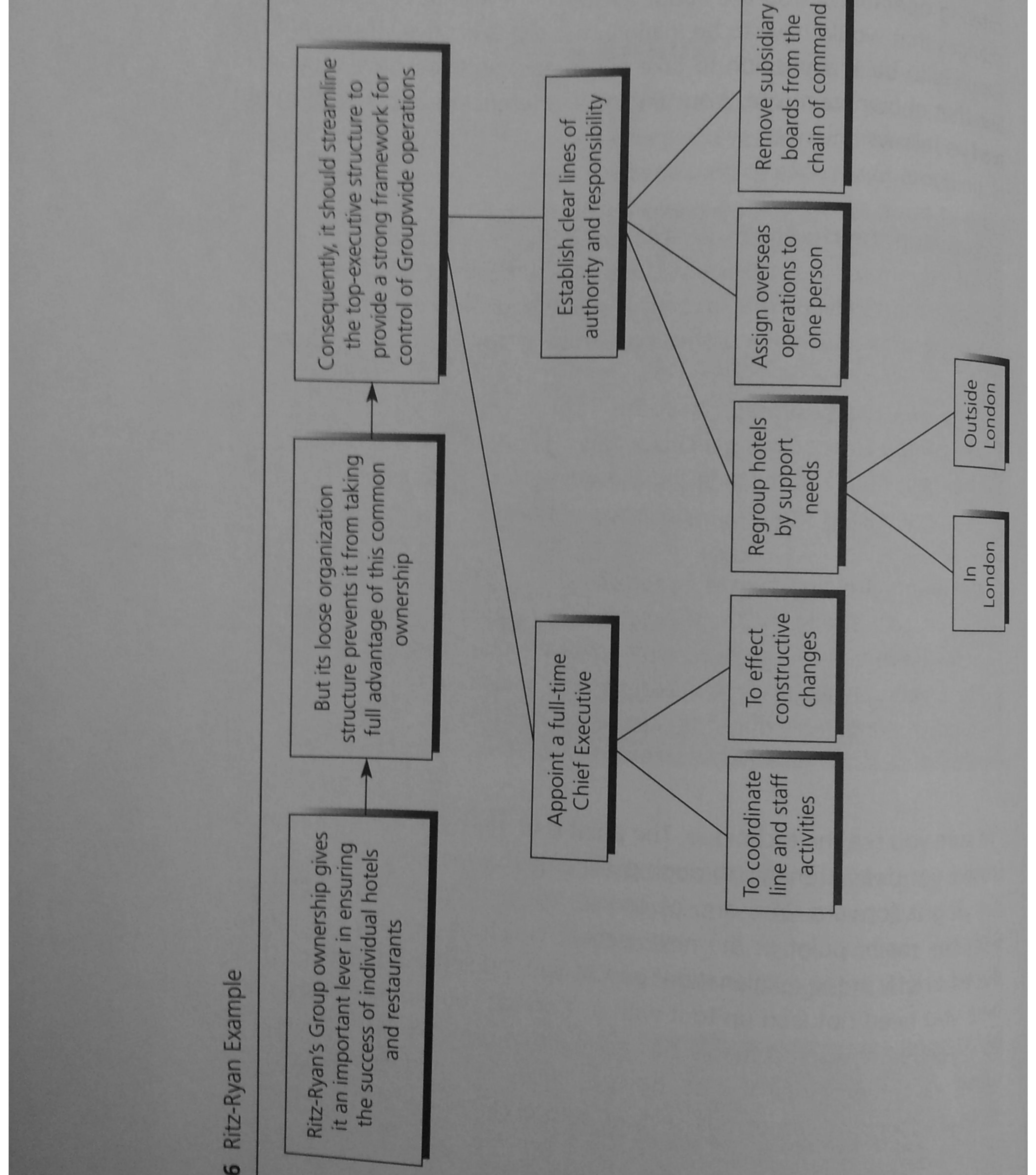
At the Key Line level — the first tier of support under the governing thought — Minto is unequivocal: prefer induction. The reader grasps the point immediately and examines evidence at leisure. Use formatting — headings, numbering, indentation — to make the pyramid visually explicit.
"As a rule of thumb, it is always better to present the action before the argument, since that is what the reader cares about." — The Pyramid Principle, Chapter 7