

Huxley imagined a regime that controls its citizens not through pain but through pleasure — through engineered births, conditioned minds, manufactured castes, severed intimacy, chemical happiness, and the abolition of suffering itself. A regime can control you better through what it lets you have than through what it forbids.
Brave New World opens not with a character but with a building: the Central London Hatchery and Conditioning Centre, where humans are decanted from bottles like champagne. Bokanovsky's Process splits one fertilised egg into up to ninety-six identical twins — the principle of the factory floor finally applied to the womb. The words “mother” and “father” have become obscenities; viviparous birth is a horror story whispered to giggling students.
COMMUNITY.
IDENTITY.
STABILITY.
“The principle of mass production at last applied to biology.”
“That is the secret of happiness and virtue — liking what you've got to do. All conditioning aims at that: making people like their un-escapable social destiny.”
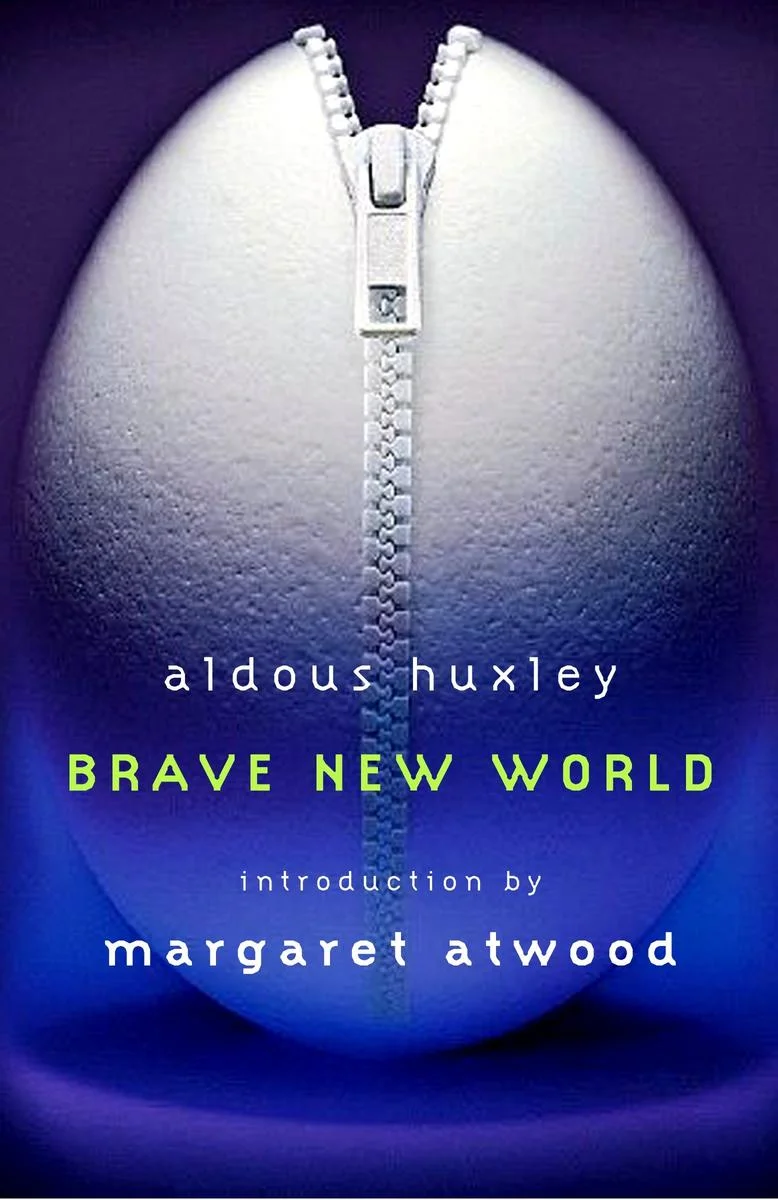

The Hatchery makes the body; conditioning makes the mind. Infants are shown books and roses, then given electric shocks and sirens until they recoil from both for life — Deltas must not read, and must not enjoy nature, which is free and therefore unprofitable. At night, sleep-teaching whispers moral slogans into their pillows: sixty-two thousand four hundred repetitions of the same sentence, until the child's mind is these suggestions.
SIXTY-TWO THOUSAND
FOUR HUNDRED
REPETITIONS
MAKE ONE TRUTH.
“Till at last the child's mind is these suggestions, and the sum of the suggestions is the child's mind.”
“Moral education, which ought never, in any circumstances, to be rational.”
“A love of nature keeps no factories busy.”

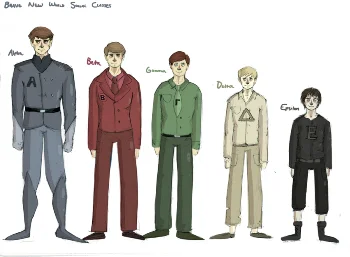
The World State has five castes — Alpha, Beta, Gamma, Delta, Epsilon — and you do not climb between them. Your caste is decided before you are decanted, calibrated by oxygen levels in the bottle: more oxygen for Alphas, less for Epsilons, who are deliberately starved of it until their brains will never quite catch up. After decanting, hypnopaedia completes the work. The lower castes are conditioned to be grateful — and the upper castes are conditioned to think this gratitude is a kindness done to them.
Alpha children wear grey. They work much harder than we do, because they're so frightfully clever. I'm really awfully glad I'm a Beta, because I don't work so hard. And then we are much better than the Gammas and Deltas. Gammas are stupid. They all wear green, and Delta children wear khaki. Oh no, I don't want to play with Delta children. And Epsilons are still worse.
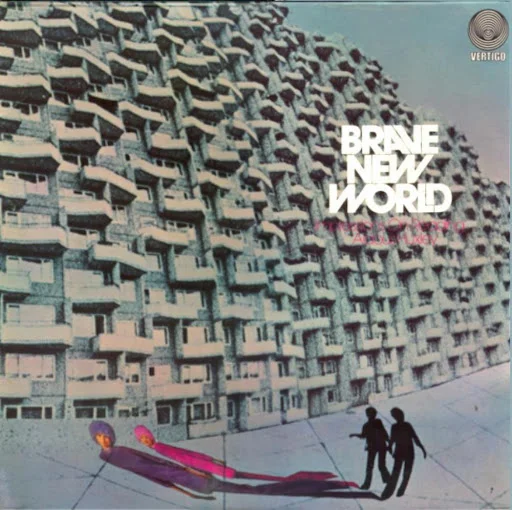
“That is the secret of happiness and virtue — liking what you've got to do. All conditioning aims at that: making people like their un-escapable social destiny.”
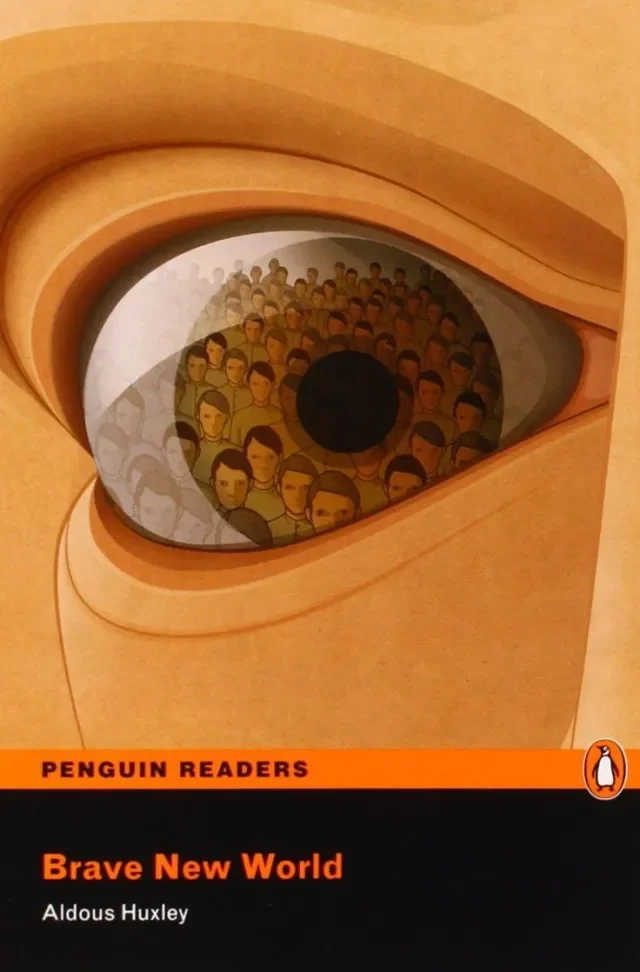
“Stability. No civilization without social stability. No social stability without individual stability.”
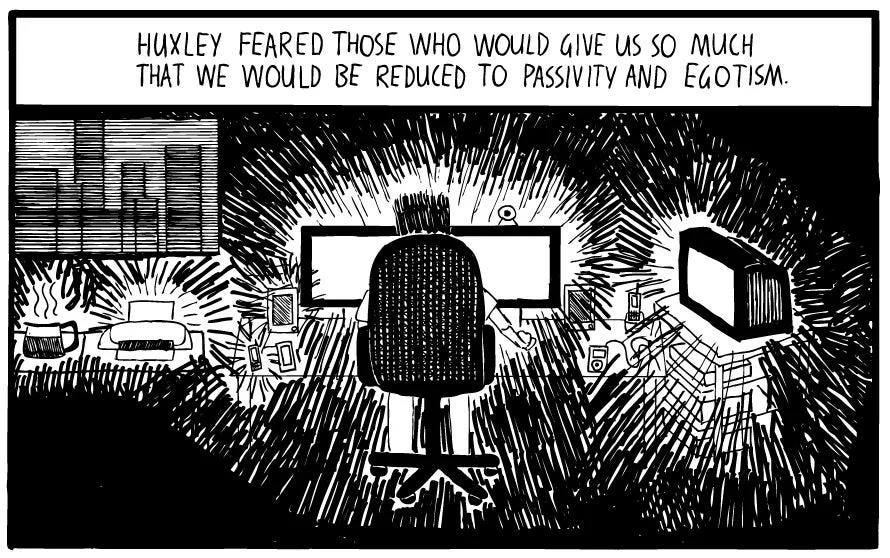
Sex in the World State is severed from reproduction, which happens in bottles, and from exclusivity, which is indecent. Promiscuity has been transformed from sin into civic duty. To want only one person, or to want them for long, marks you as suspect. When John the Savage falls in love with Lenina the Shakespearean way — wanting to deserve her, to marry her — she responds with the only script her conditioning has given her, which is to undress. Huxley saw what Orwell did not: a regime can control you better through what it lets you have than through what it forbids.
EVERY ONE
BELONGS TO
EVERY ONE ELSE.
“Don't you wish you were free, Lenina?”
— “I don't know what you mean. I am free. Free to have the most wonderful time. Everybody's happy nowadays.”
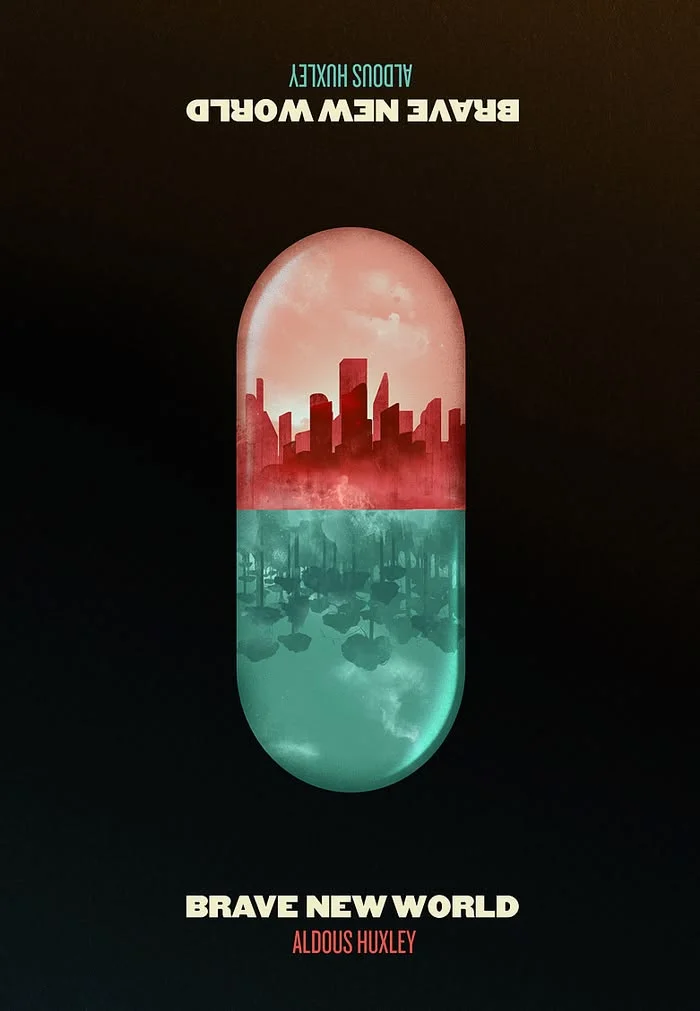
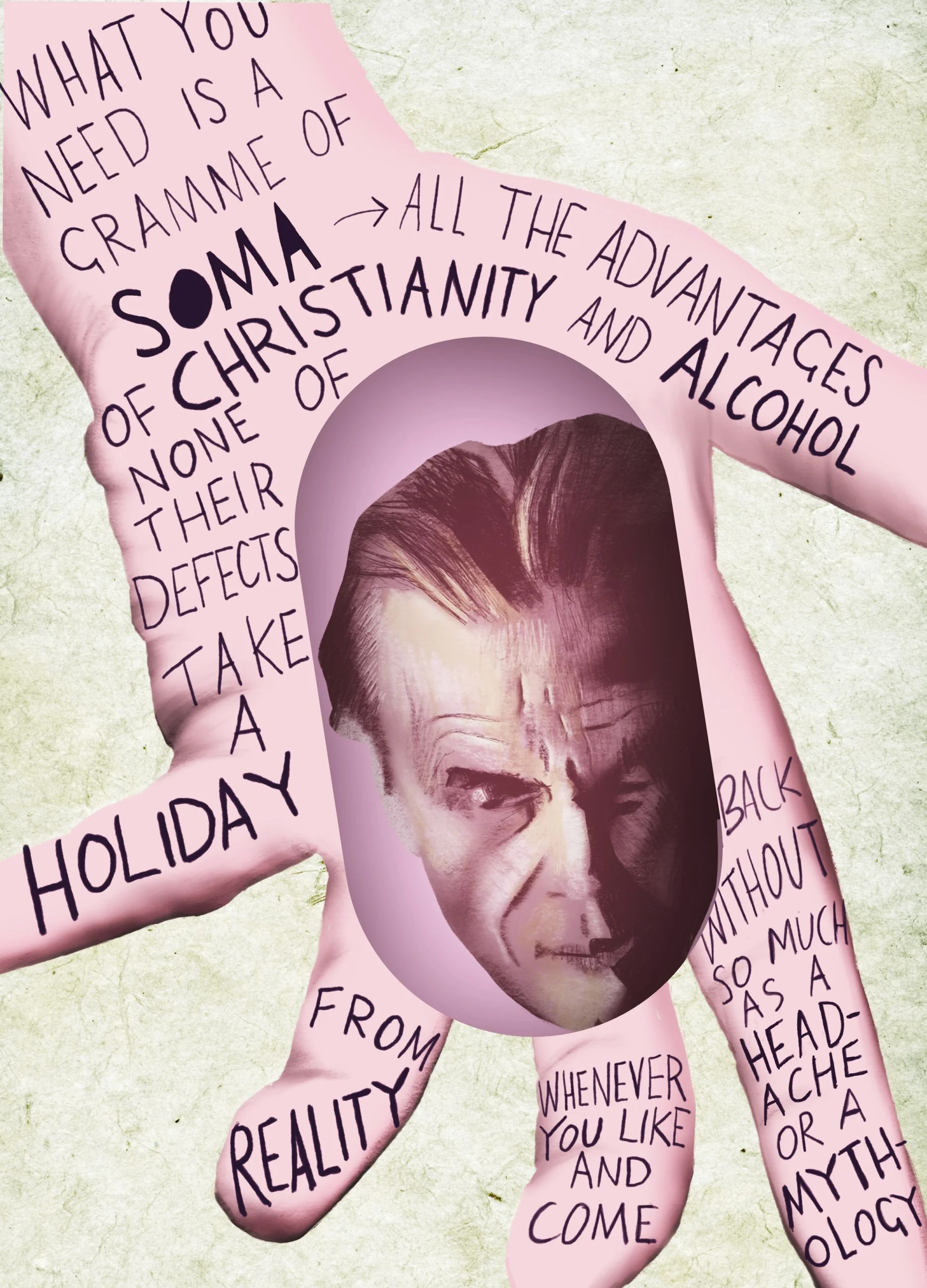
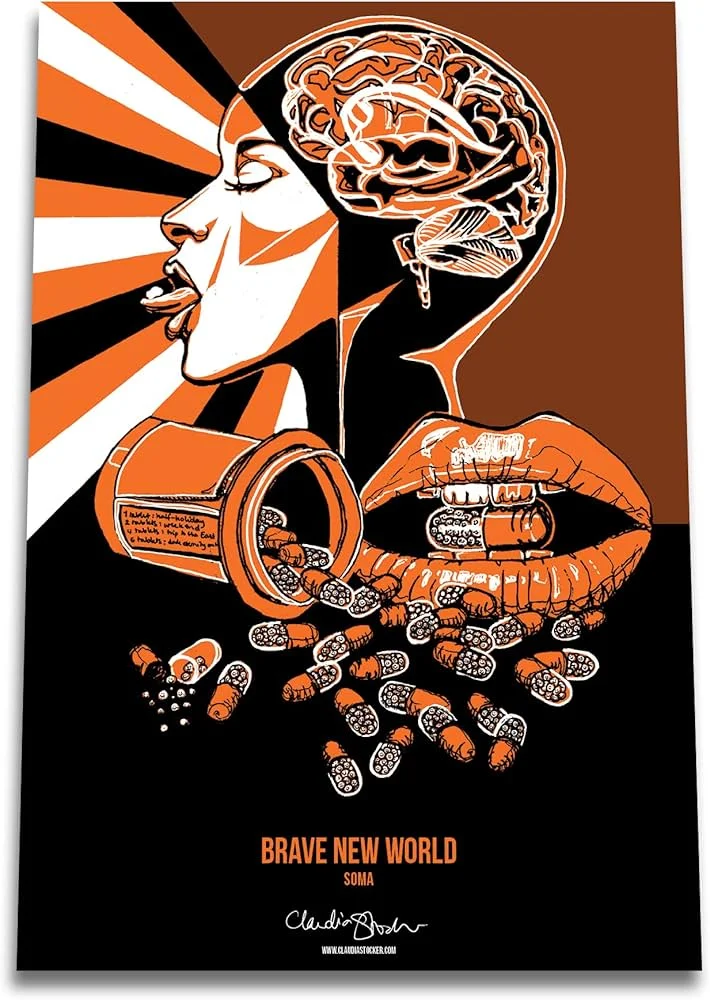
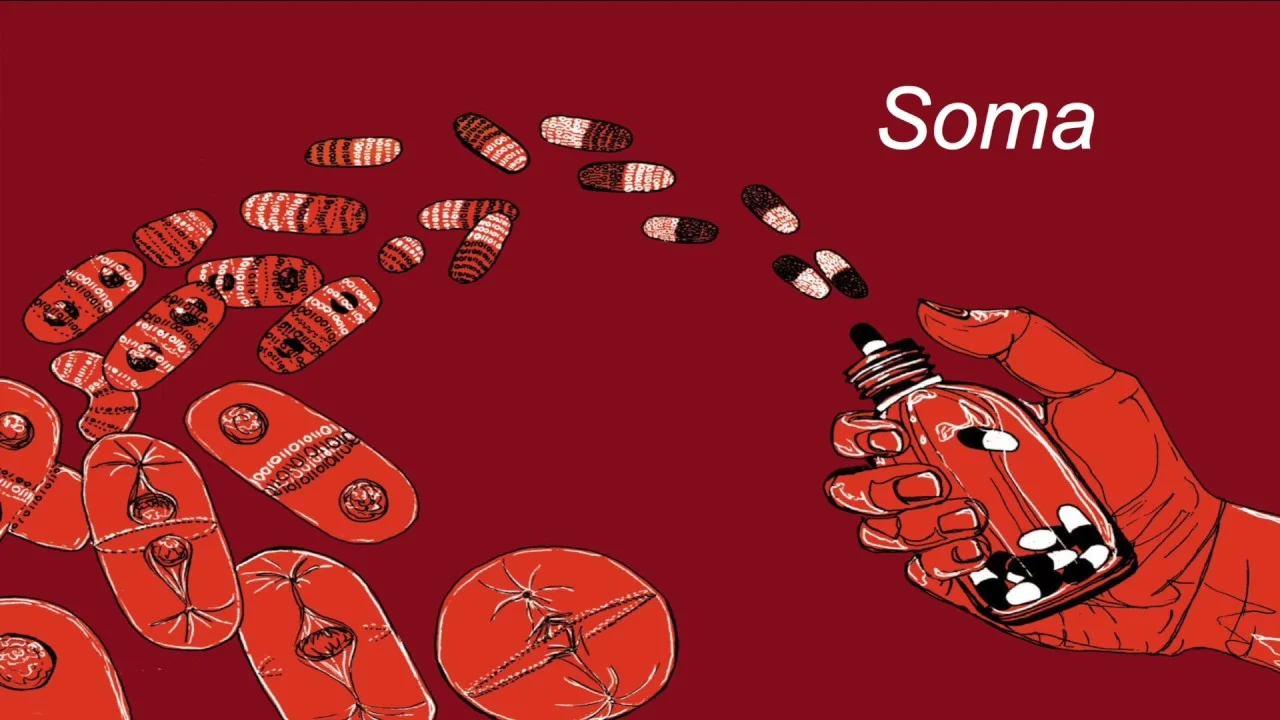
Soma is the regime's master tool. Half a gram for a half-holiday, a gram for a weekend, two for an Orient trip. It is alcohol without the hangover, religion without God, anaesthetic without surgery. The drug is everywhere and socially enforced. When anyone shows signs of distress, the reflex of those around them is to medicate the feeling out of existence. Soma is the substitute for everything the World State has abolished. The dystopia runs on consent because the consent is chemical.
A GRAMME IS BETTER
THAN A DAMN.
“Christianity without tears — that's what soma is.”
“Was and will make me ill, I take a gramme and only am.”
“But people never are alone now. We make them hate solitude; and we arrange their lives so that it's almost impossible for them ever to have it.”
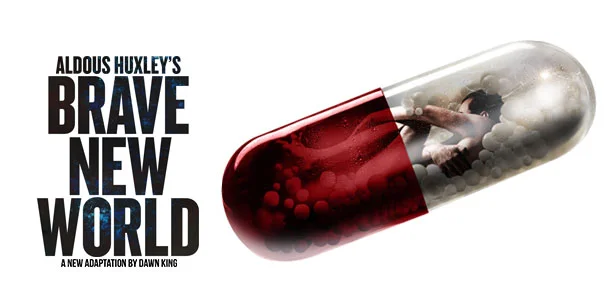

John was born — actually born, viviparously — on a Reservation in New Mexico to a woman stranded there from the World State. His education came from a single battered volume of Shakespeare. When Bernard brings him to London as an anthropological curiosity, John carries with him a moral universe the World State has spent six centuries dismantling: love that demands sacrifice, grief that cannot be medicated, the conviction that suffering is the price and proof of meaning. His confrontation with World Controller Mustapha Mond — who has read Shakespeare too — is the philosophical heart of the book.
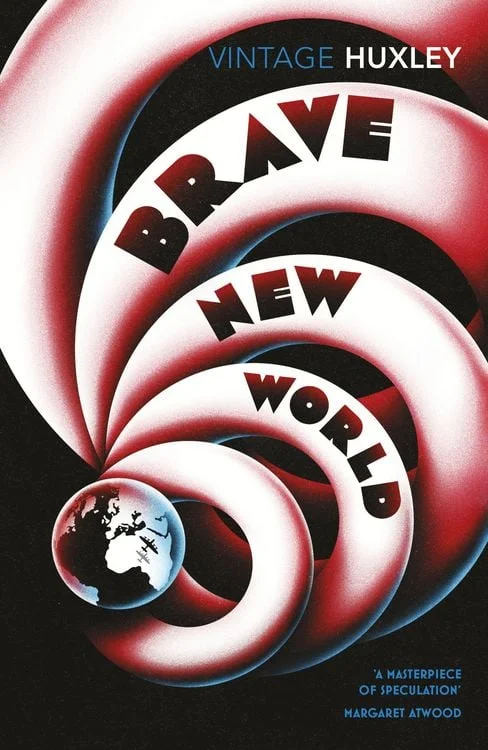
O BRAVE NEW WORLD,
THAT HAS SUCH PEOPLE IN IT.
“But I don't want comfort. I want God, I want poetry, I want real danger, I want freedom, I want goodness. I want sin.”
“Civilization has absolutely no need of nobility or heroism. These things are symptoms of political inefficiency.”