

We have started a new series of projects on a single text: the Bible.
The choice is less about religion than about structure. DeepRead is built to take a text apart, follow its internal connections, and let those connections do the analytical work. For that, the Bible is close to an ideal test case. It is one of the oldest texts still read every day, copied and translated continuously for two millennia, so the text itself is remarkably stable. It sits underneath a large share of the literature, law, and art produced since. And it comes with an enormous body of secondary material, from cross-references and commentaries to paintings, which we can pull in as evidence instead of guessing.
Where does the Old Testament make a promise that the New Testament presents as fulfilled?
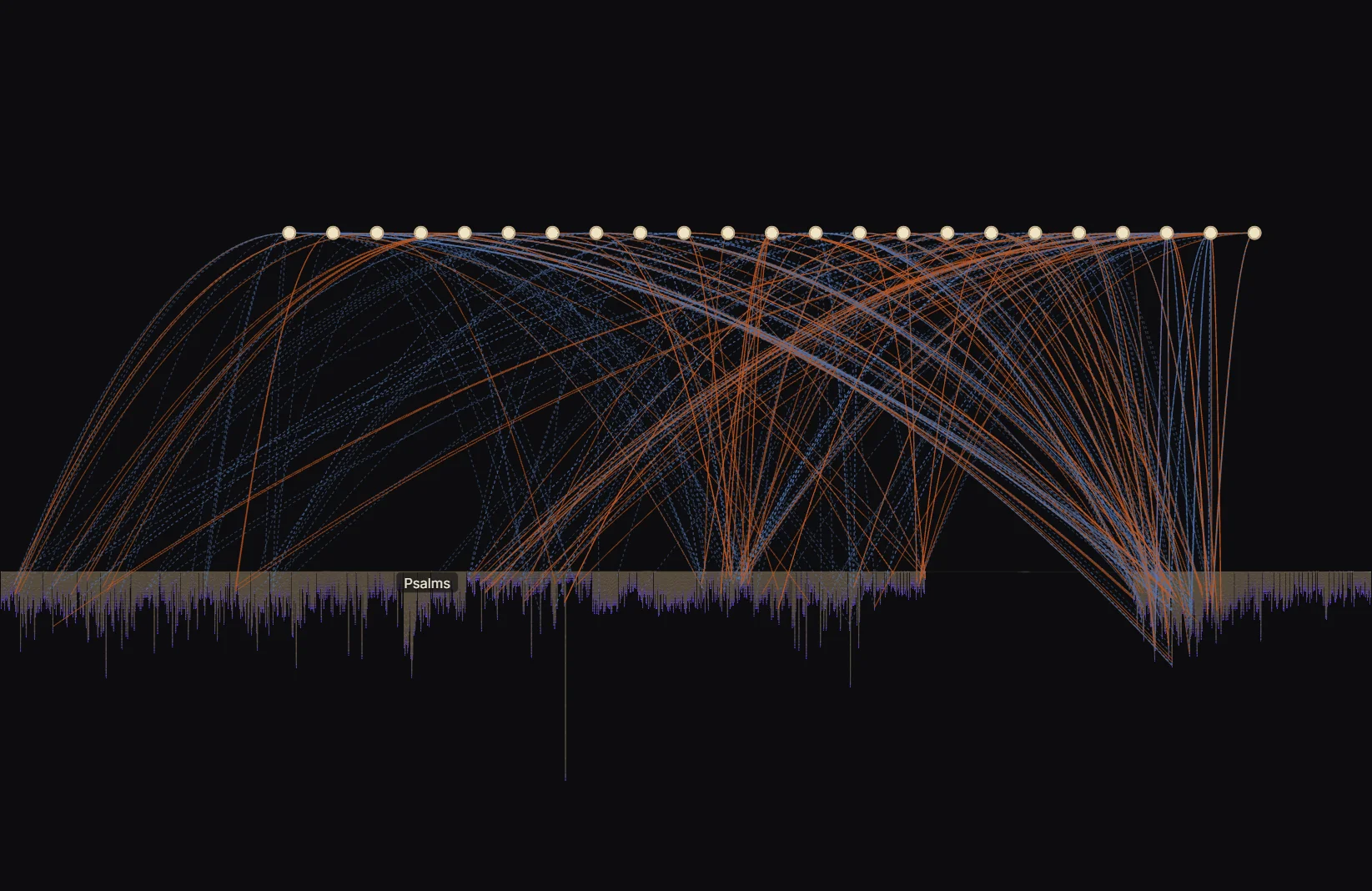
We started from roughly 73,000 cross-references that readers have drawn between the two testaments over the years and filtered them through three tests: does the New Testament passage itself say "fulfilled" or "as it is written," does it quote the older verse word for word, and, for everything else, does a careful reading show it as a fulfillment rather than a passing echo. What survived is 23 events, from the annunciation to Pentecost, held together by 326 passage-level connections and 532 verse pairs.
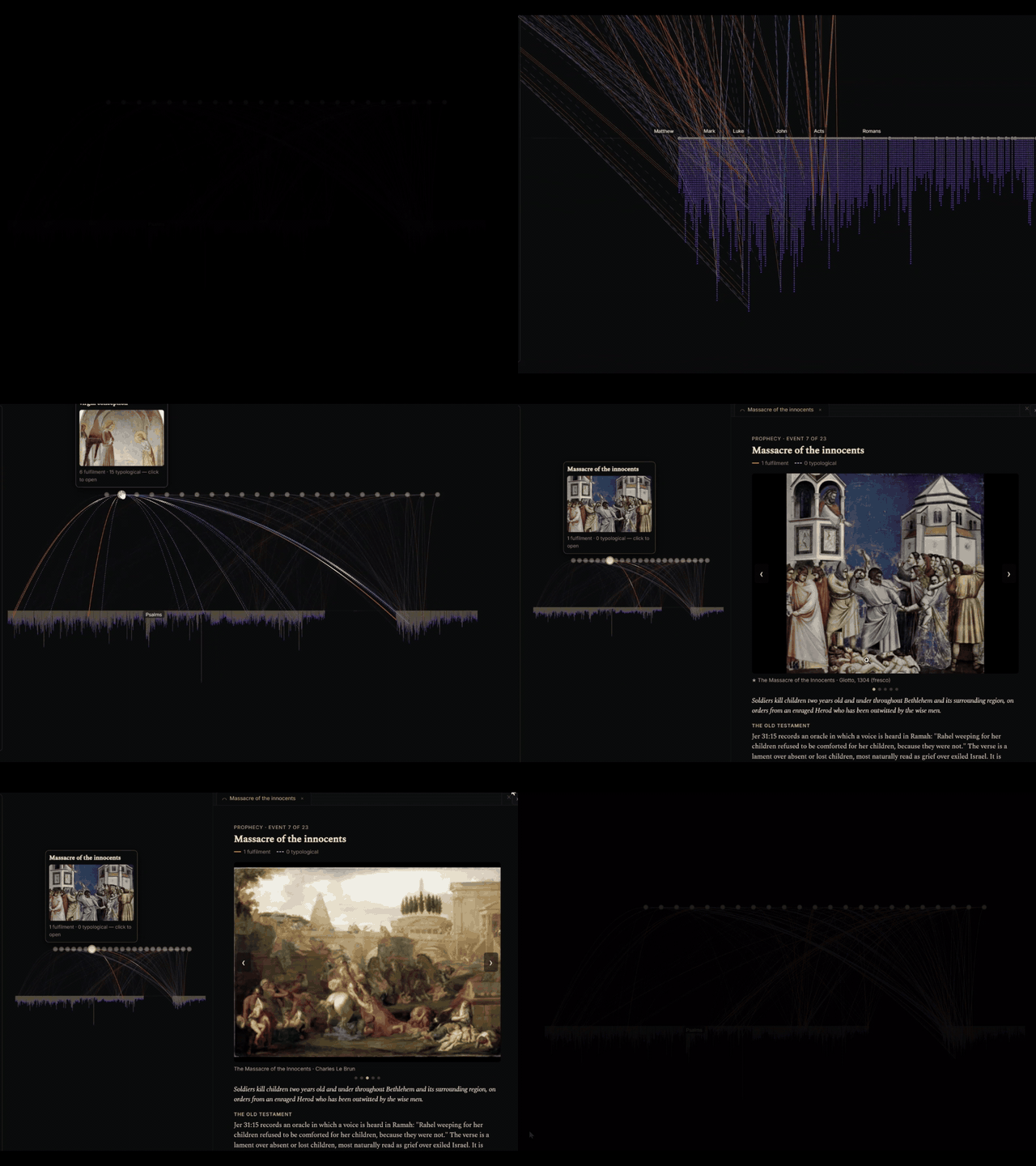
The result is drawn as a ribbon. The two testaments lie side by side, one node per event sits above them, and arcs rise from Isaiah or the Psalms into an event and descend into the Gospels that describe it. Hover over an event and its arcs light up; click, and you get the verses, a short note on how the connection works, and pictures of the scene from our art collection.
We were just as careful about what stayed out: sermons that quote scripture without anything happening, the letters, prophecies no New Testament text claims as fulfilled. The record even keeps the oddities, like the passage Matthew attributes to Jeremiah while the words sit in Zechariah.
Comparing the two testaments is only the first cut. The same setup lets us ask which verses have been the most read over time, which ones people disagree with most, how specific other books connect to the Bible and where they lean on it, and a good deal more.
Mostly, we want to see what becomes possible when you take one of the most read, analyzed, and argued-over texts in the world and treat it as data.
Ready to shape the future of DeepRead? Join the co-development community.
What you get:
Your committment: