
Taking the Bible apart, one connection at a time
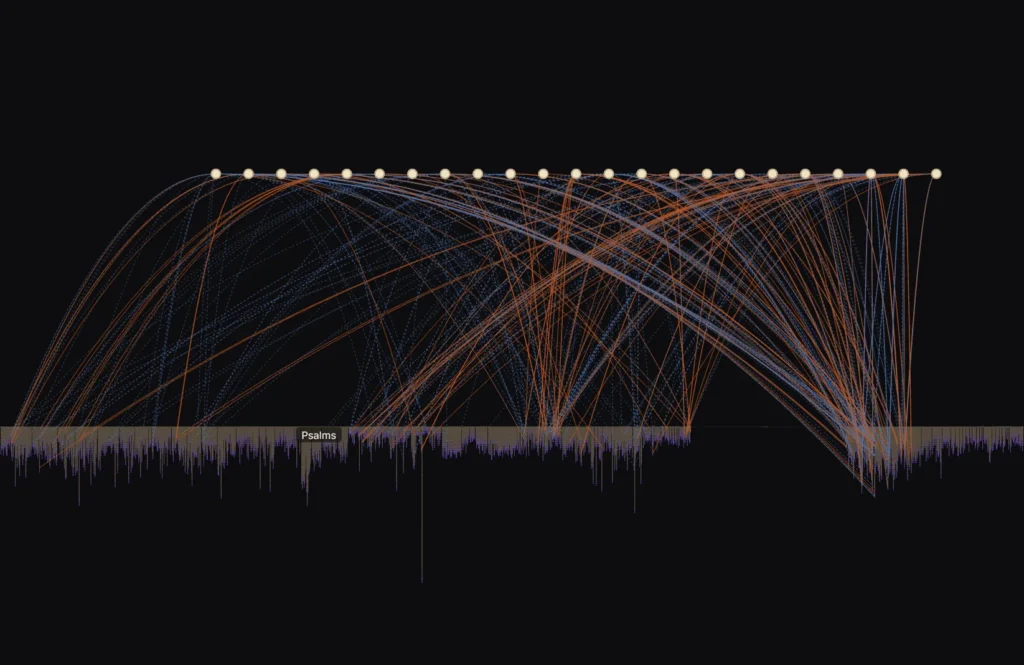
The Bible is one of the oldest texts still read every day, stable for two millennia, underneath much of what has been written since, and surrounded by centuries of commentary and art. That makes it a near-perfect text to take apart and analyze through its own structure. Our first cut: every place where the Old Testament makes a promise the New Testament presents as fulfilled, drawn as a ribbon of 23 events and 326 connections. More analyses to follow.
Karpathy’s LLM Knowledge Base Went Viral — Here’s What It Looks Like for Readers
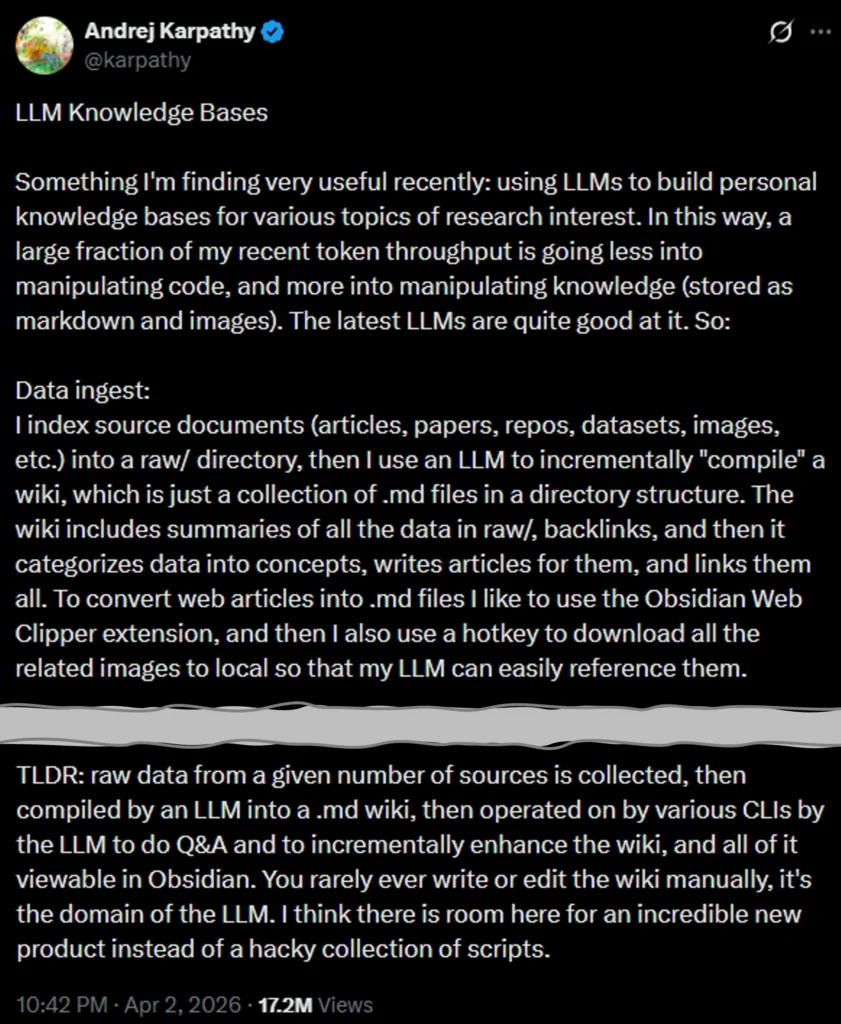
This Easter weekend, Andrej Karpathy’s post on LLM-powered knowledge bases went viral — and for good reason. He described a self-maintaining, self-correcting knowledge system built entirely by AI, and then shared the concept as a natural-language “idea file” instead of code, letting anyone’s agent build their own version. For readers who collect highlights and annotations, this is bigger than it sounds: you’re already closer to a living knowledge base than anyone else — you just need the right architecture to unlock it. That architecture has two dimensions: vertical structures that capture each book’s argumentation and logic, and a horizontal layer that connects insights across books, guided by what you’re actually trying to learn or solve.
The Future of the Book: Why Society Still Needs Books in the Age of AI
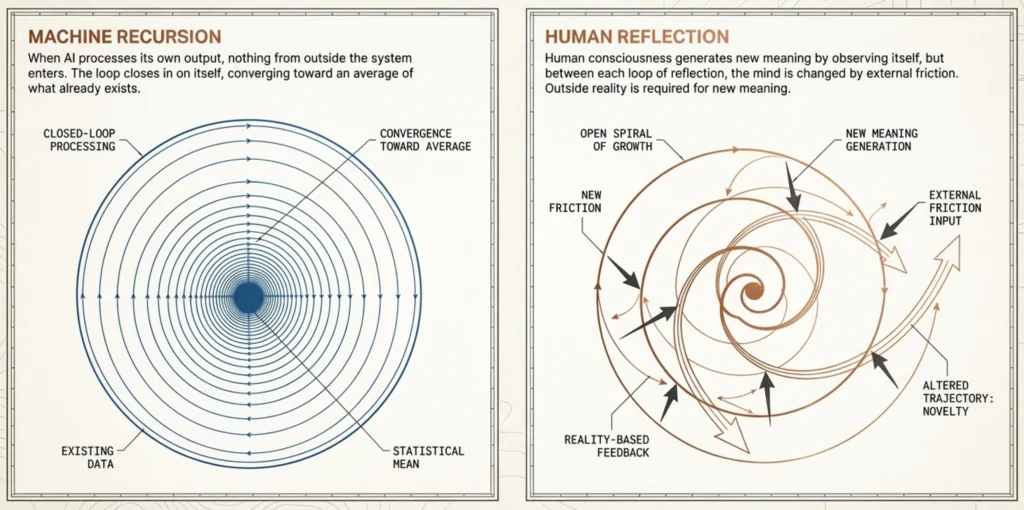
Books have always done two things for society: they preserve what we know, and they help us create what we don’t yet know. Now AI can produce, search, and recombine text at a scale no human can match. But a closer look at what AI has actually achieved — and what it hasn’t — reveals why books remain irreplaceable.
The Future of the Book: Does Deep Reading Survive When Shortcuts Are Everywhere?
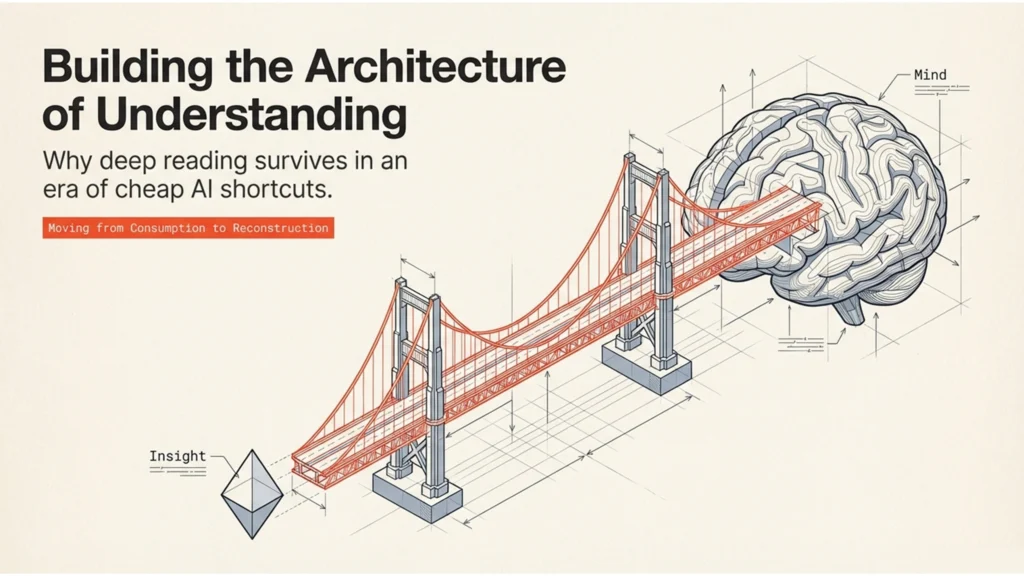
Any book can be summarized by AI in seconds. So why would anyone still read the whole thing? The answer requires rethinking what books actually are. A book is a mediator — one possible bridge between an insight and your mind. Sometimes it’s the best bridge. Sometimes AI is. And sometimes the shortcut you think saves time quietly destroys the thing you were trying to acquire.
The Future of the Book: How Do You Choose Your Next Book When Anyone Can Write One?
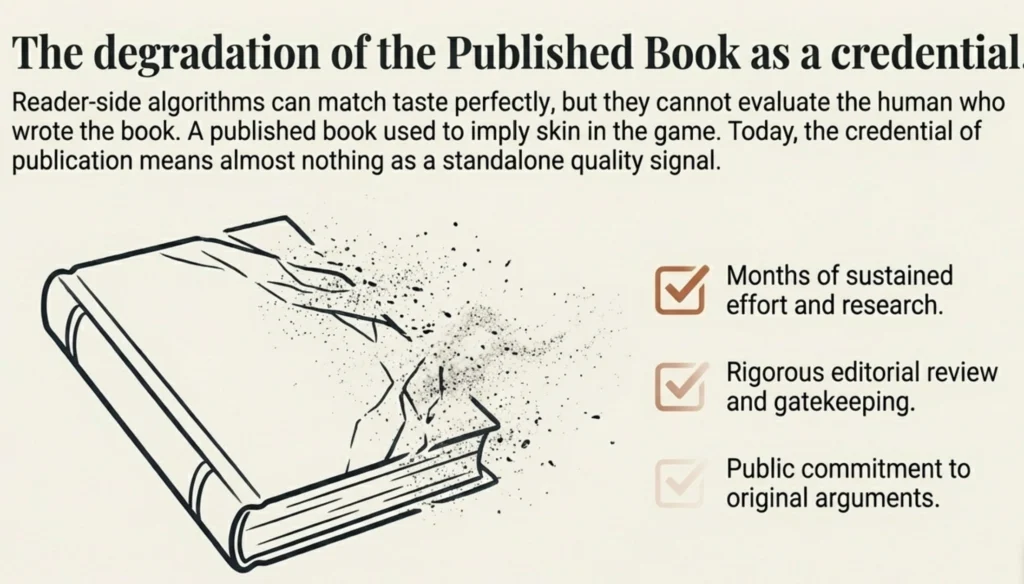
Choosing a book is not like picking something to watch tonight. It is a serious commitment of hours, sometimes days — and the opportunity cost of every other book you won’t be reading during that time. That’s why readers have always needed to trust their sources. But here’s the counterintuitive part: that trust has never really been about books. It’s been about finding people who have already found the books you were looking for.
The Future of the Book: What Happens When Anyone Can Write a Book?
When anyone can write a book, more people will. More topics, more perspectives, more niche knowledge that was previously locked inside practitioners’ heads. But what about the top — the works that change how we think? AI has had access to virtually all of human knowledge for three years now. It has not produced a single original explanation for any unsolved problem. What does that tell us about the future of books?
The Future of the Book: Text as a Knowledge Technology — Will It Survive?
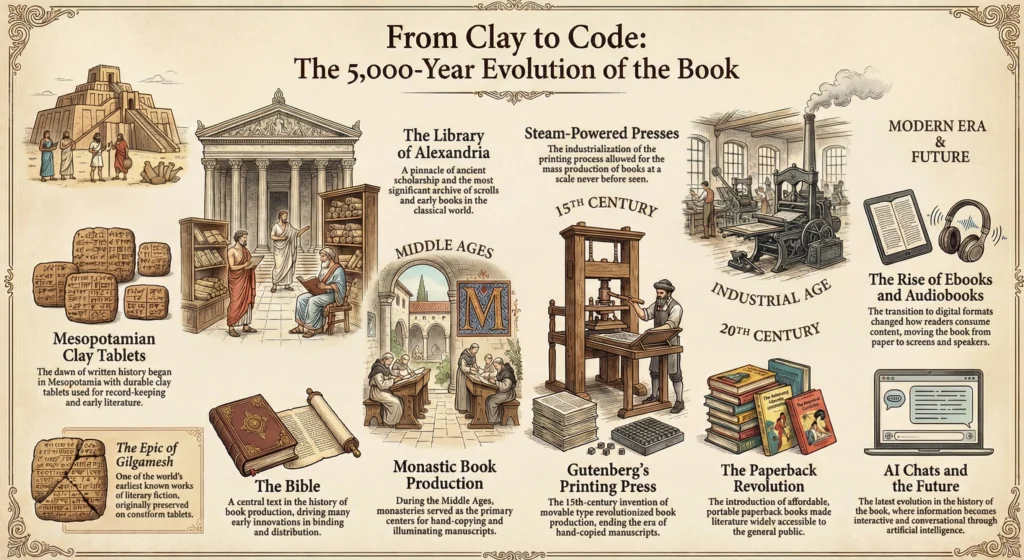
For five thousand years, books have done something no other technology has managed: let you enter another person’s mind and reconstruct their thinking in your own. In 2026, the most powerful technology we’ve ever built communicates the same way — as a chain of words on a screen. But in a world racing toward interfaces that bypass text entirely, will the book survive?
The Index Card, the Map, the Researcher, and the Scholar: How AI Finds What Matters in Your Books
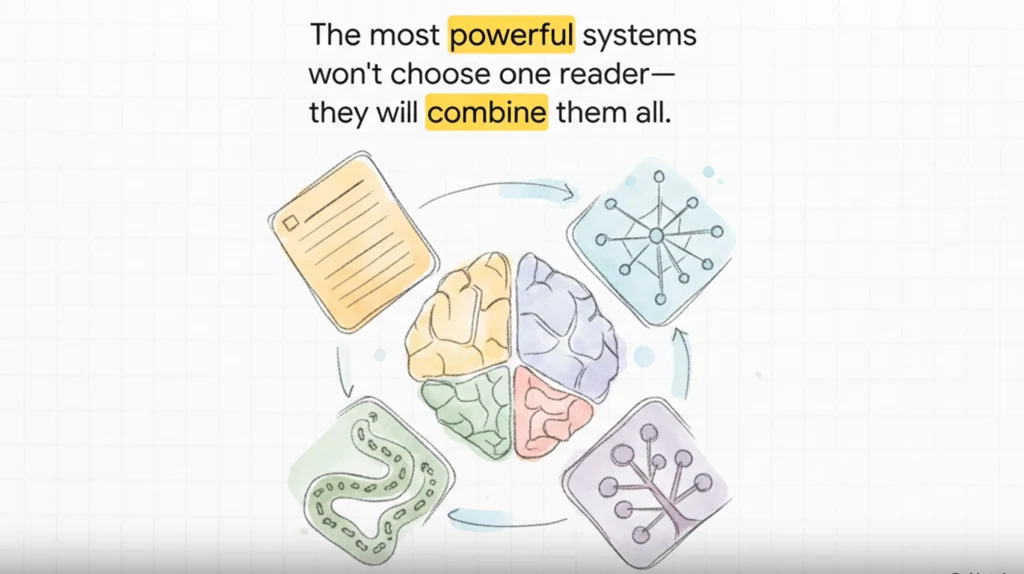
There are two ways to know a book. One changes how you think. The other gives you answers to concrete problems. Most people drift toward one or the other. Combining the two is where you stop consuming knowledge — and start creating it.
The Book You Read vs. The Book You Query
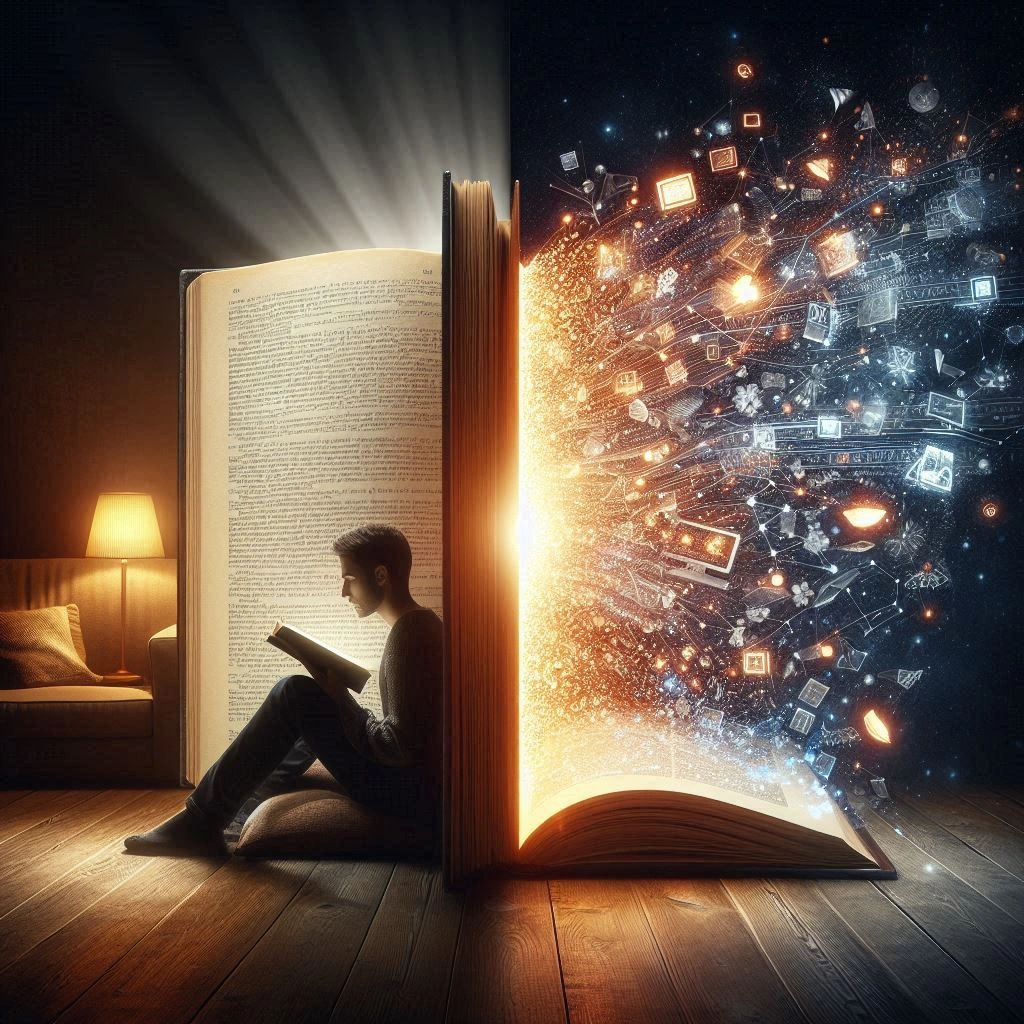
There are two ways to know a book. One changes how you think. The other gives you answers to concrete problems. Most people drift toward one or the other. Combining the two is where you stop consuming knowledge — and start creating it.
OpenClaw: The AI Agent That Gives You Time Back Instead of Stealing It
A new AI tool exploded this week – 100,000 GitHub stars, Mac Minis selling out, three name changes in seven days. But unlike most tech hype, OpenClaw might actually deliver on a promise we’ve been waiting for: AI that gives you time back instead of stealing it.