

The Brothers Karamazov, by Fyodor Dostoevsky (Book summary)
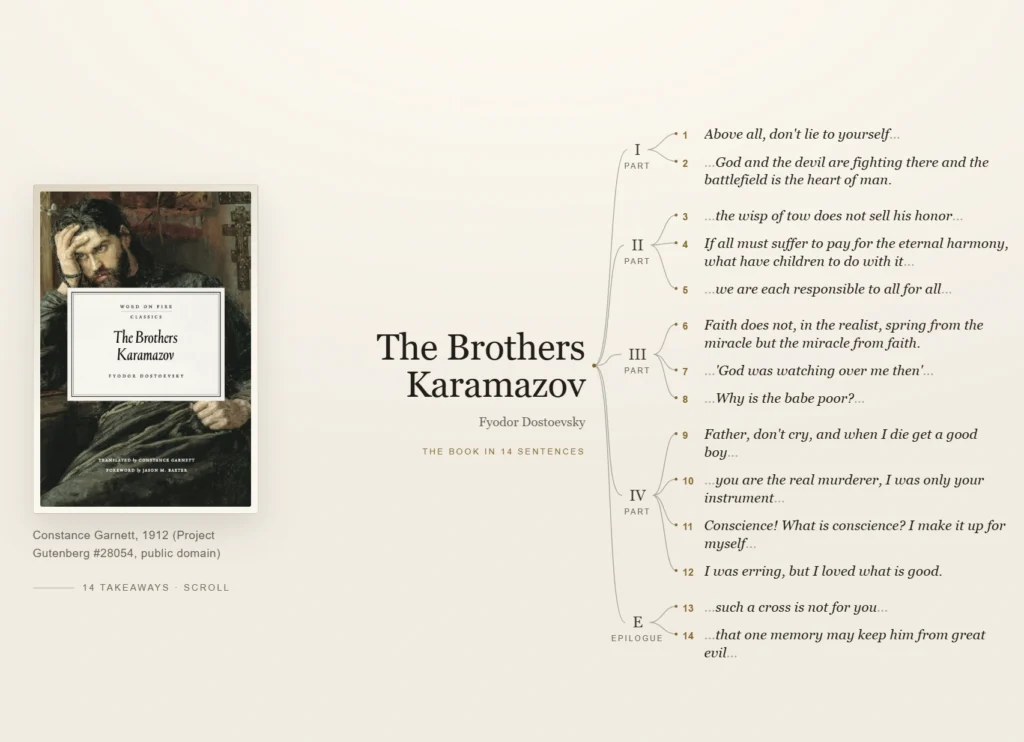
The Brothers Karamazov was Dostoevsky’s last novel and his grand opus. On the surface it’s a murder story: a father is killed, and one of his sons is convicted. Underneath, it’s the great argument of the modern age: can there be conscience without God, and are we each answerable for all? I’ve built a new summary of it. It’s the book in 14 sentences. The page is easy to navigate. You just scroll: a plain storyline guides you through the scenes, with the quotes, pictures and the great questions of the book alongside.
Lila: An Inquiry Into Morals, by Robert Pirsig (Book summary)

Everyone knows Zen and the Art of Motorcycle Maintenance. Almost nobody reads the book Pirsig wrote seventeen years later — and that’s the one where he finishes the job. In Lila, the loose intuitions of the classic harden into a working framework: the Metaphysics of Quality, which puts Western science and Eastern wholeness on the same map and then uses it to explain morality, evolution, culture and madness. One of the most underrated books ever written, and one of my personal top five.
A Brief History of Intelligence, by Max Bennett (Book summary)
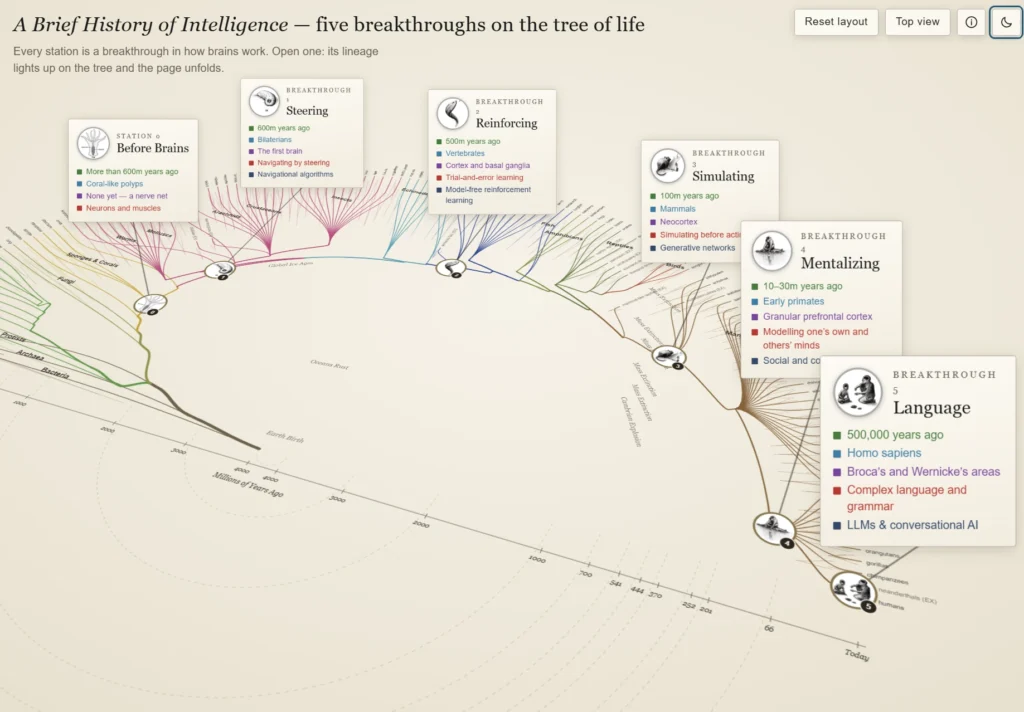
A Brief History of Intelligence by Max Bennett traces how brains evolved, from the first reflexes to language. It’s a brilliant synthesis of brain evolution — the regions, their functions, and how they stack — and the perfect entry point into AI, deep learning, and robotics. A must-read for anyone curious where intelligence comes from.
Our interactive tree of life lets you navigate the book’s five breakthroughs directly on the evolutionary map — an intuitive feel for when each happened and its impact.
The Odyssey, by Homer (Book summary)
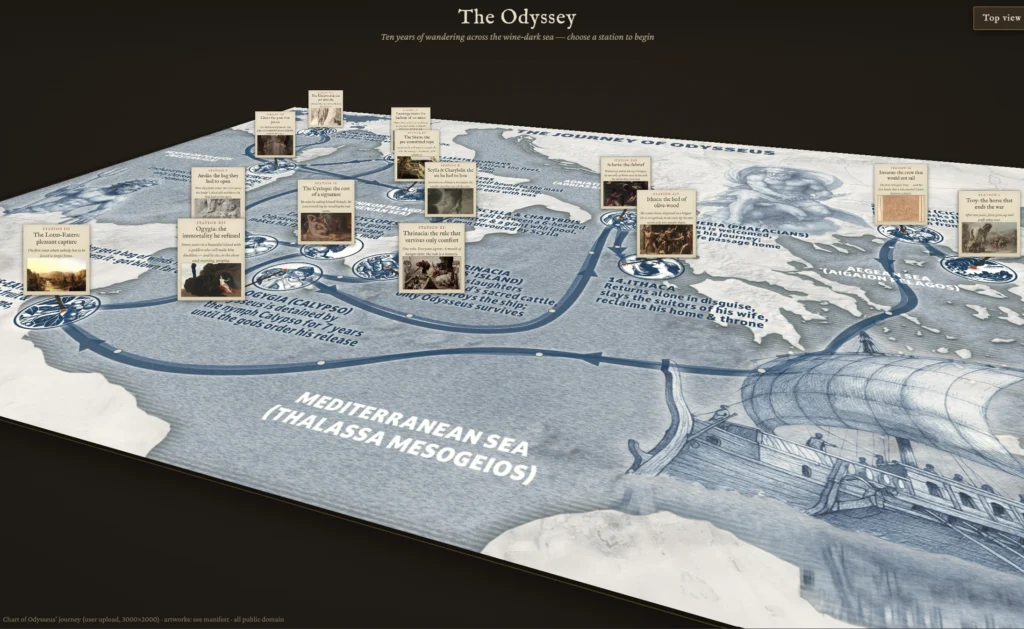
The Odyssey is 3,000 years old — its lessons on ego, temptation and leadership are due today. Explore Ulysses’ adventures of the voyage on a living map: your spatial memory will hold what a summary never could. Pick a station and sail.
The Beginning of Infinity, by David Deutsch (Book summary)
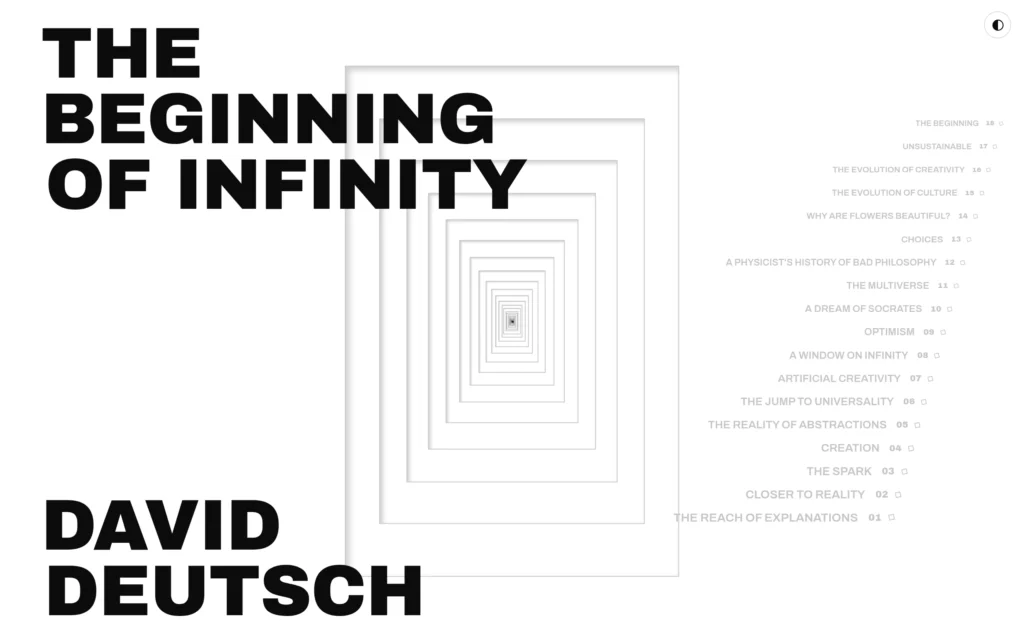
Interactive summary of The Beginning of Infinity by David Deutsch — one of those rare books that doesn’t just make you think, it changes your mind. It’s highly recommended by several leading thinkers. I’ve lived with this book for about a year now — listened to the audiobook twice, read it cover to cover, and took several hundred highlights along the way. The summary is made to be explored, not just read: a word cloud of key terms, hand-picked images, a section on the debates the book reframes, and more — all fully interactive and easy to navigate.
Human Action, by Ludwig von Mises (Book summary)
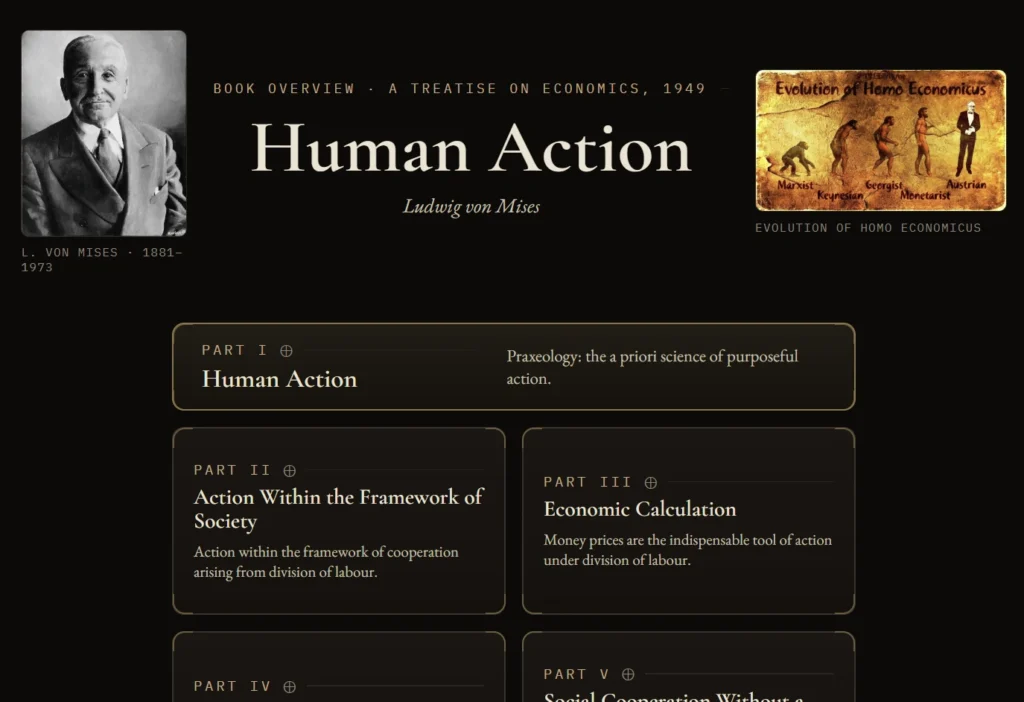
Ludwig von Mises’ Human Action (1949) is one of the great works of economics — the definitive case for the free market, sound money, and why central planning can’t calculate. But it’s 1,400 dense pages, and most readers never finish. This interactive summary strips it to the bare argument: start with the whole book at a glance, then zoom into any part or chapter, down as deep as you want to go. The classic, made graspable.
Brave New World, by Aldous Huxley (Book summary)
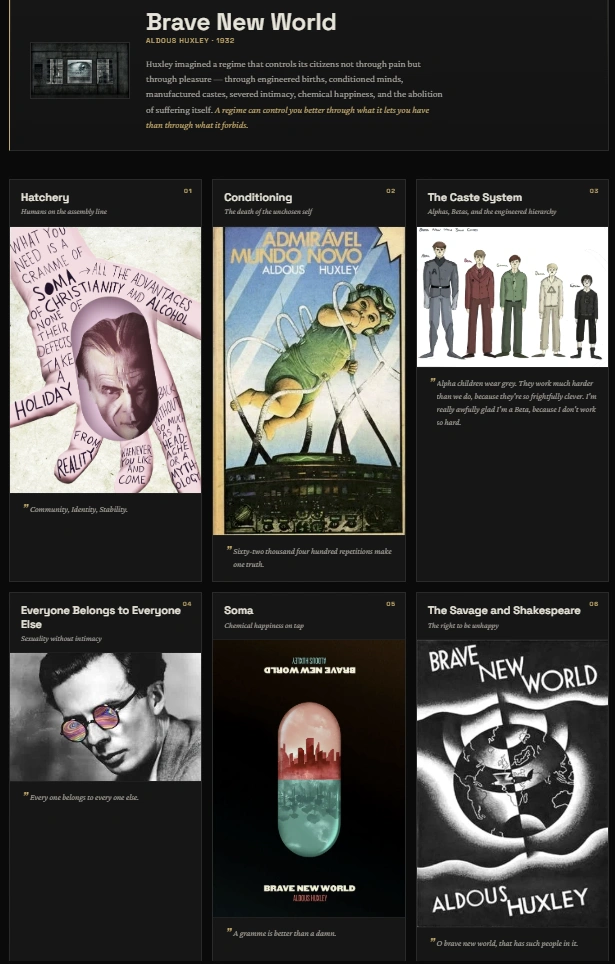
Huxley imagined a regime that controls its citizens not through pain but through pleasure — through engineered births, conditioned minds, manufactured castes, severed intimacy, chemical happiness, and the abolition of suffering itself. A regime can control you better through what it lets you have than through what it forbids.
1984, by George Orwell (Book summary)
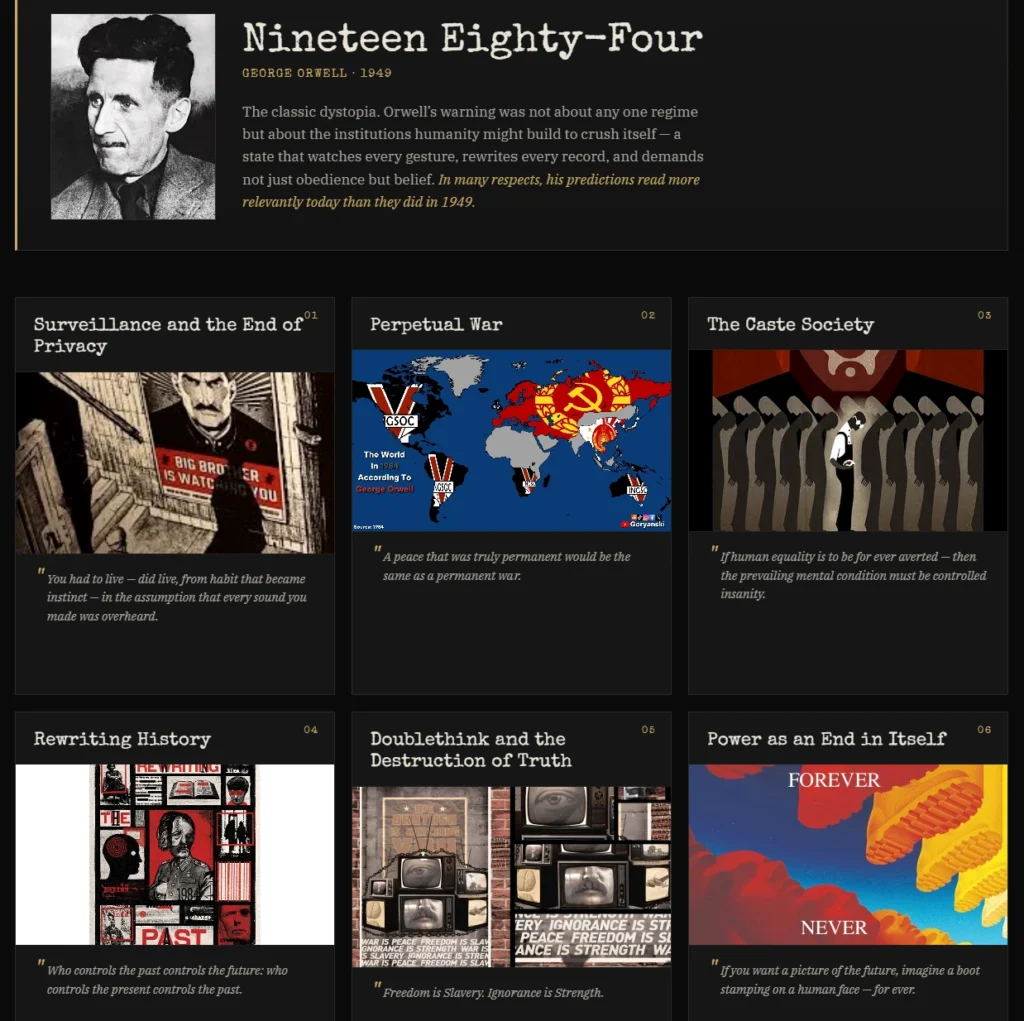
The classic dystopia. Orwell’s warning was not about any one regime but about the institutions humanity might build to crush itself — a state that watches every gesture, rewrites every record, and demands not just obedience but belief. In many respects, his predictions read more relevantly today than they did in 1949.
The Pyramid Principle, by Barbara Minto (Book summary)
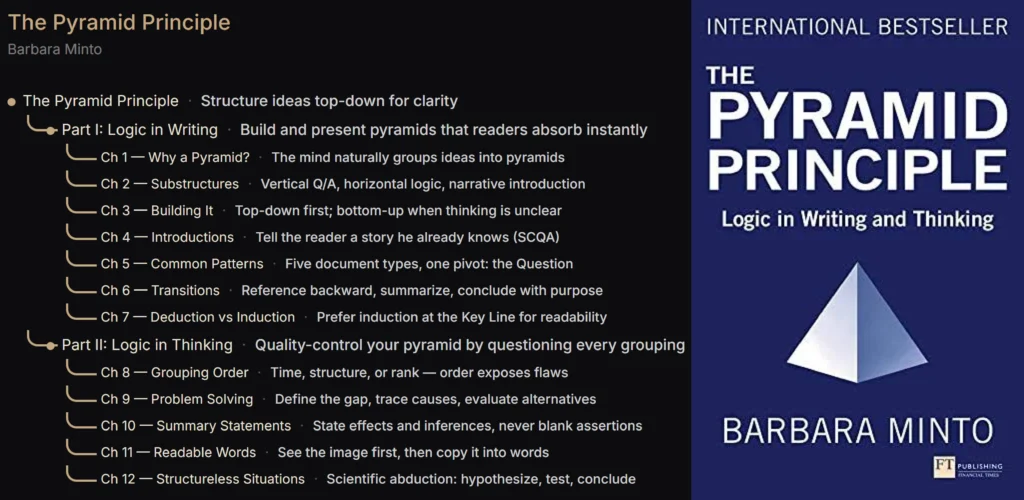
The Pyramid Principle by Barbara Minto is a rare book — and a criminally underrated one.
Once the McKinsey bible for structured communication, it has no Kindle edition, no viral following, and an entire generation of professionals who’ve never heard of it. It is slowly disappearing — and that feels like a quiet intellectual loss.
I encountered this book early in my career and it rewired the way I think. It became a permanent standard I’ve never stopped respecting.
If you’ve ever struggled to make your ideas land clearly, what Minto built here will change how you communicate forever.
Read the full summary below.
Getting Things Done, by David Allen (Book summary)
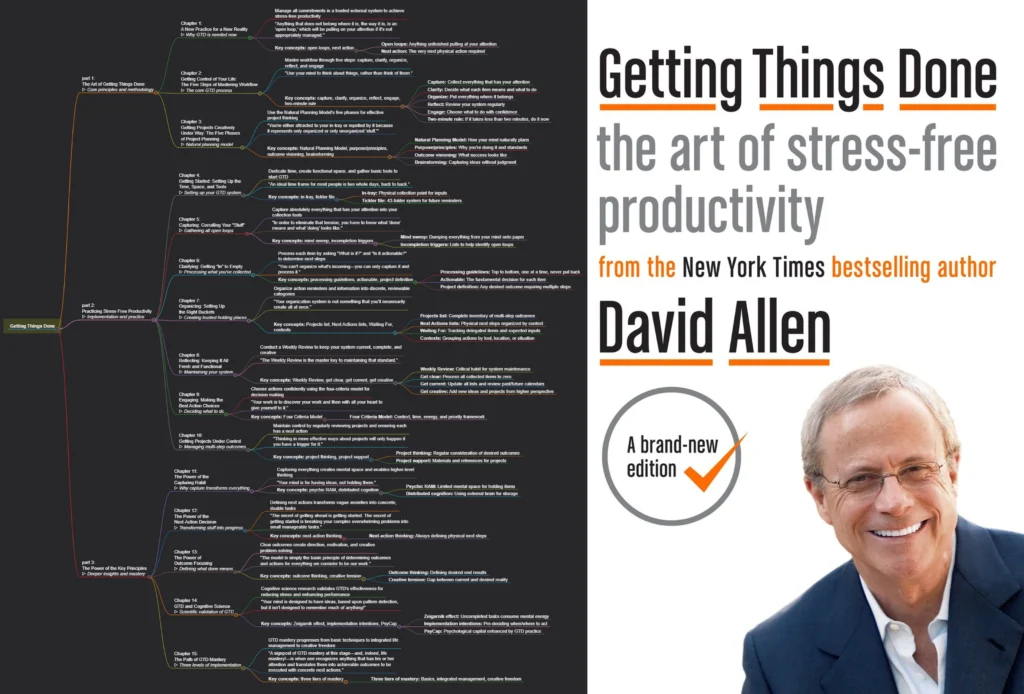
Getting Things Done (GTD) is THE foundational productivity text that transformed how millions manage their work and life. David Allen’s core insight—”your mind is for having ideas, not holding them”—is especially vital for readers and learners who need clear mental space to absorb new knowledge.