
Book Summaries

Essential insights from great books about reading, learning, and habits—distilled into digestible summaries with mind maps for quick visual overviews.

The Beginning of Infinity, David Deutsch (book summary9

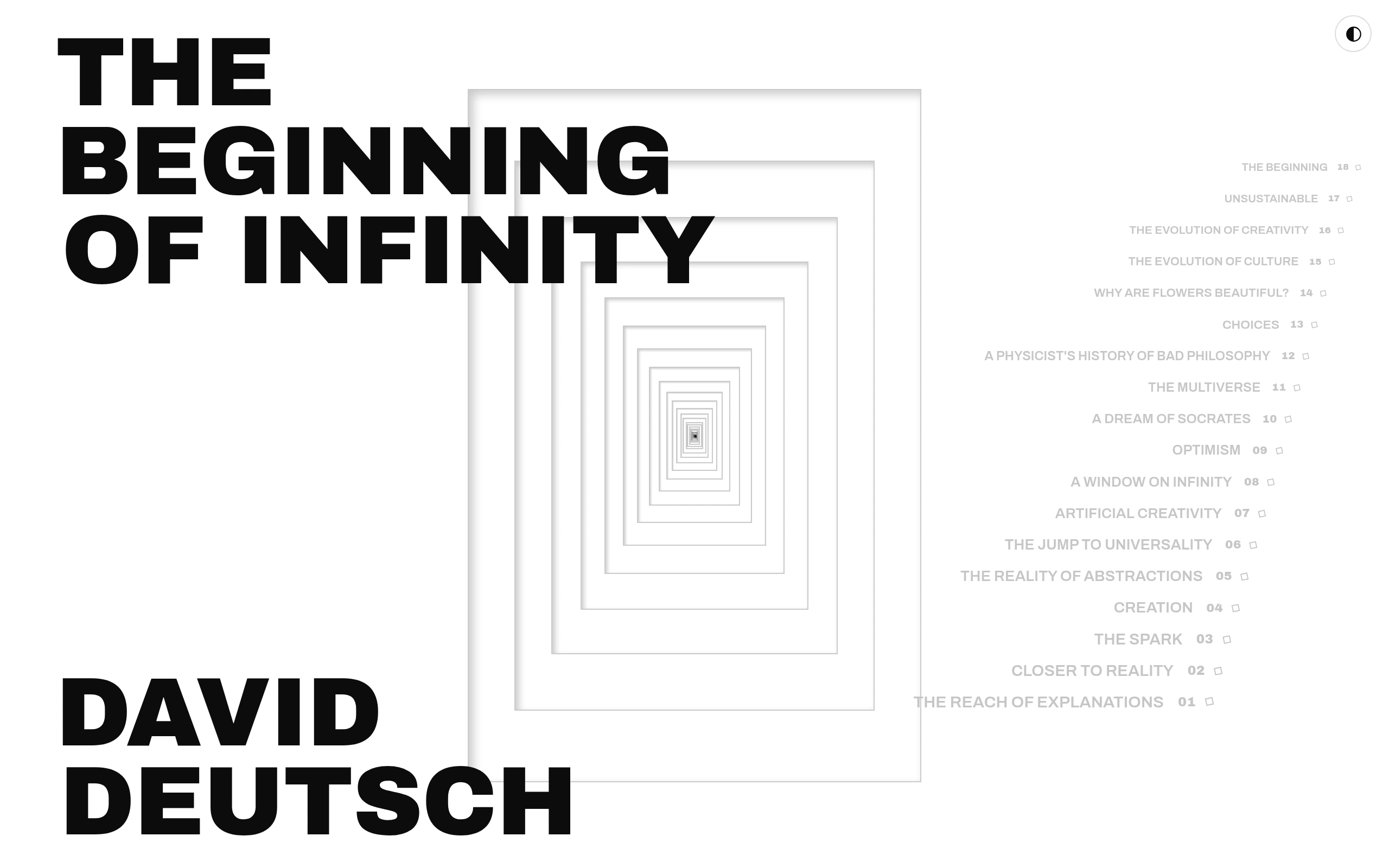
The Beginning of Infinity, by David Deutsch (Book summary)

Interactive summary of The Beginning of Infinity by David Deutsch — one of those rare books that doesn’t just make you think, it changes your mind. It’s highly recommended by several leading thinkers. I’ve lived with this book for about a year now — listened to the audiobook twice, read it cover to cover, and took several hundred highlights along the way. The summary is made to be explored, not just read: a word cloud of key terms, hand-picked images, a section on the debates the book reframes, and more — all fully interactive and easy to navigate.

Learn more >
Human Action (Book Summary)

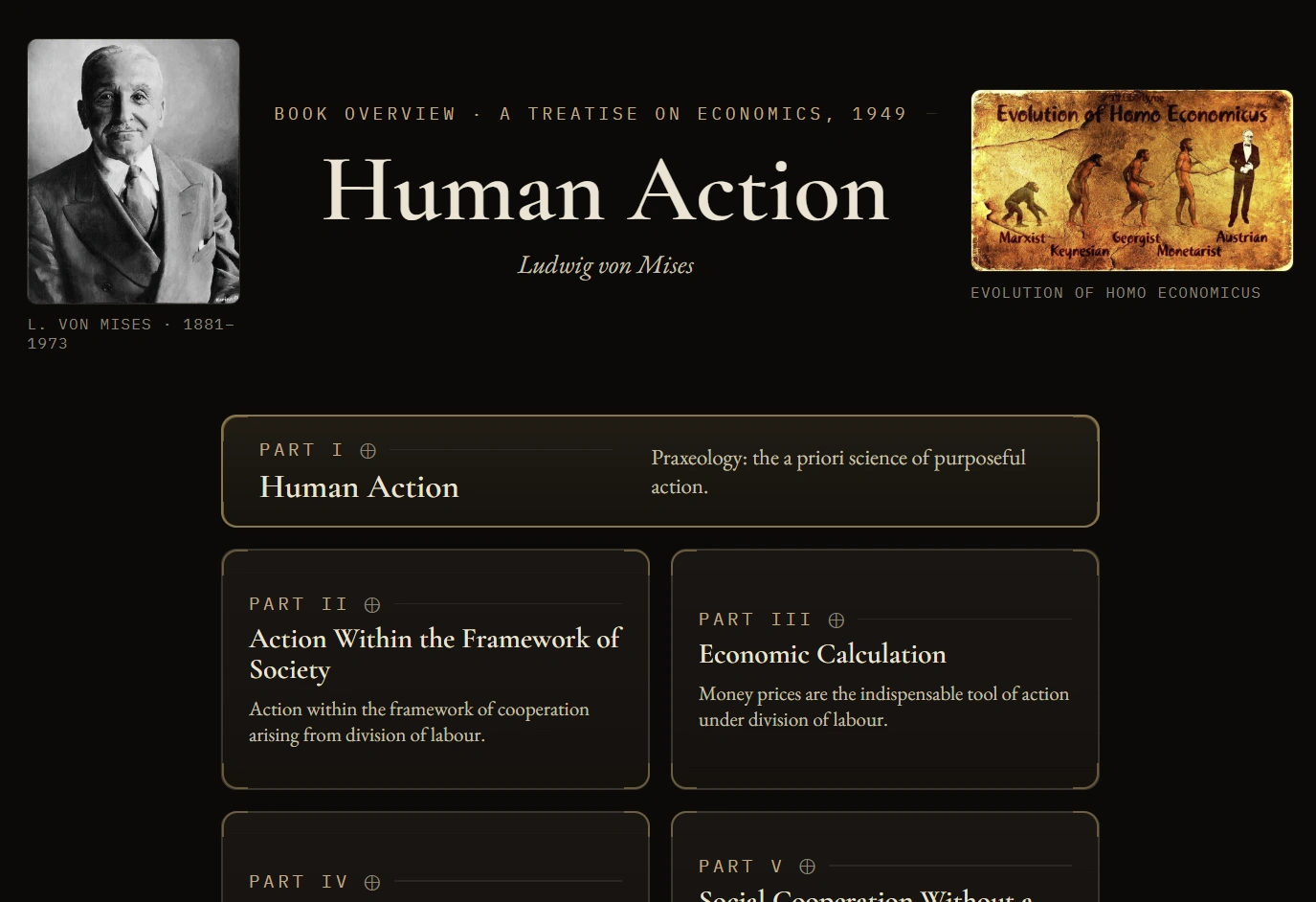
Human Action, by Ludwig von Mises (Book summary)

Ludwig von Mises’ Human Action (1949) is one of the great works of economics — the definitive case for the free market, sound money, and why central planning can’t calculate. But it’s 1,400 dense pages, and most readers never finish. This interactive summary strips it to the bare argument: start with the whole book at a glance, then zoom into any part or chapter, down as deep as you want to go. The classic, made graspable.

Learn more >
Brave New World

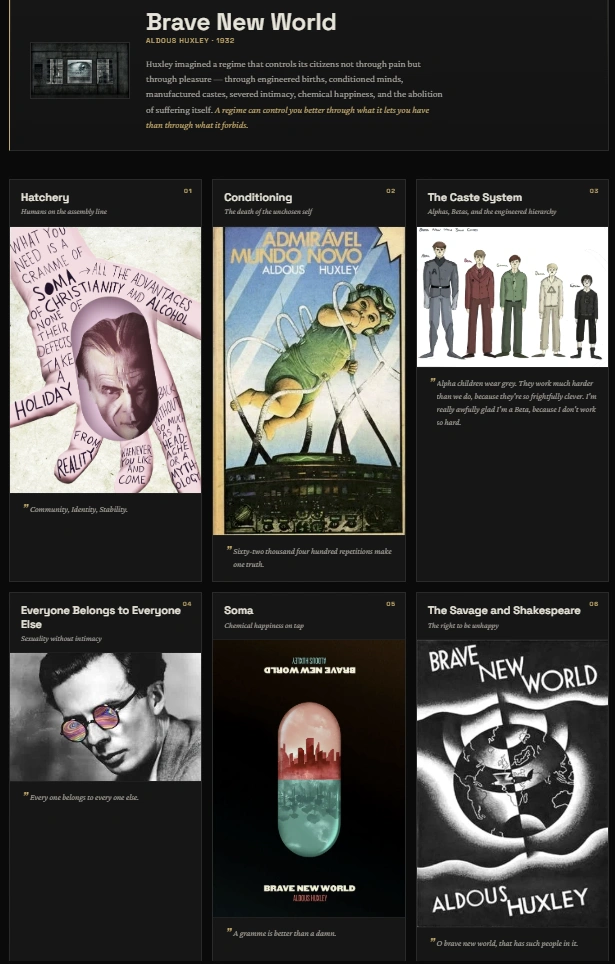
Brave New World, by Aldous Huxley (Book summary)

Huxley imagined a regime that controls its citizens not through pain but through pleasure — through engineered births, conditioned minds, manufactured castes, severed intimacy, chemical happiness, and the abolition of suffering itself. A regime can control you better through what it lets you have than through what it forbids.

Learn more >
1984, by George Orwell (Book summary)

1984, by George Orwell (Book summary)

The classic dystopia. Orwell’s warning was not about any one regime but about the institutions humanity might build to crush itself — a state that watches every gesture, rewrites every record, and demands not just obedience but belief. In many respects, his predictions read more relevantly today than they did in 1949.

Learn more >
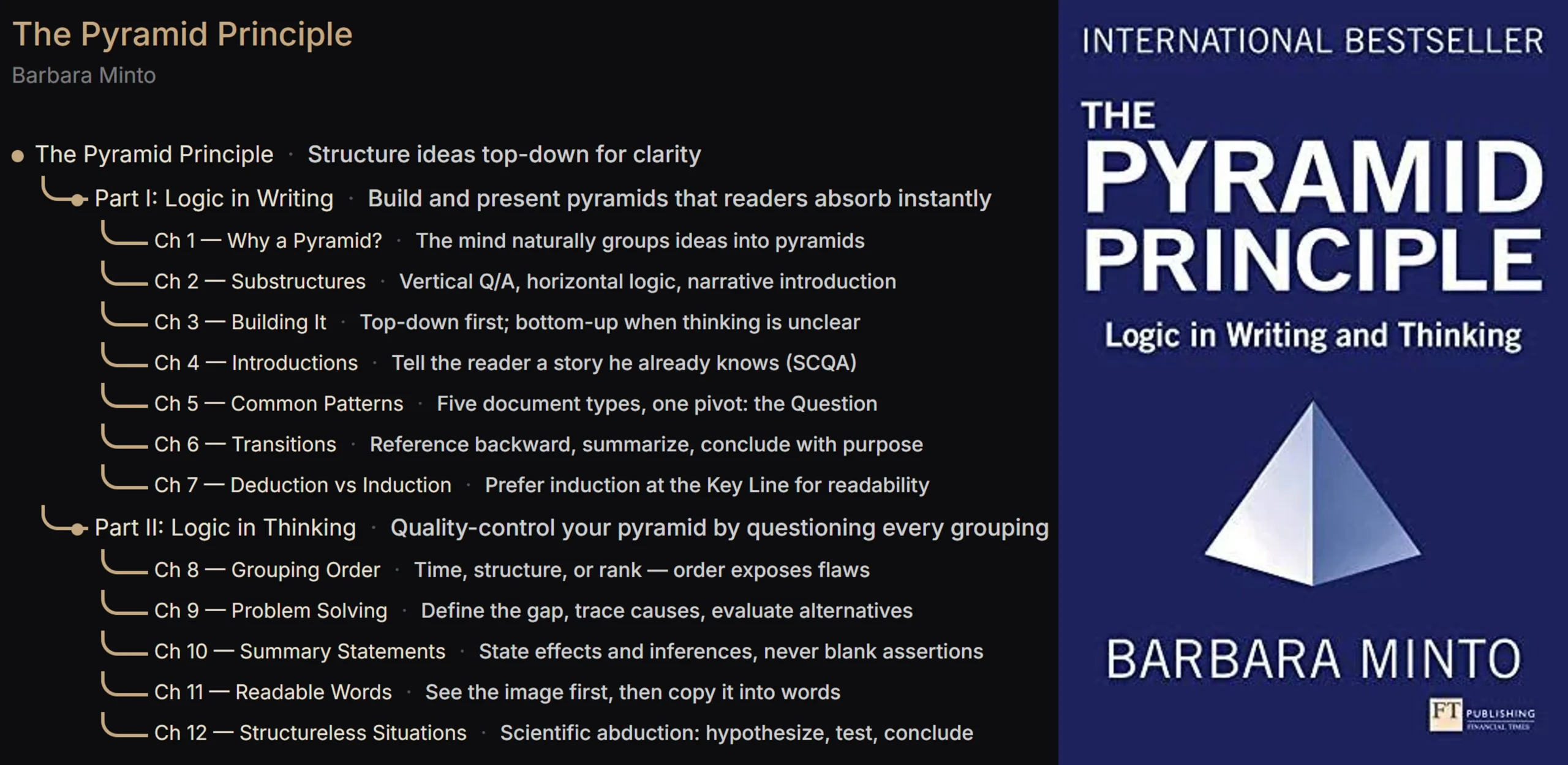
The Pyramid Principle, by Barbara Minto (Book Summary)

The Pyramid Principle, by Barbara Minto (Book summary)

The Pyramid Principle by Barbara Minto is a rare book — and a criminally underrated one.
Once the McKinsey bible for structured communication, it has no Kindle edition, no viral following, and an entire generation of professionals who’ve never heard of it. It is slowly disappearing — and that feels like a quiet intellectual loss.
I encountered this book early in my career and it rewired the way I think. It became a permanent standard I’ve never stopped respecting.
If you’ve ever struggled to make your ideas land clearly, what Minto built here will change how you communicate forever.
Read the full summary below.

Learn more >
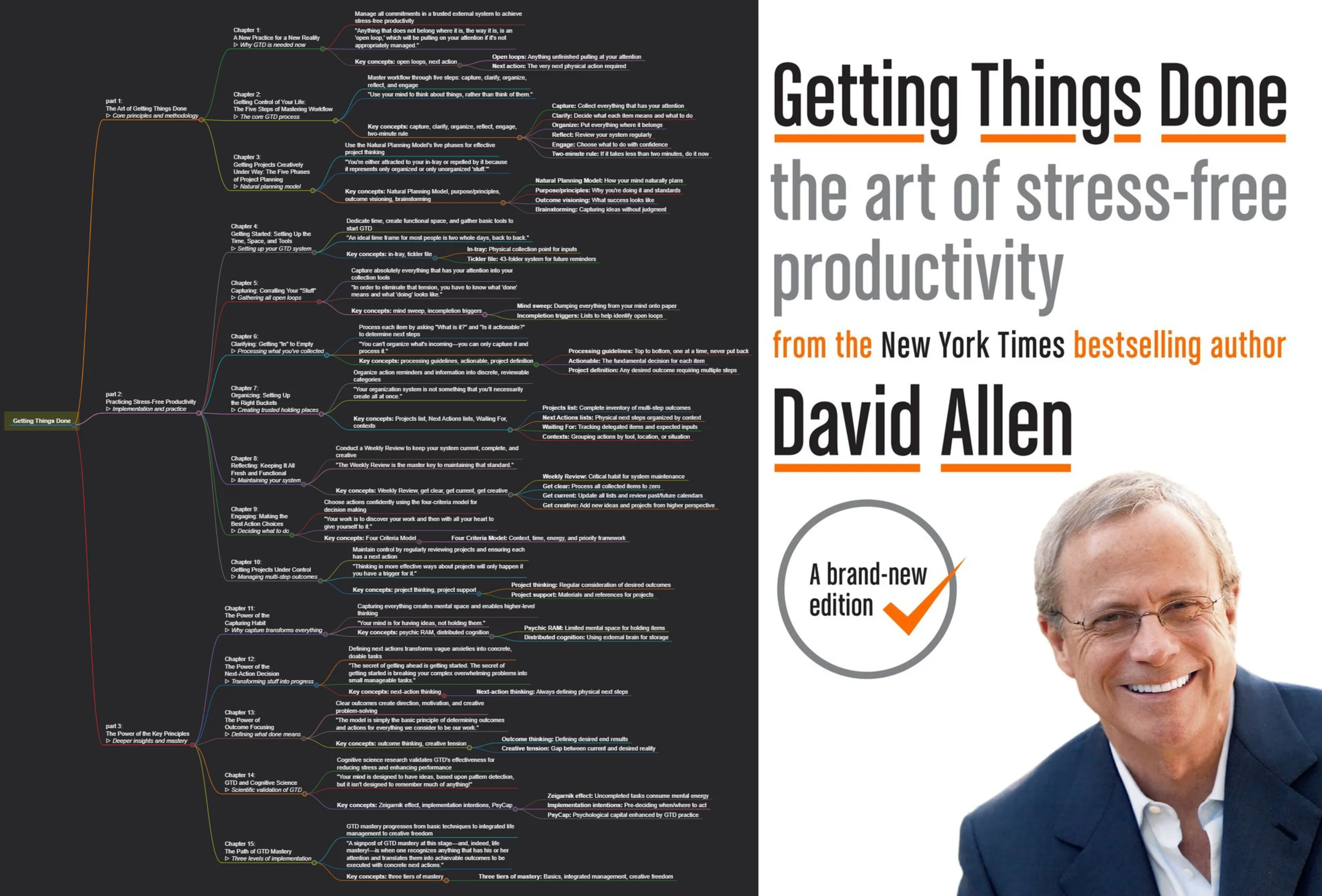
Getting Things Done, by David Allen (book summary)

Getting Things Done, by David Allen (Book summary)

Getting Things Done (GTD) is THE foundational productivity text that transformed how millions manage their work and life. David Allen’s core insight—”your mind is for having ideas, not holding them”—is especially vital for readers and learners who need clear mental space to absorb new knowledge.

Learn more >
Feel Good Productivity, by Ali Abdaal

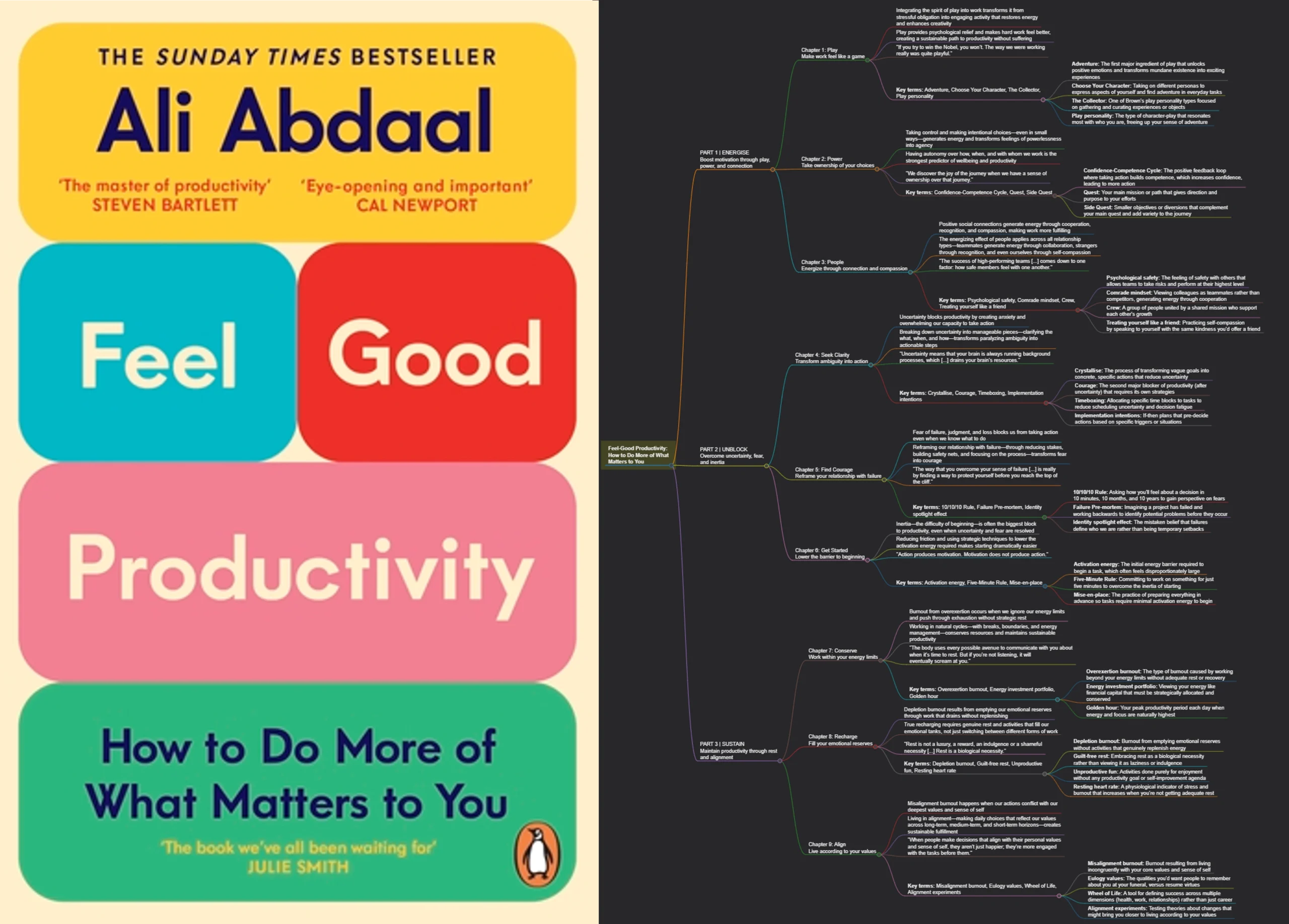
Feel Good Productivity, by Ali Abdaal (Book summary)

This book is your roadmap to doing what matters while actually enjoying it. Ali Abdaal, a YouTuber with millions of followers, challenges the belief that success requires suffering.
Drawing on research and personal experience, he reveals a counterintuitive truth: feeling good isn’t optional—it’s the foundation of sustainable productivity. This interactive mind map distills his framework for energizing your work, overcoming mental blocks, and achieving more without burning out.

Learn more >
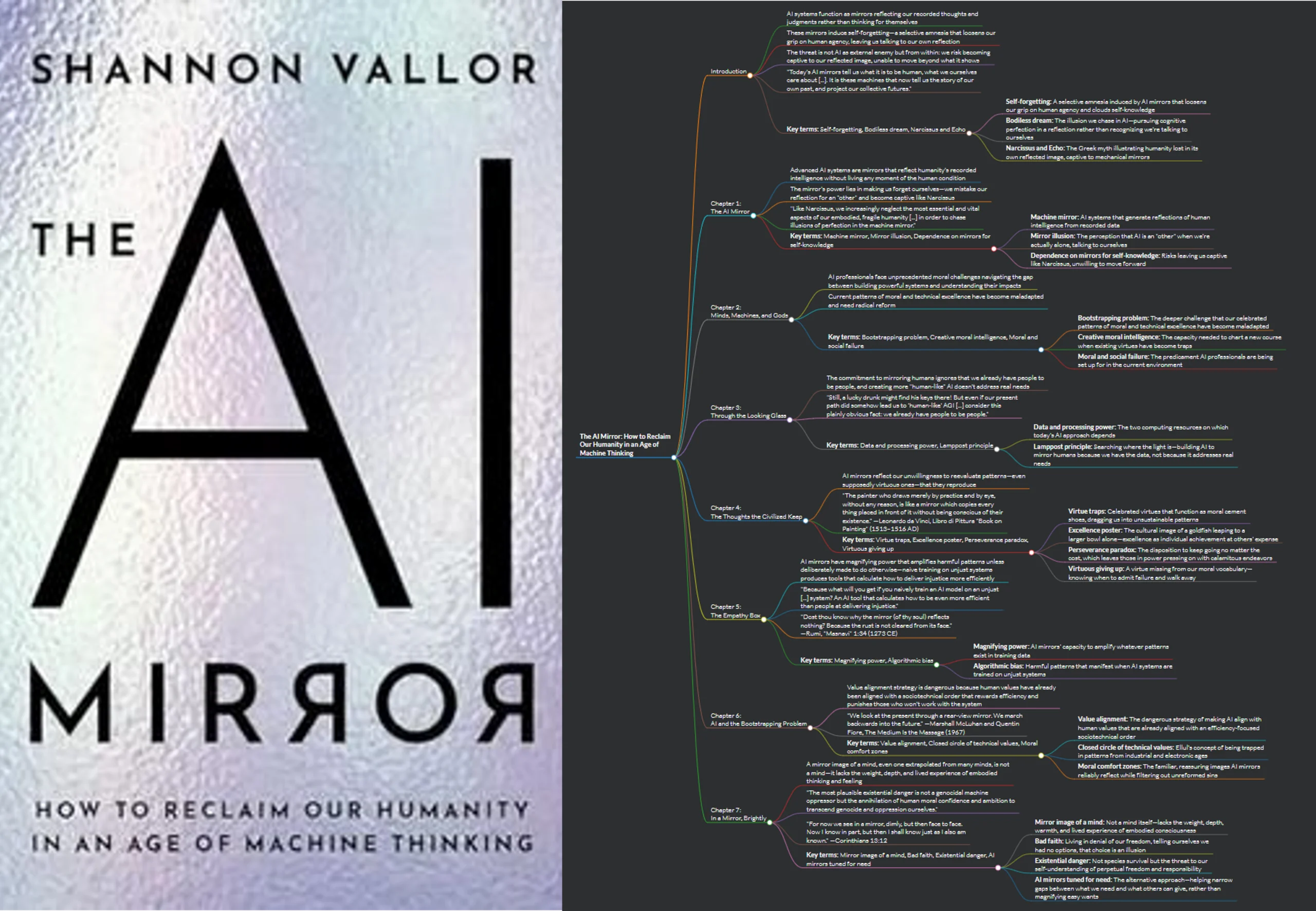
The AI Mirror (Book summary)

The AI Mirror, by Shannon Vallor (Book summary)

This book argues that AI systems are mirrors reflecting back our past patterns. For learners and readers navigating an AI-saturated world, it offers essential insight into maintaining intellectual agency—understanding when to trust these tools and when they’re simply showing us our own reflection, trapping us in familiar patterns rather than expanding our thinking.

Learn more >
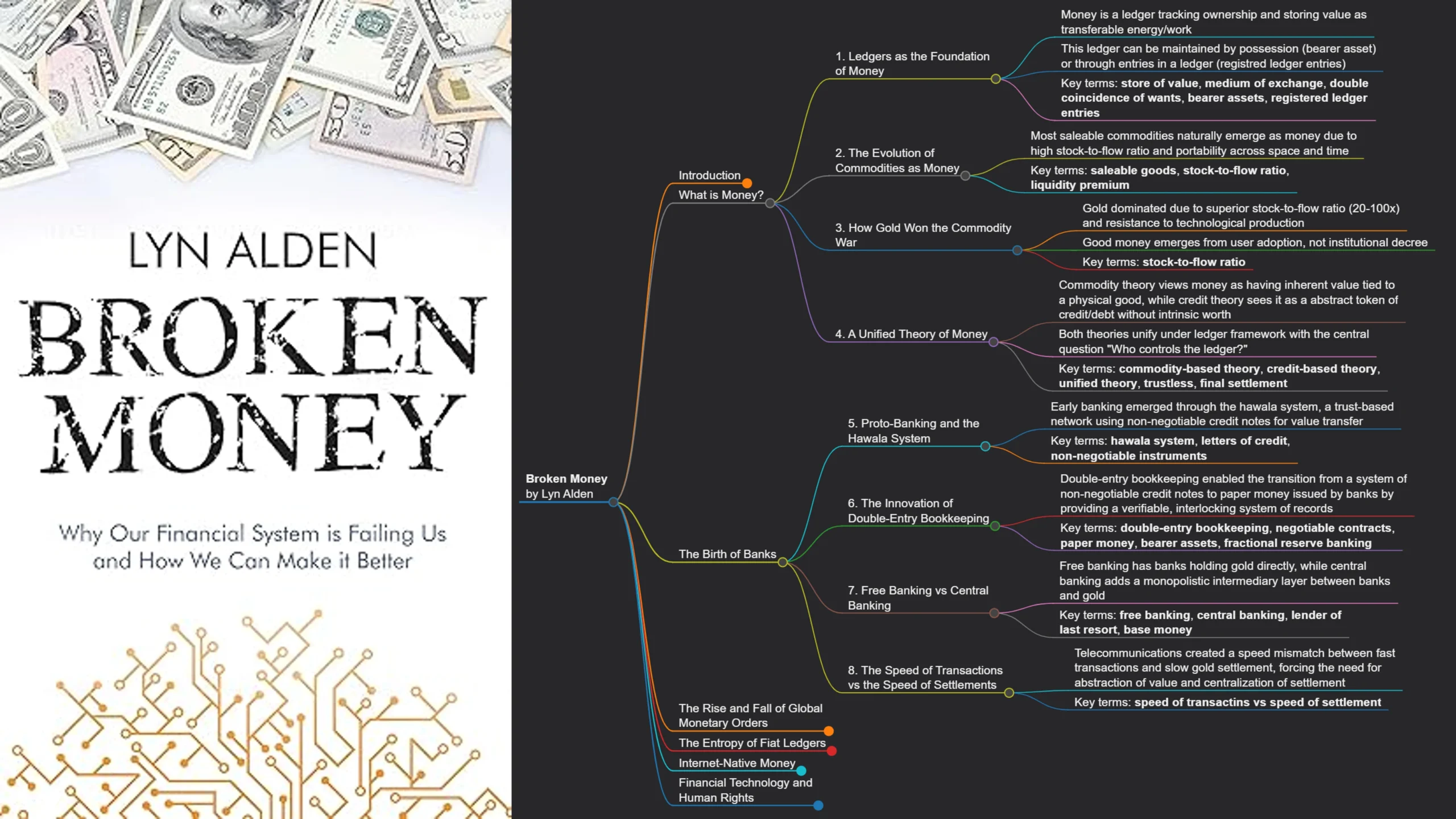
Broken Money, by Lyn Alden (Book summary)

Broken Money, by Lyn Alden (Book summary)

Broken Money by Lyn Alden unpacks how money has transformed through history—from gold to fiat to digital networks—and what this means for economies, politics, and individual freedom. It’s an essential read for anyone curious about the forces shaping our financial future.

Dive into the summary in two ways:
An interactive mind map lets you zoom through the book’s key themes and connections at a glance, while a comprehensive nested summary allows you to explore each chapter in depth, opening and closing sections as you go.

Learn more >
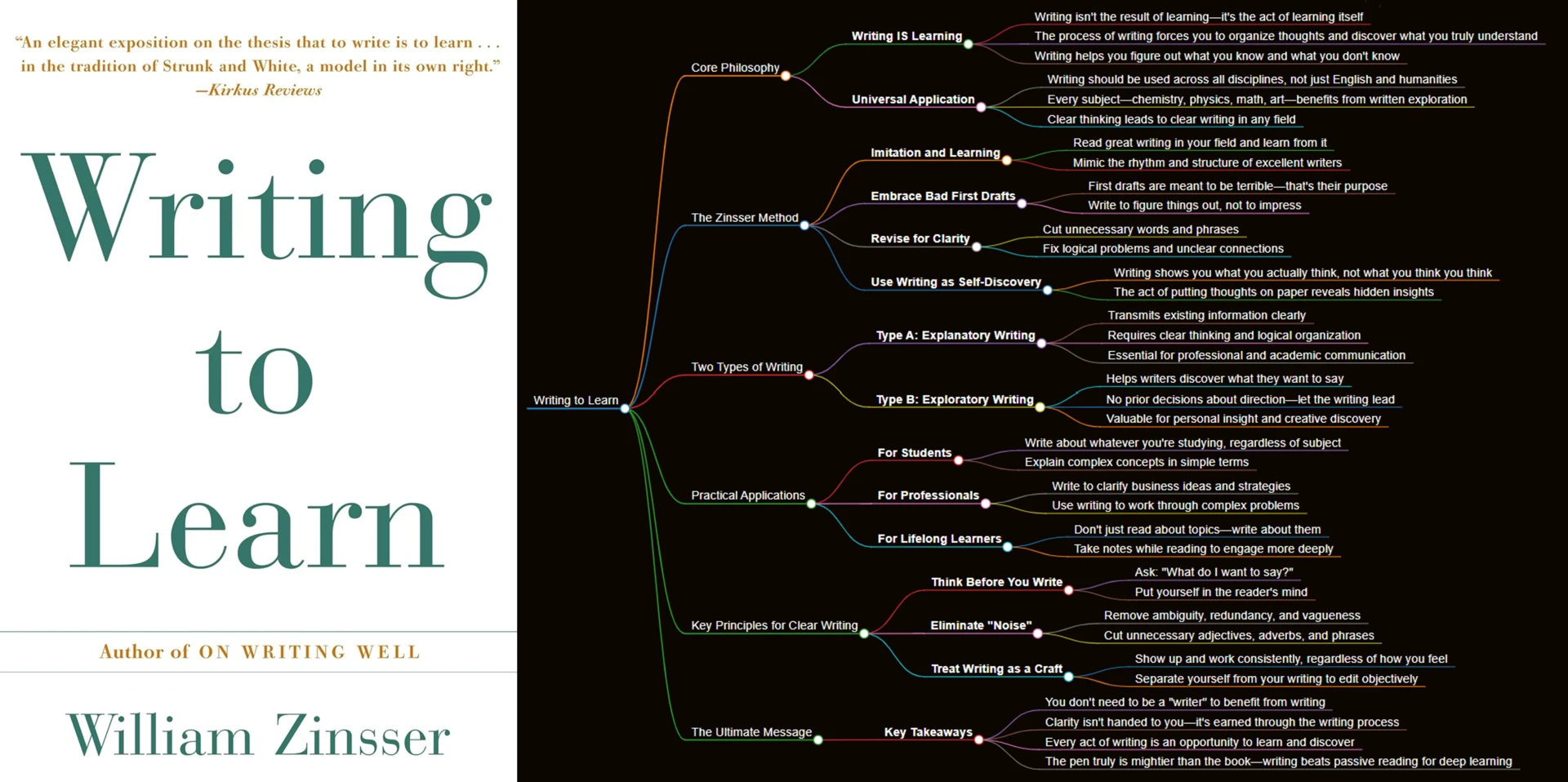
Writing to Learn, by William Zinsser (Book Summary)

Writing to Learn, by William Zinsser (Book summary)

“Writing to Learn” by William Zinsser is the classic that understood powerful learning decades before modern science—proving that writing isn’t just communication, it’s thinking made visible. Zinsser discovered what researchers now call retrieval practice and elaboration: the act of putting thoughts on paper forces you to truly understand any subject, from chemistry to philosophy. This influential book reveals why the simple practice of “thinking on paper” is your key for mastering anything you want to learn.

Learn more >

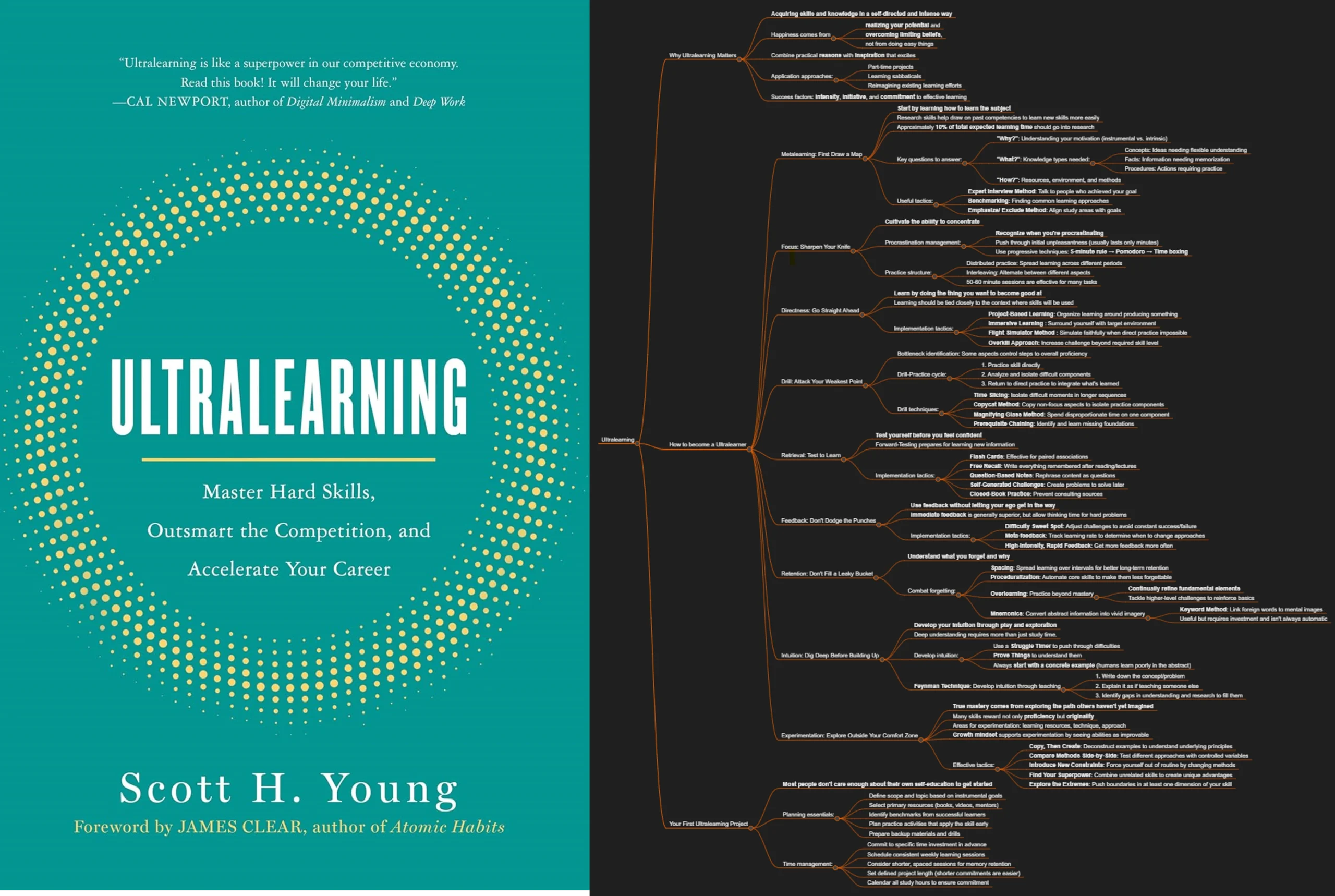
Ultralearning, by Scott H. Young (Book summary)

Ever wanted to pick up a skill quickly—maybe coding, a new language, or a craft—and wondered how to do it without wasting time? This article walks you through Scott Young’s Ultralearning, a book packed with practical steps to speed up your learning and boost self-improvement. We’ll cover why Ultra Learning matters and give you a full rundown of how to make it work, from planning to pushing your limits. Let’s dive in and see how you can take charge of your growth.

Learn more >

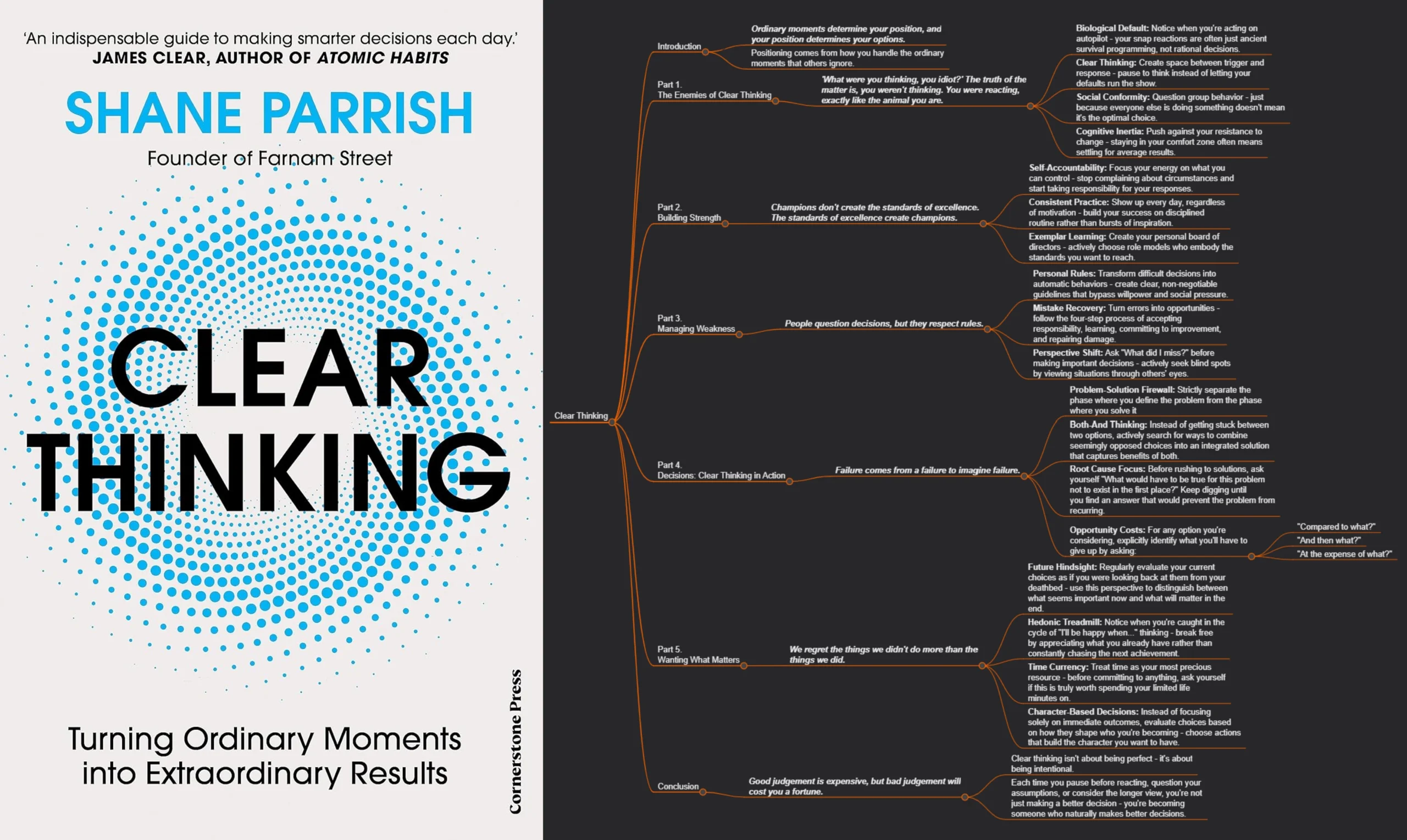
Clear Thinking, by Shane Parrish (Book summary)

The book sharpens your reasoning, improving how you understand and process what you read.
The way you think in ordinary moments shapes your future more powerfully than any single “big” decision. Yet most of us operate on autopilot, letting biological defaults and unconscious reactions guide our choices rather than making deliberate decisions. This book presents a practical framework for developing clear thinking that transforms how you handle everyday situations. You’ll learn to build systems that naturally lead to better choices.
By mastering these principles, you’ll position yourself to seize opportunities that others miss and build a life free from regret.

Learn more >